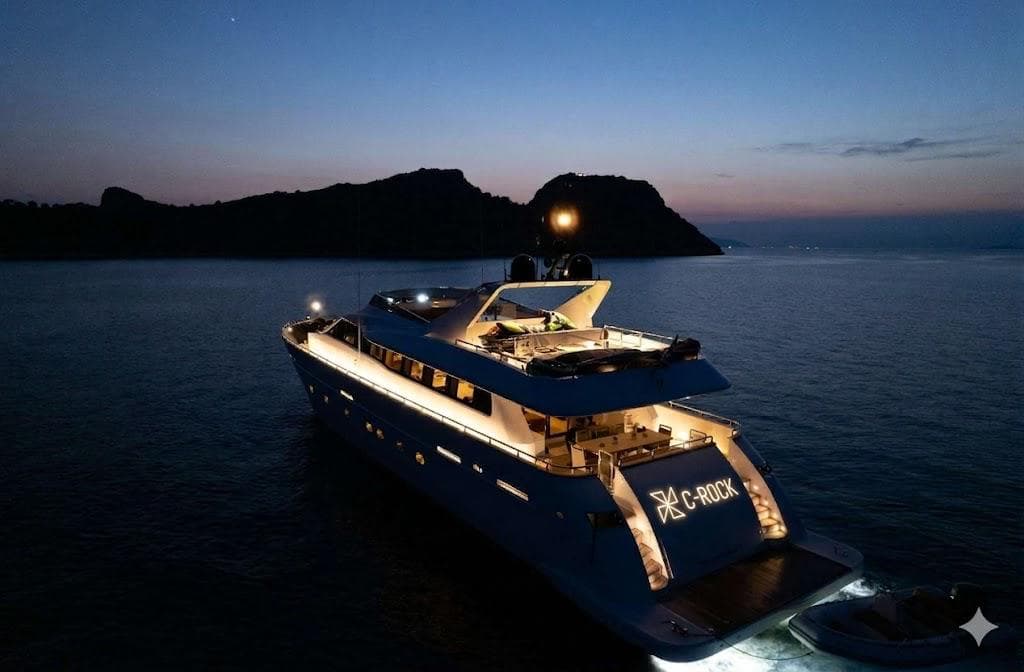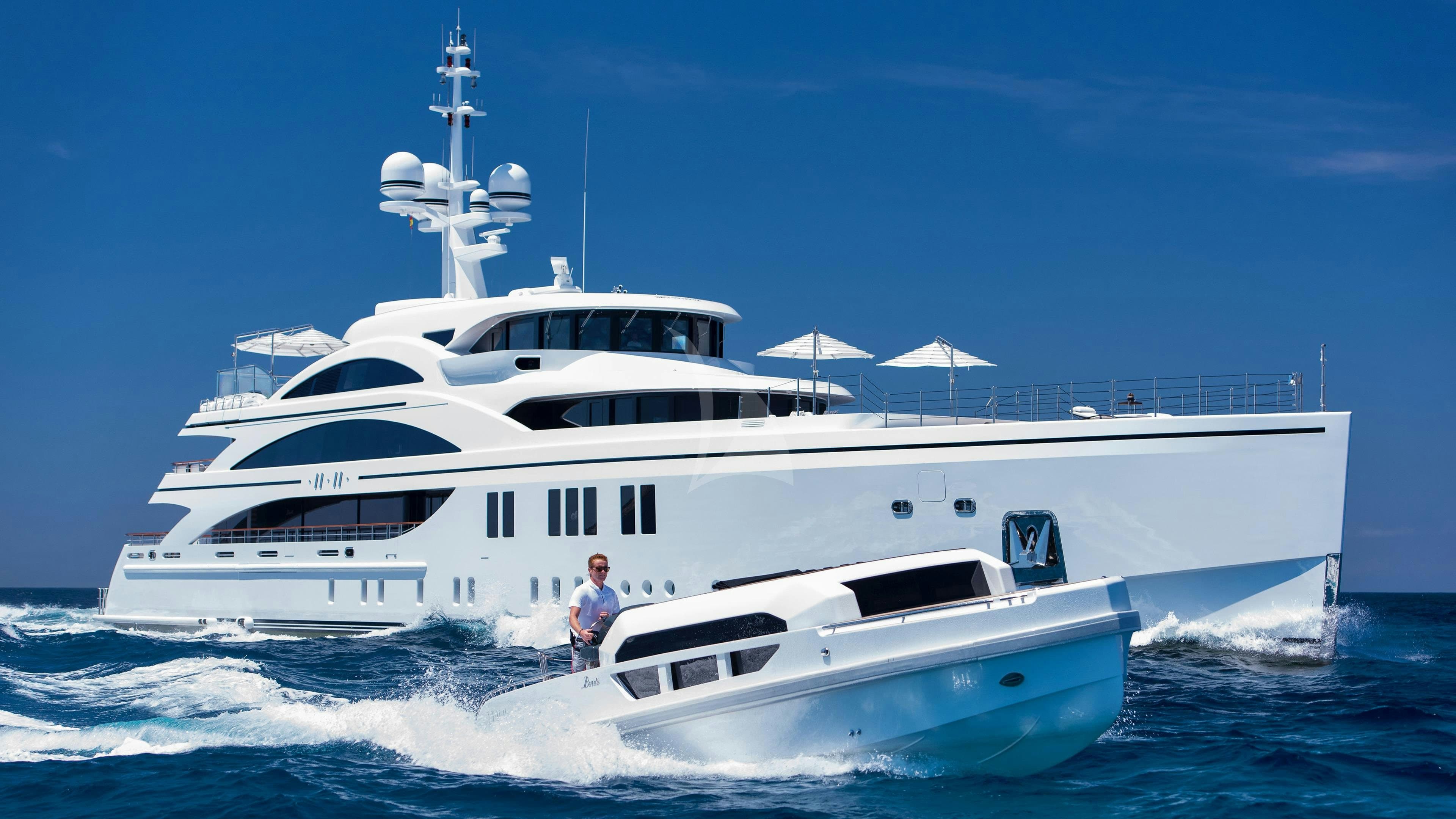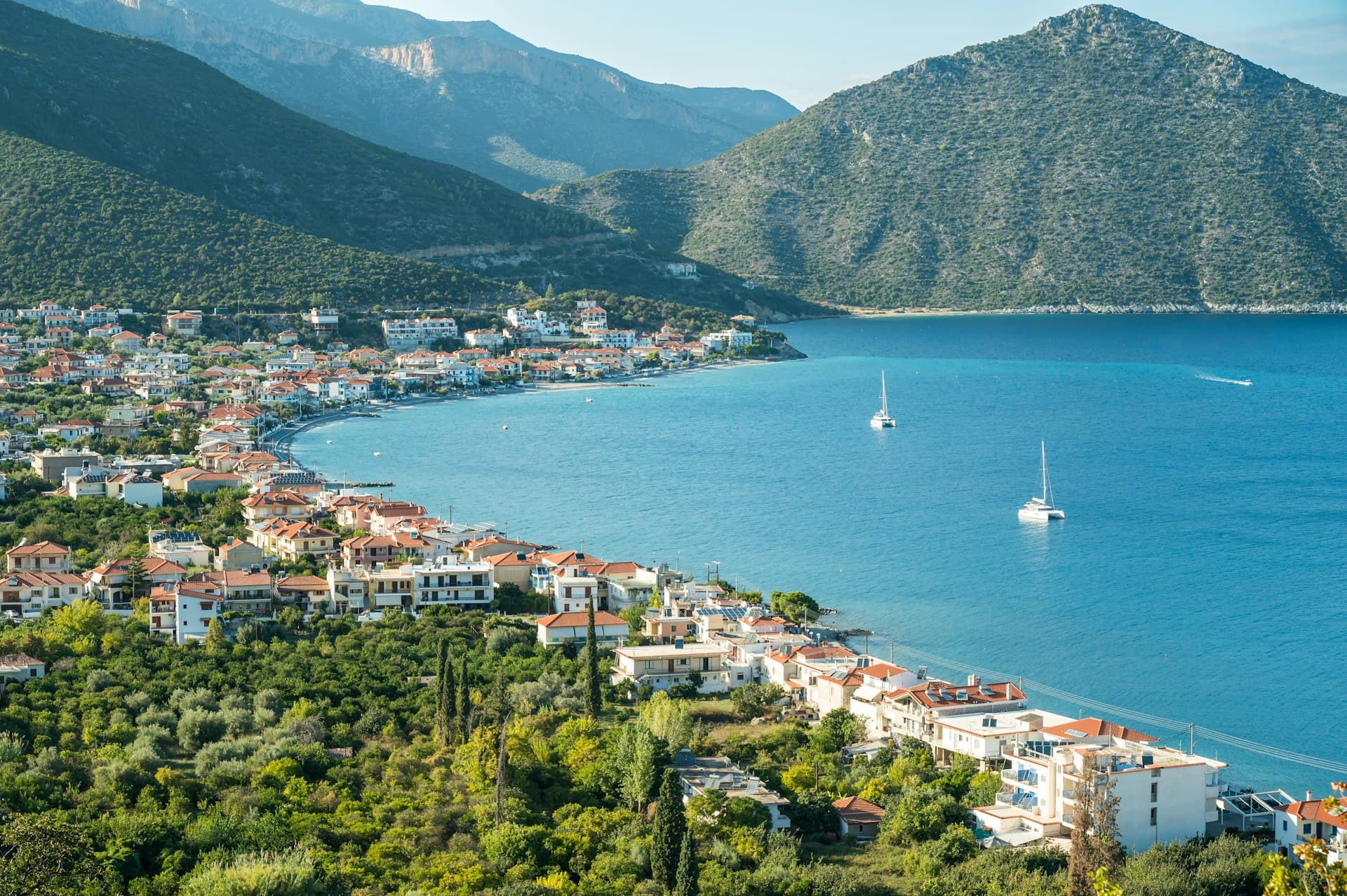
The Ionian islands are a different Greece — greener, calmer, and more Mediterranean in character than the arid, wind-swept Cyclades. Cypress and olive groves run down to turquoise bays, Venetian fortresses crown hilltops, and the mythology is as old as anything in the Aegean: Ithaki is the home of Odysseus. This 435-nm route links Athens to the central Ionian via the Corinth Gulf, touching six destinations in seven days.
Your VoyageAthens to Galaxidi
A 77-nm opening passage through the Saronic Gulf and into the Gulf of Corinth. Galaxidi is a beautifully preserved 19th-century naval town on the northern Peloponnese coast — stone captain's houses, two natural harbours, and a quiet waterfront. Its principal attraction for charterers is proximity to Delphi (15 km inland), the ancient sanctuary of Apollo and one of the most important archaeological sites in Greece. An evening or early morning visit to Delphi is possible from here.
Galaxidi to Kefalonia
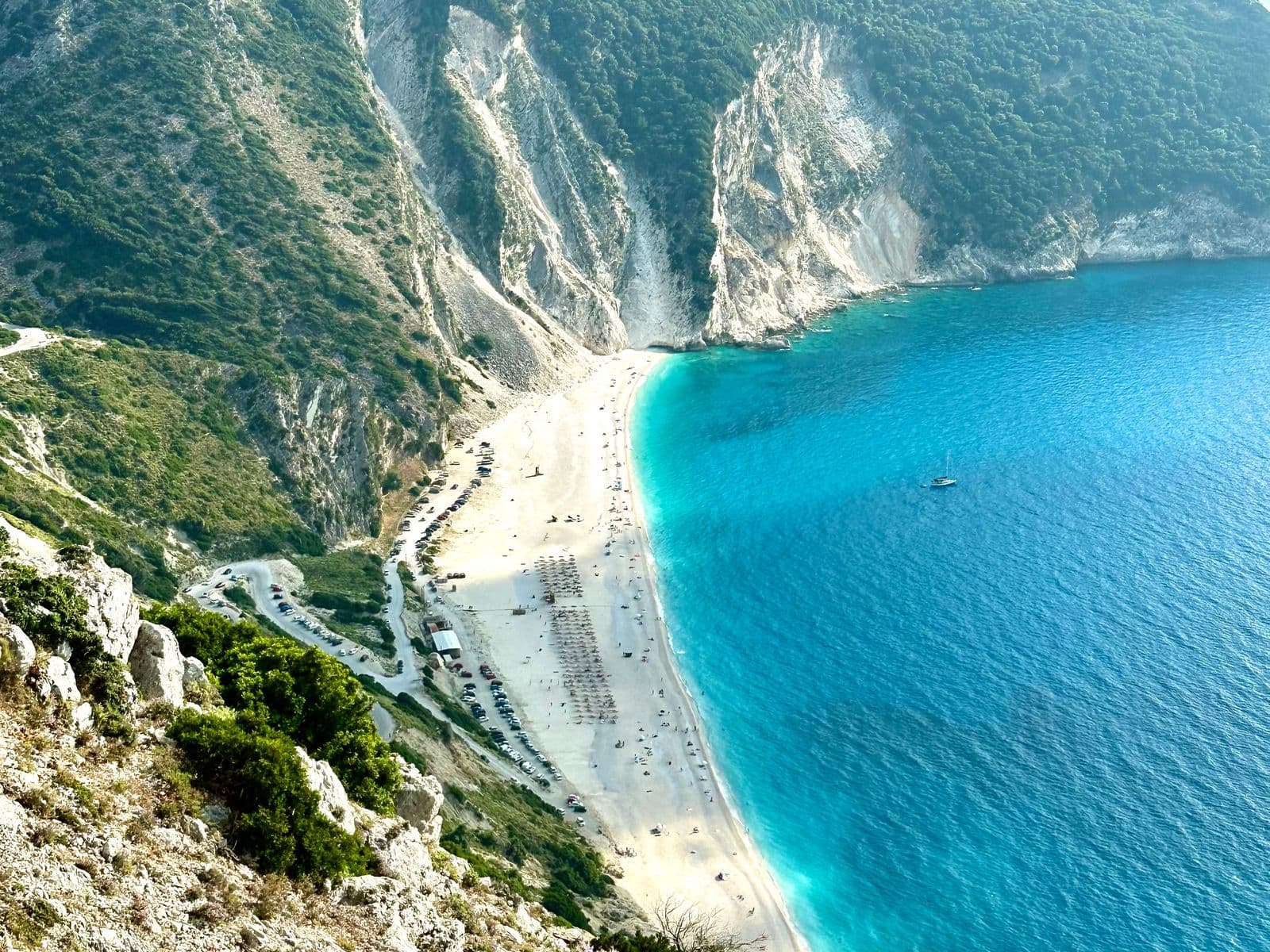
The longest passage of the charter at 90 nm, exiting the Corinth Gulf and heading south to Kefalonia — the largest of the Ionian islands. Argostoli, the capital, sits on a deep natural harbour. Kefalonia's landscape is dramatic: Mount Ainos (the highest peak in the Ionian at 1,628 m), the white-limestone cliffs of Myrtos Beach (regularly ranked among the most beautiful beaches in Europe), and the subterranean Melissani Cave (where a collapsed ceiling lets sunlight illuminate an underground lake). The island was the setting for Louis de Bernières' novel "Captain Corelli's Mandolin."
Kefalonia to Lefkada
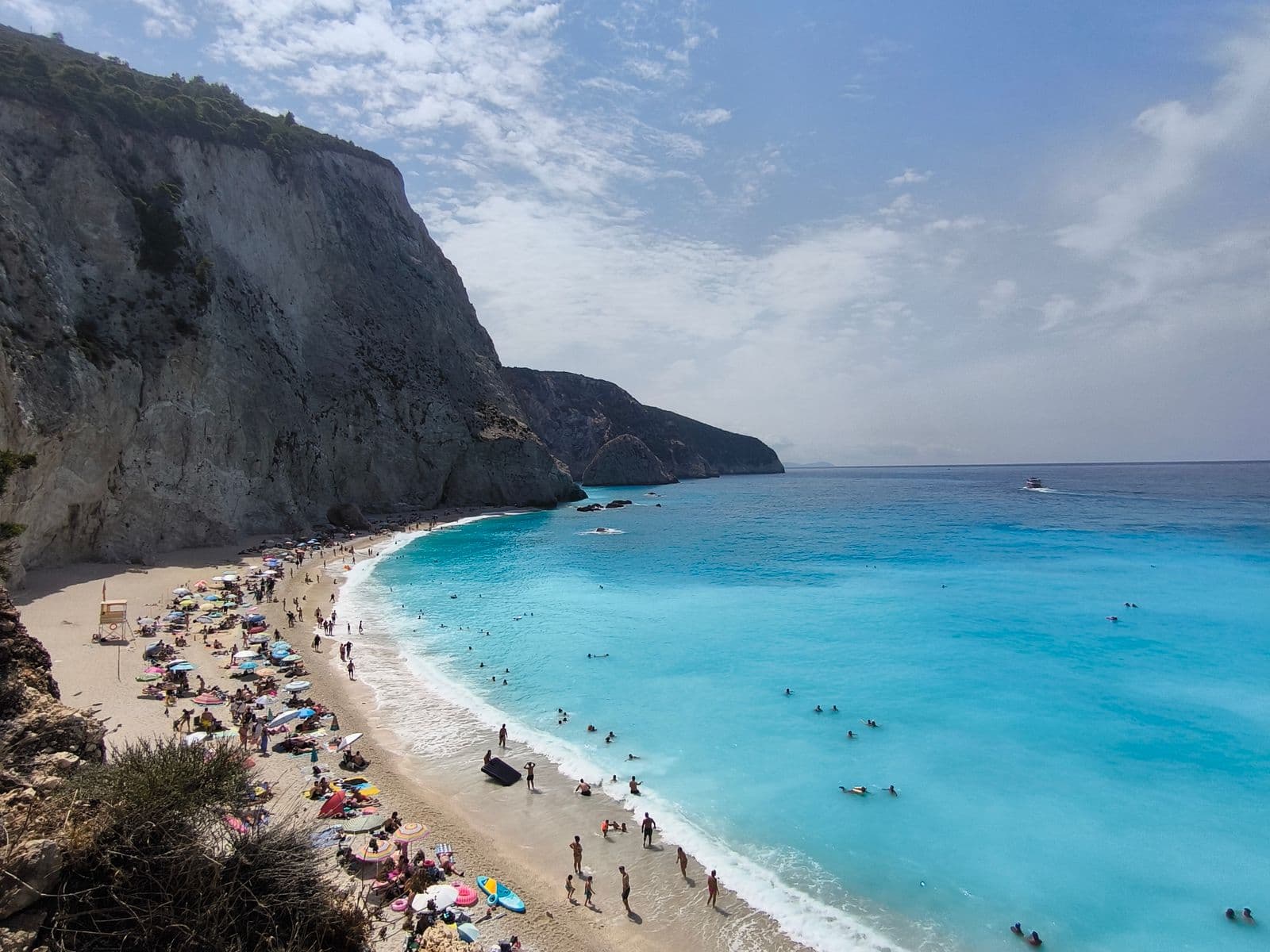
Thirty-five nautical miles north to Lefkada. The island's western coastline is a series of dramatic white cliffs and turquoise bays — Porto Katsiki, Egremni, and Kathisma are among the most photographed beaches in Greece. Lefkada is connected to the mainland by a causeway, making it the most accessible of the Ionian islands. The east coast is more sheltered and better for anchoring; Nidri, on the east side, is a popular yacht base with views across to Meganisi and Skorpios (the private island once owned by Aristotle Onassis).
Lefkada to Meganisi
A short 10-nm crossing to Meganisi, a small island between Lefkada and Ithaki. Meganisi has three tiny villages, a handful of tavernas, and some of the clearest water in the Ionian. Vathi harbour on the north side is well-protected and quiet — the perfect antidote to busier destinations. Spartochori village, perched on the hill above, has views across to Lefkada and Skorpios.
Meganisi to Ithaki
Fifteen nautical miles to the legendary home of Odysseus. Ithaki is one of the most evocative islands in Greece — small, mountainous, and steeped in Homeric tradition. The main harbour of Vathi sits at the end of a deep, fjord-like bay and is one of the most sheltered in the Ionian. Whether or not you subscribe to the Homeric identification, the island's landscape — steep green hillsides falling to quiet bays — feels appropriately mythic. The archaeological site at Aetos and the Fountain of Arethusa are traditional Odyssey landmarks.
Ithaki to Zakynthos
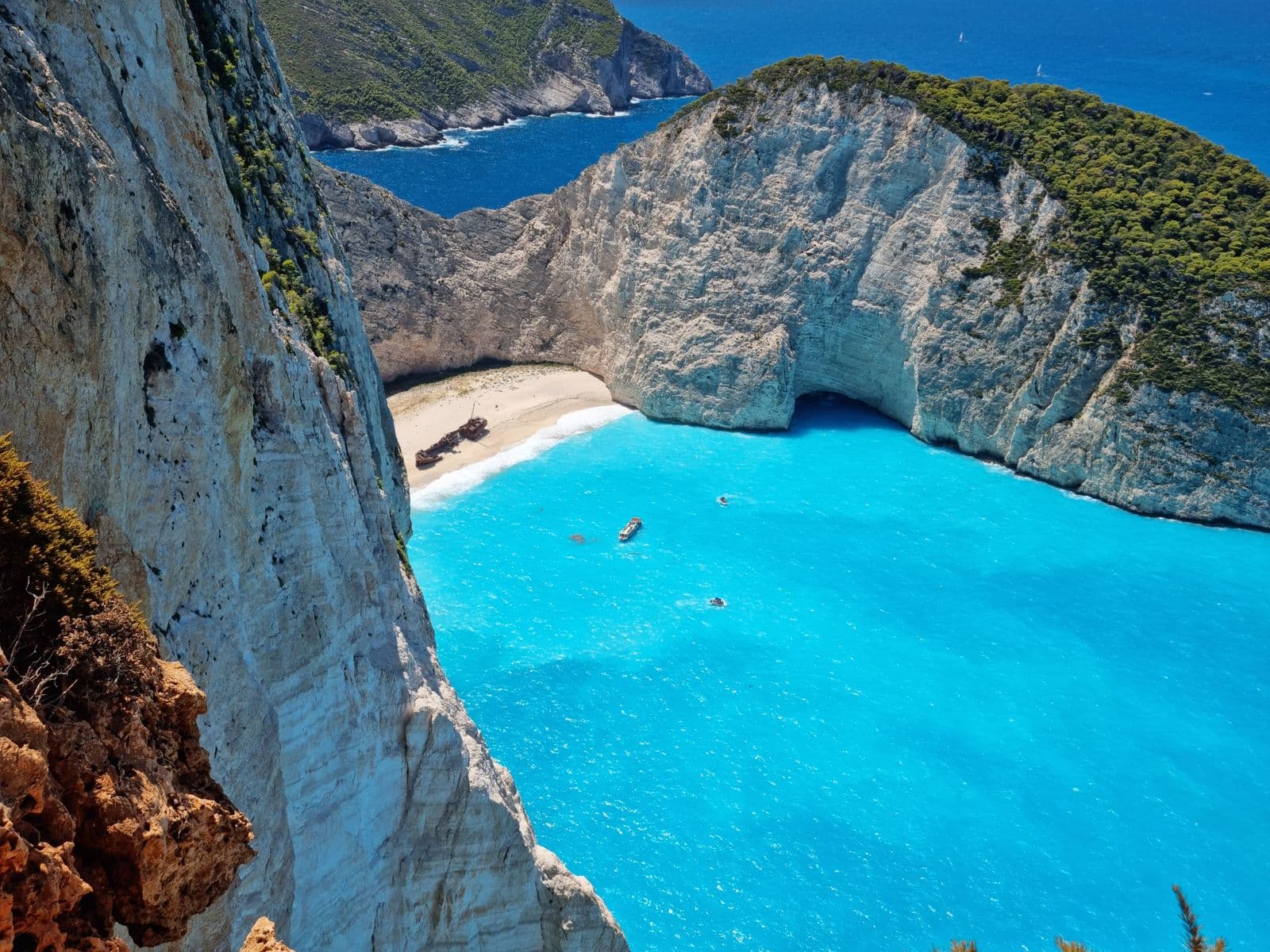
Forty-five nautical miles south to Zakynthos. The island is famous for Navagio (Shipwreck) Beach — a cove backed by vertical white cliffs, with the rusted hulk of a smuggler's ship on the sand. It is one of the most iconic images of Greece. However, as of March 2026, direct beach access is indefinitely prohibited (by sea and land) due to ongoing rockfall and cliff instability following geological assessments by Greece's Earthquake Planning and Protection Organisation (OASP). Boats may approach the bay up to approximately 40 metres from shore for photography, but no landing or swimming in the bay is permitted. The cliff-top viewpoints remain open, including a new "Navagio 2" viewpoint added in 2025. The marine protected area around Laganas Bay on the south coast is a critical nesting site for loggerhead sea turtles (Caretta caretta); boat access is regulated in the bay.
⚠ Confirmed (Mar 2026): Navagio Beach is CLOSED to all visitors indefinitely. Boats may approach ~40m offshore for photos only. No landing, no swimming. Cliff-top viewpoints remain accessible.
Zakynthos to Nafpaktos
Sixty-four nautical miles northeast, re-entering the Gulf of Corinth via the narrow strait at Rio-Antirrio. Nafpaktos (known historically as Lepanto) has a well-preserved Venetian fortress and a picturesque harbour. It was the staging point for the Battle of Lepanto (1571), one of the decisive naval engagements in European history. The harbour is small but atmospheric for a final overnight.
Nafpaktos to Athens
A 99-nm final passage through the Corinth Gulf back to Athens.
Season
May through October. The Ionian has lighter and more predictable winds than the Aegean — afternoon thermals are typical rather than the sustained Meltemi. This makes the Ionian particularly suitable for families and guests who prefer calmer conditions.
One-way alternative
This route has long positioning legs to/from Athens. A one-way charter starting in Lefkada (or Preveza, which has an airport) and ending in Zakynthos (or vice versa) reduces daily mileage significantly and allows more time at each destination.
Provisioning
Argostoli (Kefalonia), Lefkada town, and Zakynthos town are well-stocked. Smaller stops (Galaxidi, Meganisi, Ithaki) have limited supplies.
This itinerary is a suggestion.
Your captain will adapt the route based on weather, wind conditions, and your preferences. Corfu is a natural extension for longer charters.
| Day | From | To | NM | |
|---|---|---|---|---|
| 1 | Athens | → | Galaxidi | 77 |
| 2 | Galaxidi | → | Kefalonia | 90 |
| 3 | Kefalonia | → | Lefkada | 35 |
| 4 | Lefkada | → | Meganisi | 10 |
| 5 | Meganisi | → | Ithaki | 15 |
| 6 | Ithaki | → | Zakynthos | 45 |
| 7 | Zakynthos | → | Nafpaktos | 64 |
| 8 | Nafpaktos | → | Athens | 99 |
| Total | 435 | |||