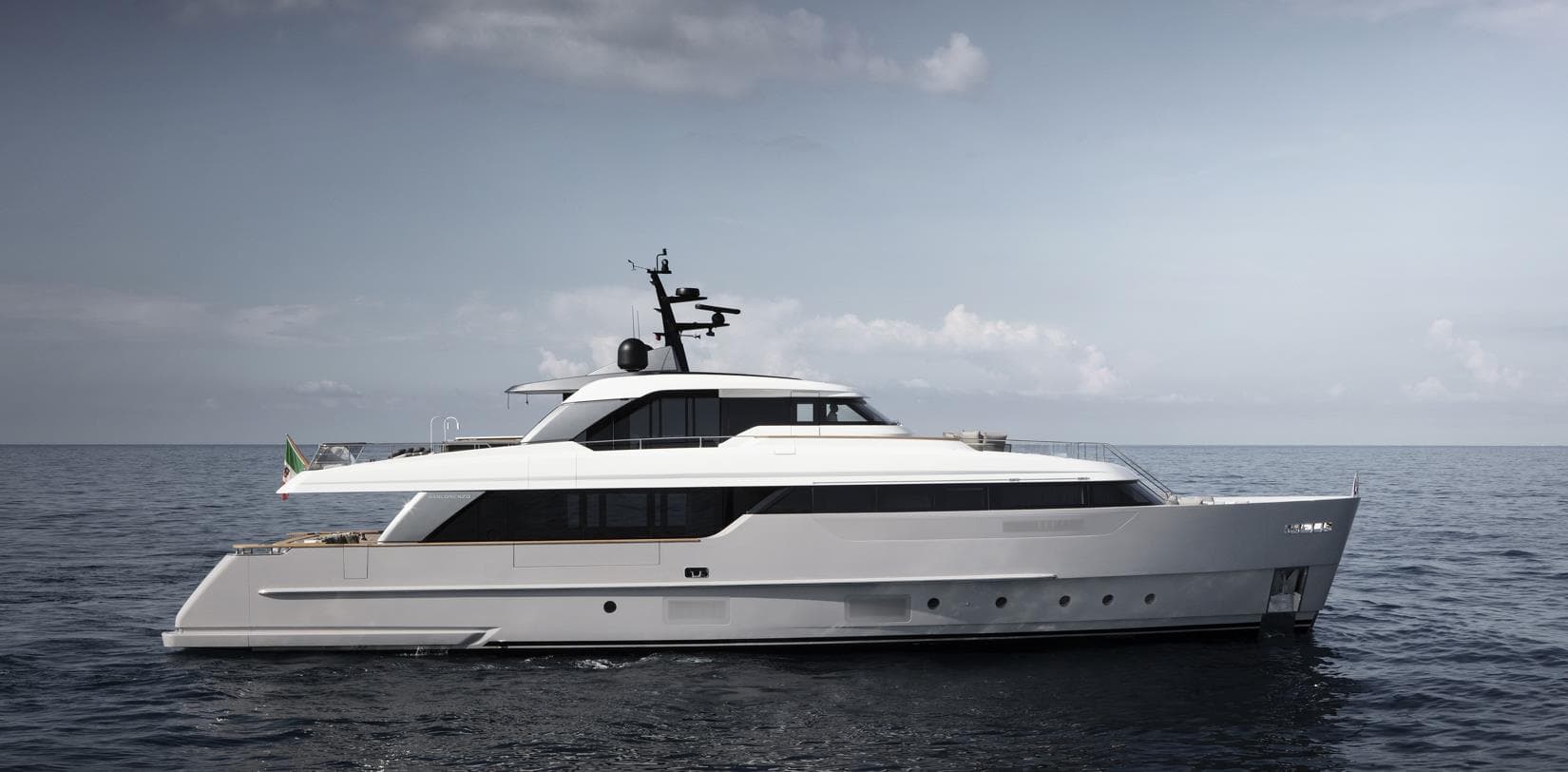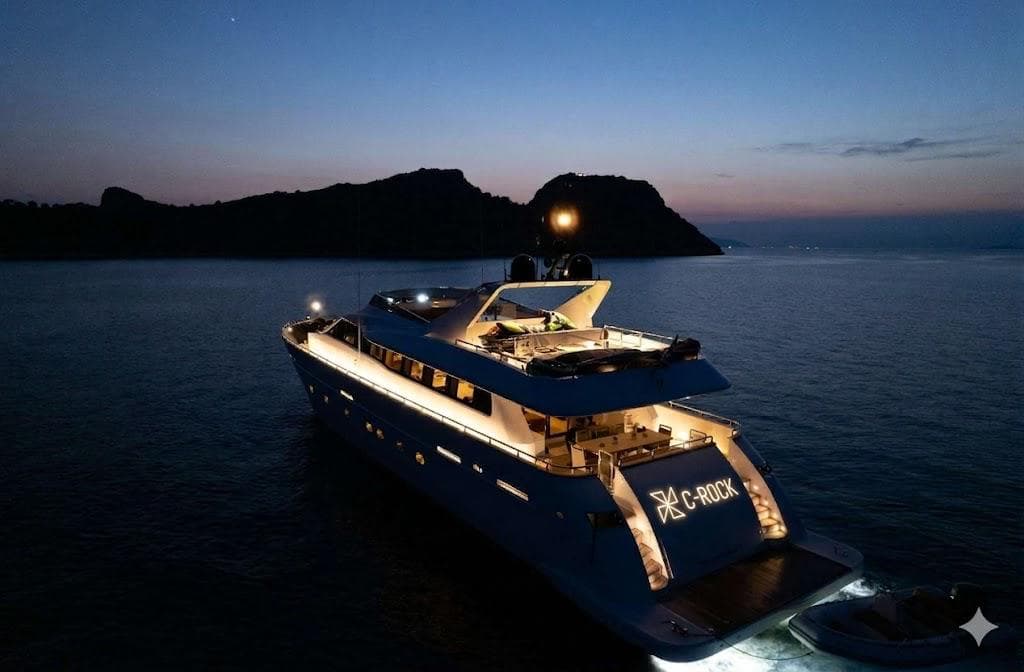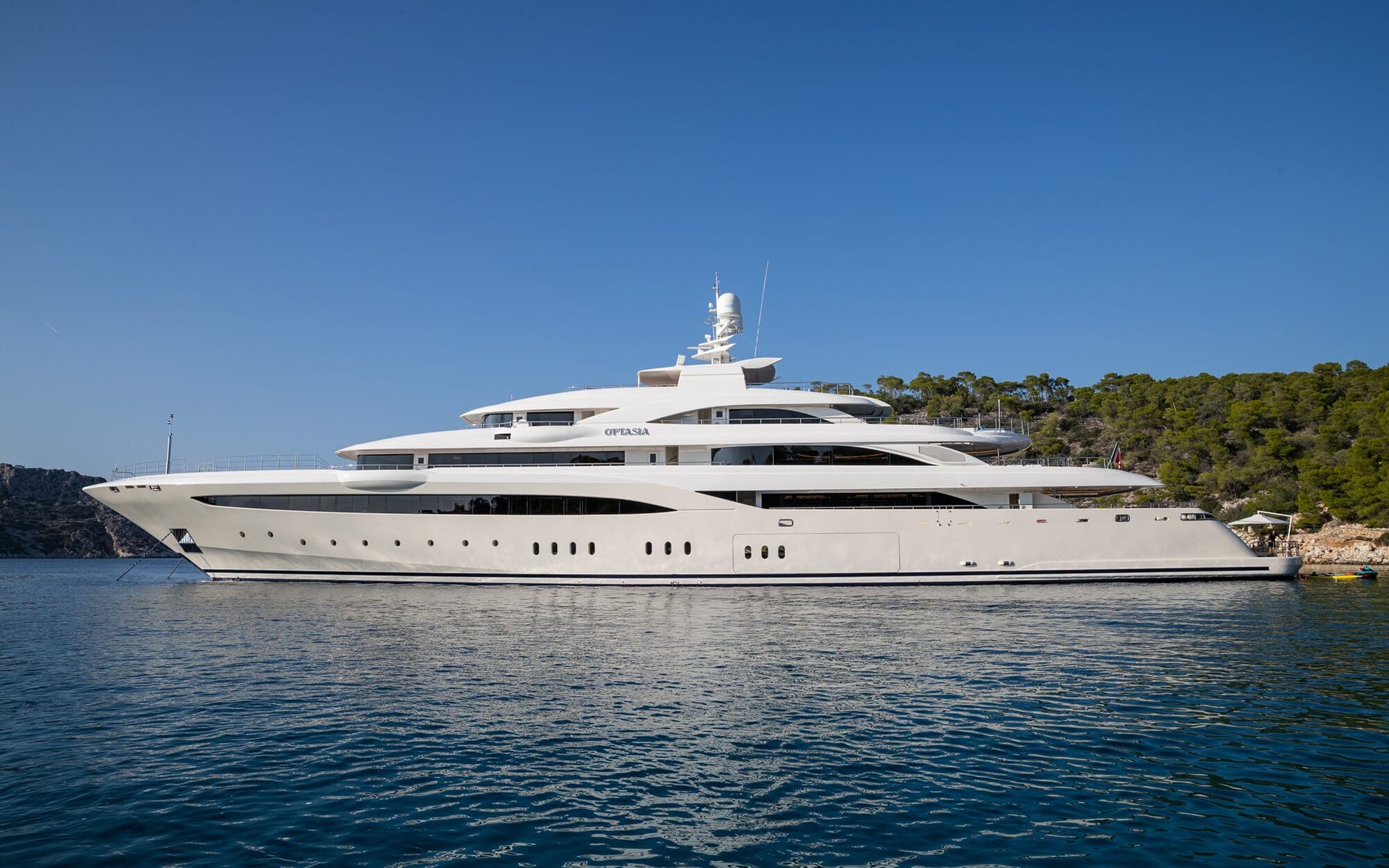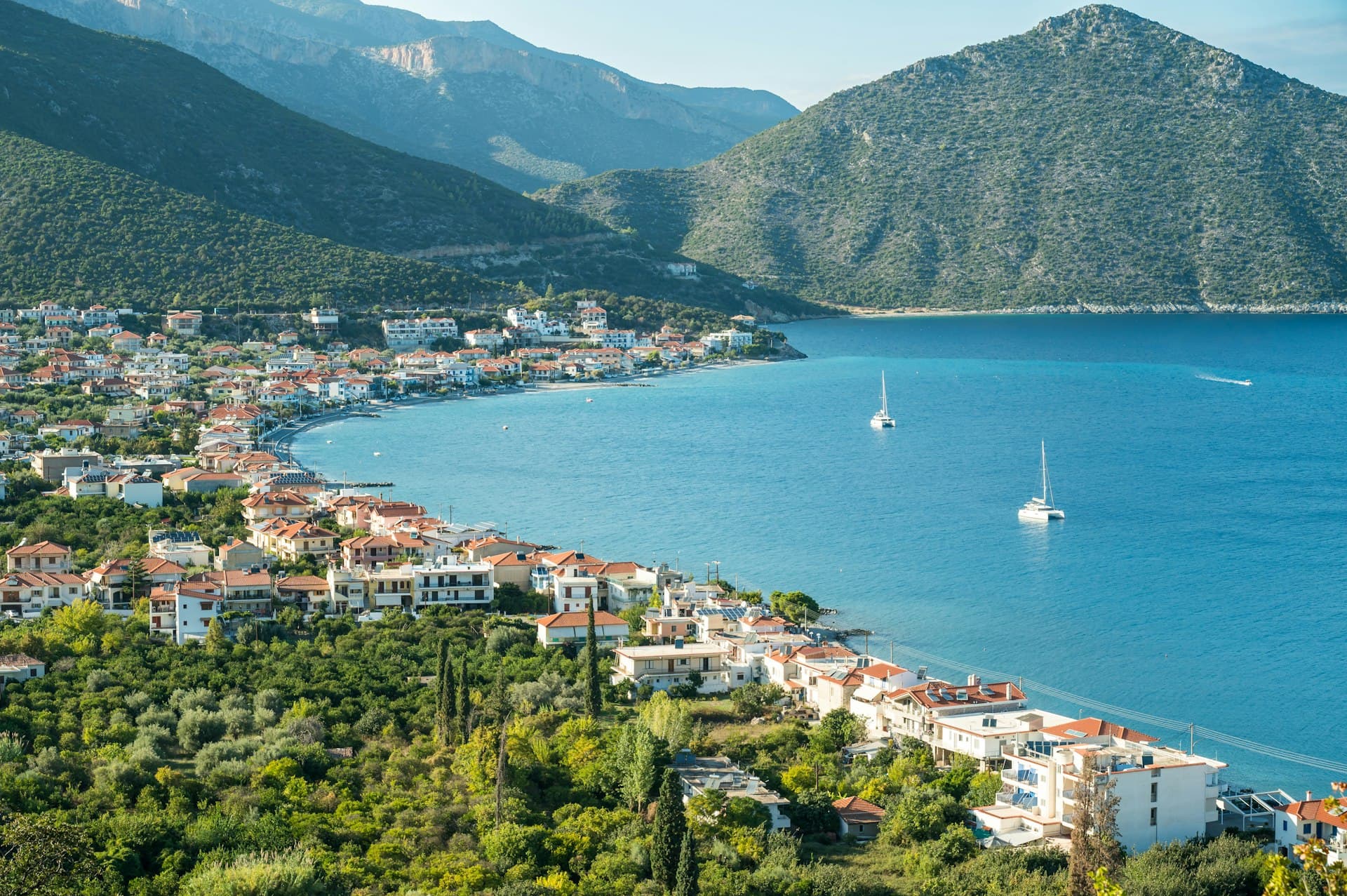
Ten days unlocks the full range of the Cyclades — from the cosmopolitan harbours of Mykonos and Santorini to the volcanic landscapes of Milos and the quiet, cliff-perched villages of Folegandros. This 403-nm circular route from Athens visits ten islands and covers the northern, central, and western Cyclades in a single sweep.
Your VoyageAthens to Kea
Depart Athens for the western Cyclades. Kea is the first island reached from Attica and one of the least touristed. The port of Korissia sits on an ancient settlement; the 6th-century BCE Lion of Kea is carved from bedrock above the hilltop town of Ioulis. Vourkari, a small bay near the port, has waterfront tavernas and a calm overnight anchorage. The island's relative proximity to Athens makes it a favourite weekend destination for Athenians, lending it a local character rare in the Cyclades.
Kea to Syros
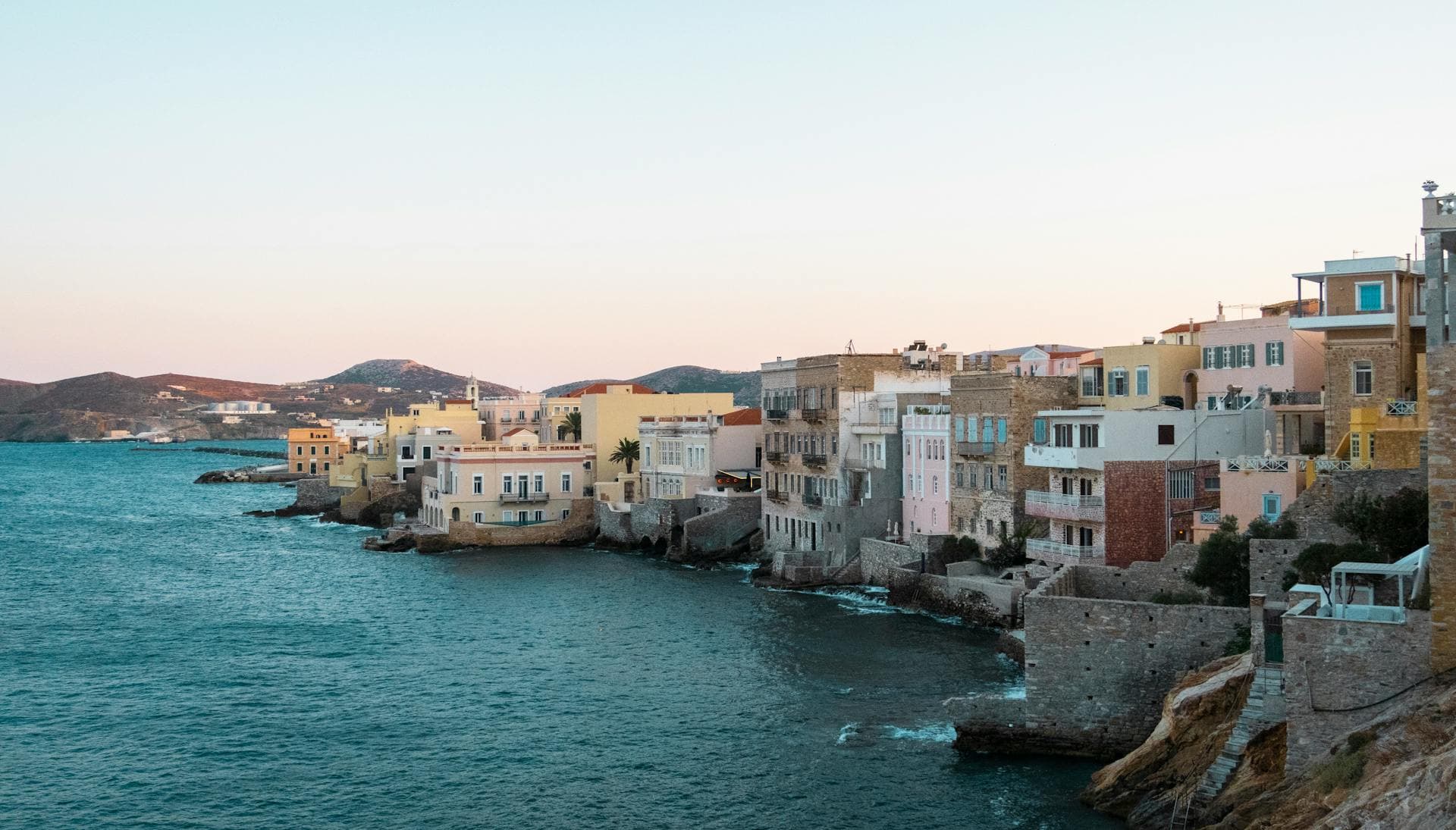
Forty-eight nautical miles east to Ermoupoli, the administrative and cultural capital of the Cyclades. The neoclassical harbour town was one of the most important ports in Greece during the 19th century, and its architecture reflects that prosperity: Miaouli Square, the Apollon Theatre, and the Vaporia mansions. Protected anchorages at Vari (south) and Kini (west) offer alternatives to the main harbour. Syros is known for its loukoumi and year-round cultural calendar.
Syros to Mykonos
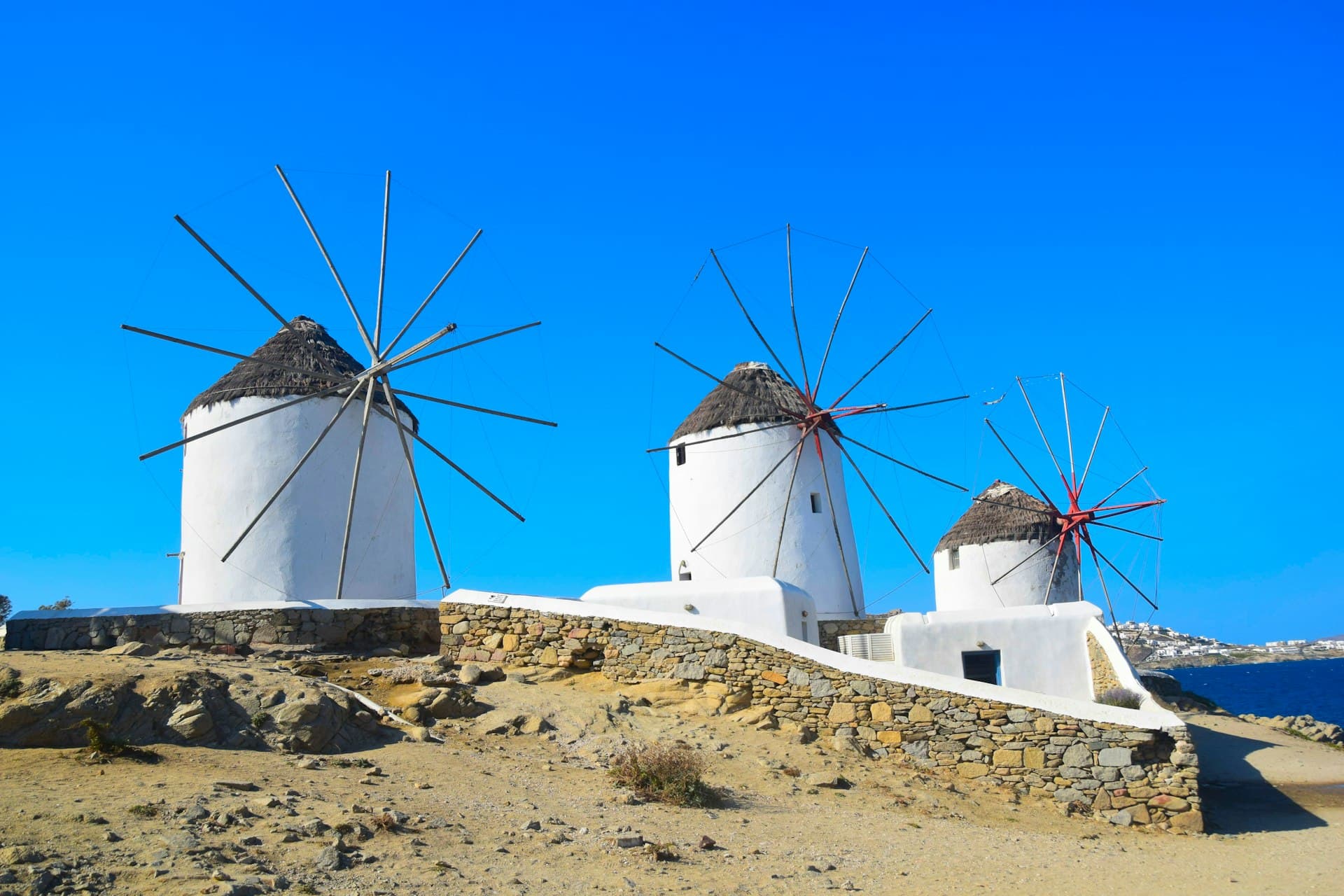
A short 19-nm crossing to Mykonos. The signature windmills, Little Venice waterfront, and vibrant nightlife need no introduction. High-season berthing requires advance arrangement. A half-day trip to the UNESCO-listed archaeological site on Delos — accessible by boat from the old port — is one of the most important classical sites in the Mediterranean.
Mykonos to Paros
South to Paros (32 nm), one of the most balanced islands in the group — well-developed but retaining strong Cycladic identity. The 6th-century Panagia Ekatontapyliani in Paroikia is among the most significant Byzantine churches in Greece. The harbour village of Naoussa, on the north coast, has become a destination in its own right. Anchorage at Kolimbithres offers distinctive wind-sculpted granite formations and clear water.
Paros to Ios
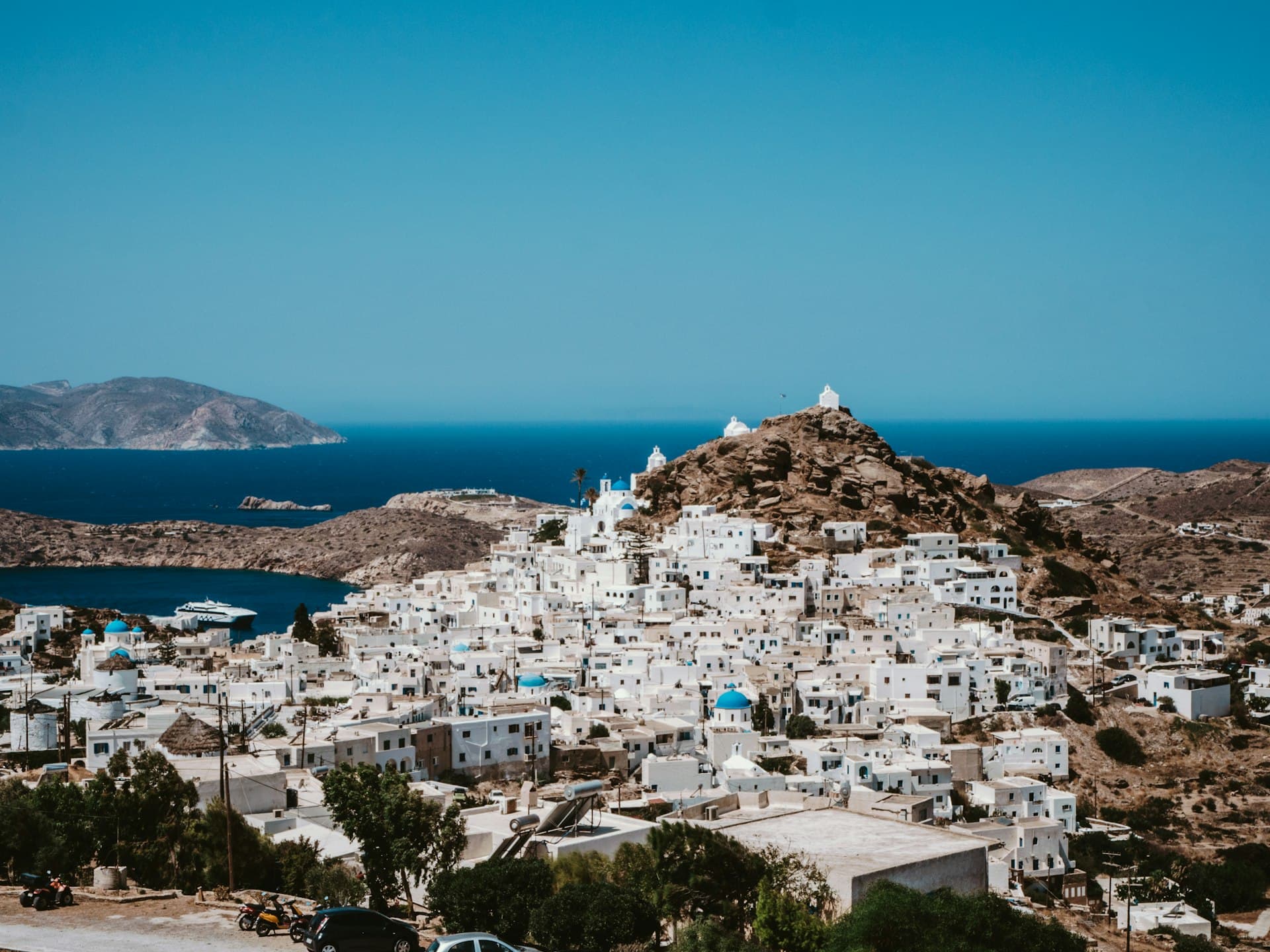
A 35-nm passage to Ios. Once known principally for its youth-oriented nightlife, Ios has matured into a more rounded destination. The hilltop Chora — a cascade of whitewashed houses above the port — is one of the prettiest in the Cyclades. Homer is traditionally believed to have been buried on Ios; the site is marked on the northern part of the island. Manganari beach on the south coast is one of the finest in the Aegean and reachable by tender from an anchorage offshore.
Ios to Santorini
Thirty nautical miles to the most dramatic landfall in the Greek islands. Santorini is the flooded rim of a volcanic caldera, and the approach by sea — the clifftop villages of Fira and Oia appearing above 300-metre walls of layered rock — is unforgettable. Yacht anchorage within the caldera is available but requires attention to depth and holding. Ashore, the island offers world-class dining, the archaeological site at Akrotiri (a Minoan-era town preserved under volcanic ash), and volcanic-sand beaches in black, red, and white. A tender trip to the Kammeni islands for hot springs and volcanic vents is a charter highlight.
Santorini to Folegandros
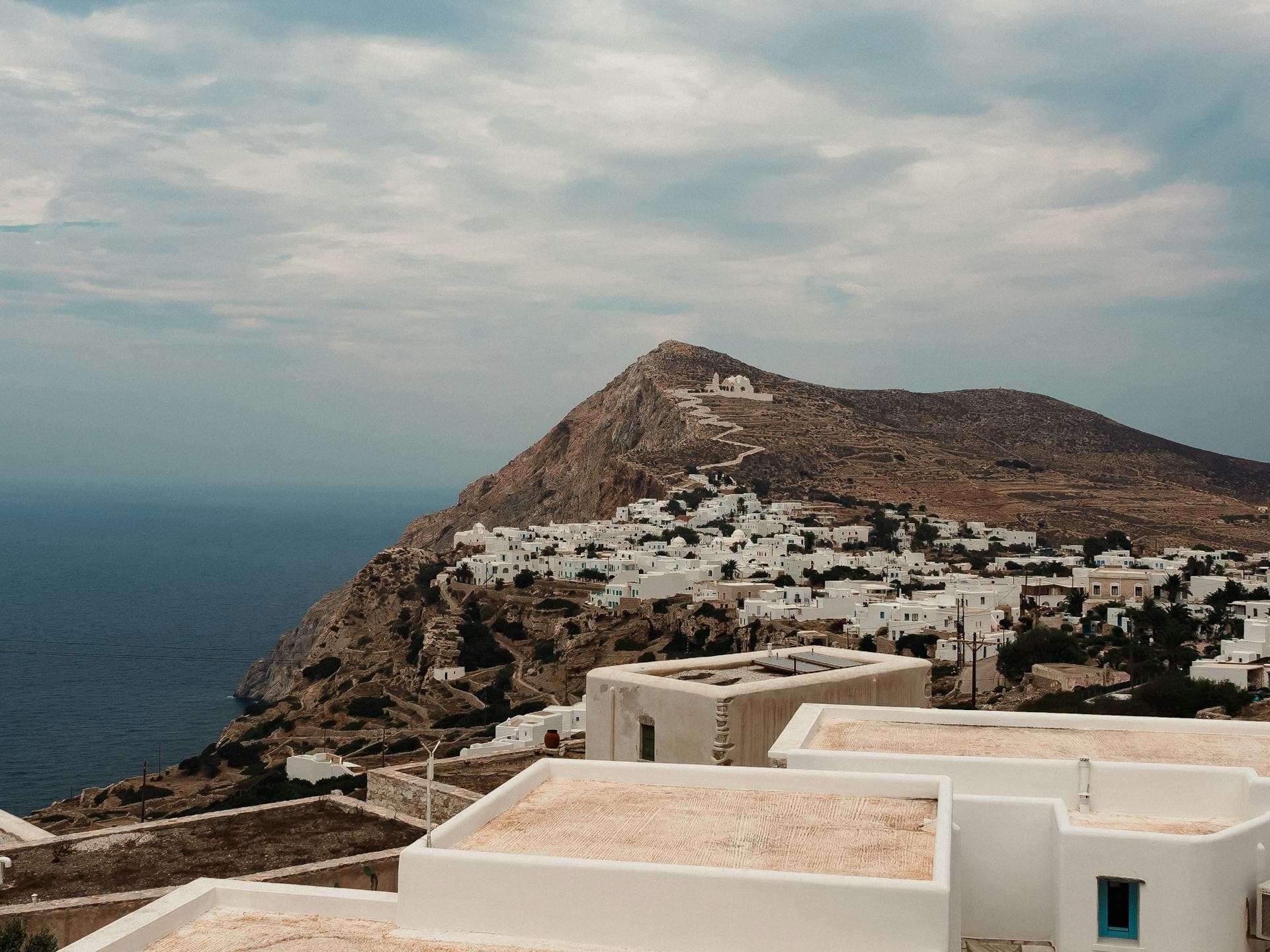
Thirty-one nautical miles west to one of the most authentic islands in the Cyclades. Folegandros has resisted overdevelopment more successfully than most of its neighbours. The Chora — perched on a cliff 200 metres above the sea — has a medieval Kastro quarter where the outer walls of the houses form a continuous defensive wall. The harbour at Karavostasi is small but functional. This is an island for walking, eating well, and experiencing a pace of life that has largely disappeared elsewhere in the group.
Folegandros to Milos
A 40-nm sail to one of the most geologically remarkable islands in the Aegean. Milos is volcanic, and its coastline is a catalogue of extraordinary formations: Kleftiko (sea caves and rock arches accessible only by boat — a former pirate hideout), Sarakiniko (a lunar landscape of white volcanic rock meeting turquoise water), and dozens of multicoloured beaches. The main harbour of Adamas sits inside one of the best natural harbours in the Mediterranean — the flooded volcanic crater itself. Milos has become increasingly popular in recent years and is well-served for dining and provisioning.
Milos to Sifnos
Twenty-seven nautical miles northeast to Sifnos, the gastronomic heart of the Cyclades. The port of Kamares is well-protected. Inland, the medieval cliff-village of Kastro and the bays of Vathi, Faros, and Platis Gialos are all reachable by tender. Sifnos is credited with some of the best traditional cooking in the Greek islands — dishes like mastelo (lamb slow-cooked in a clay pot) and revithada (chickpea stew) have made local restaurants destinations in their own right.
Sifnos to Kythnos
A 40-nm run north to Kythnos, one of the quietest islands in the western Cyclades. Merichas and Loutra are the main harbours; Loutra provides reliable Meltemi protection and has natural hot springs on the waterfront. The narrow sandbar at Kolona — connecting a headland to the main island across a double bay — is one of the most distinctive anchorages in Greece. The twin villages of Chora and Dryopis are small, car-free, and largely unchanged.
Kythnos to Athens
Final passage of 52 nm back to Athens. Depending on timing, a last swim stop along the Attic coast — Vouliagmeni or Sounio — is a good way to close the charter.
Season
May through October. This route covers open-water passages between the central and western Cyclades; the Meltemi (July–August) can produce rough conditions on east-west legs (particularly Santorini–Folegandros–Milos). June and September offer the best balance of warm weather and moderate wind.
Embarkation
Flisvos Marina or Zea Marina (Piraeus) are the standard Athens starting points. Lavrion (closer to Kea) is an alternative.
Provisioning
Full provisioning in Athens. Mykonos, Paros, and Santorini offer comprehensive resupply. Smaller islands (Folegandros, Kythnos) have limited supplies — plan ahead.
This itinerary is a suggestion.
Your captain will adapt the route based on weather, wind conditions, and your preferences. Tinos and Naxos are natural additions if conditions or interests warrant.
| Day | From | To | NM | |
|---|---|---|---|---|
| 1 | Athens | → | Kea | 49 |
| 2 | Kea | → | Syros | 48 |
| 3 | Syros | → | Mykonos | 19 |
| 4 | Mykonos | → | Paros | 32 |
| 5 | Paros | → | Ios | 35 |
| 6 | Ios | → | Santorini | 30 |
| 7 | Santorini | → | Folegandros | 31 |
| 8 | Folegandros | → | Milos | 40 |
| 9 | Milos | → | Sifnos | 27 |
| 10 | Sifnos | → | Kythnos | 40 |
| 11 | Kythnos | → | Athens | 52 |
| Total | 403 | |||