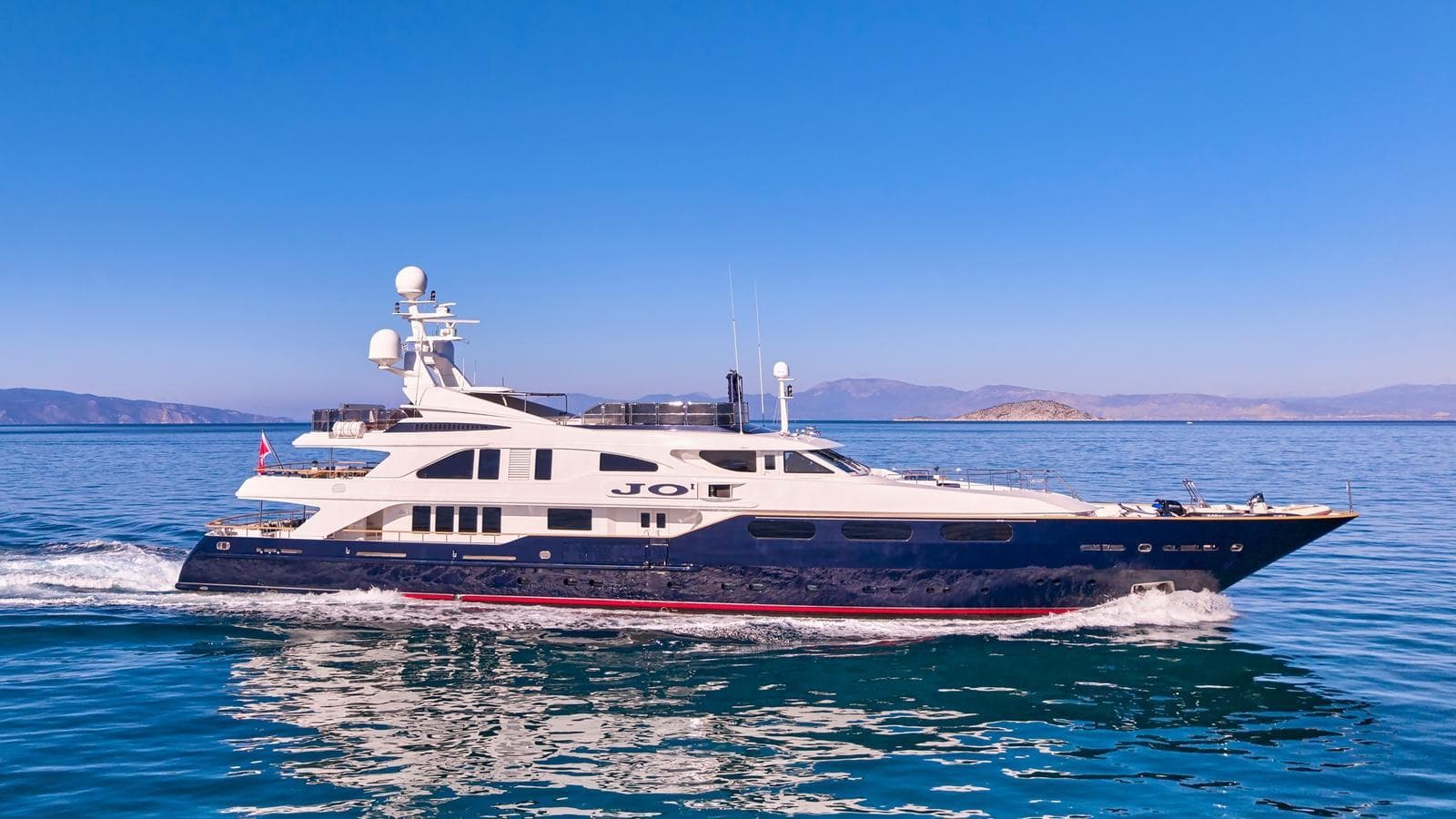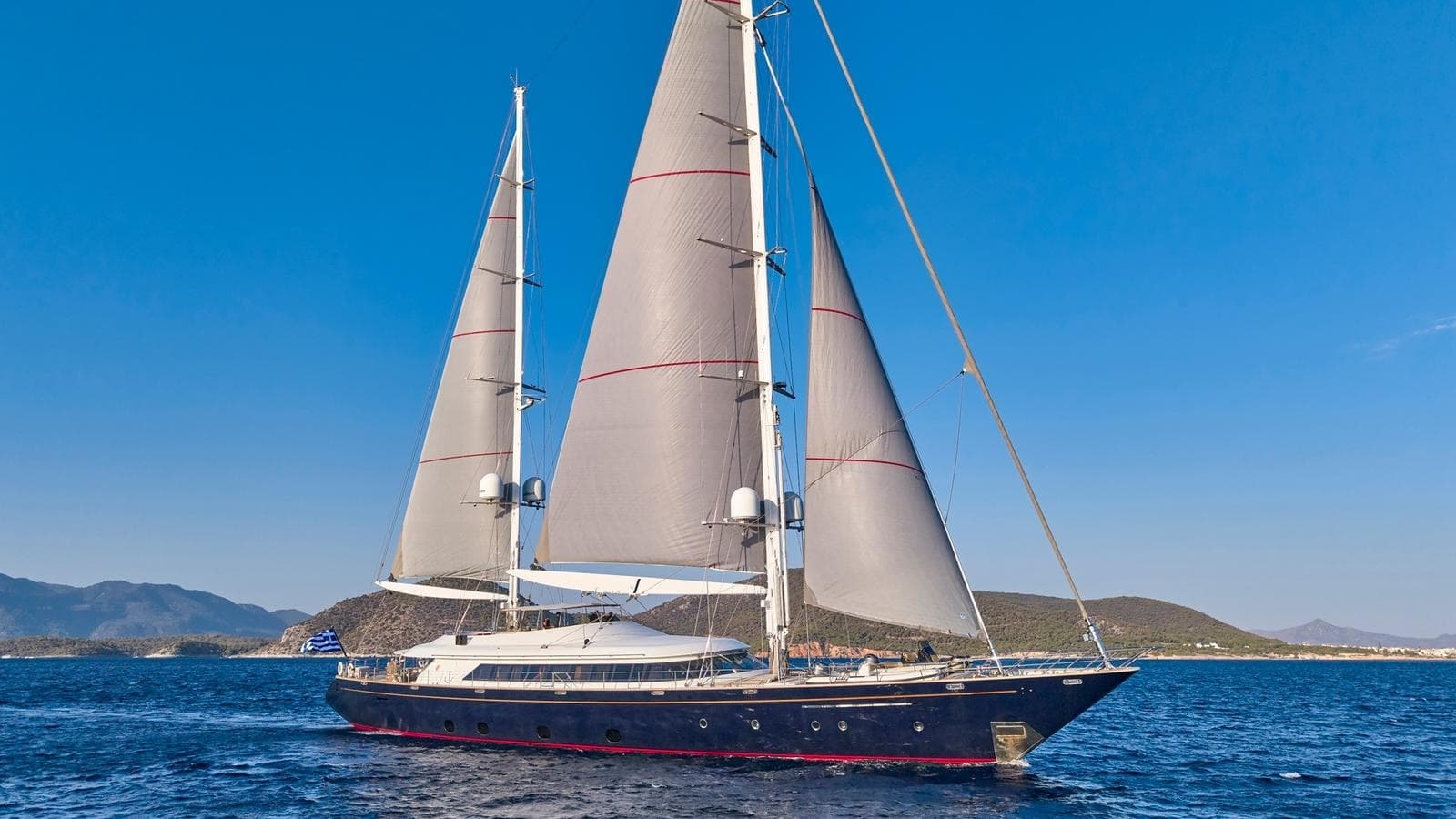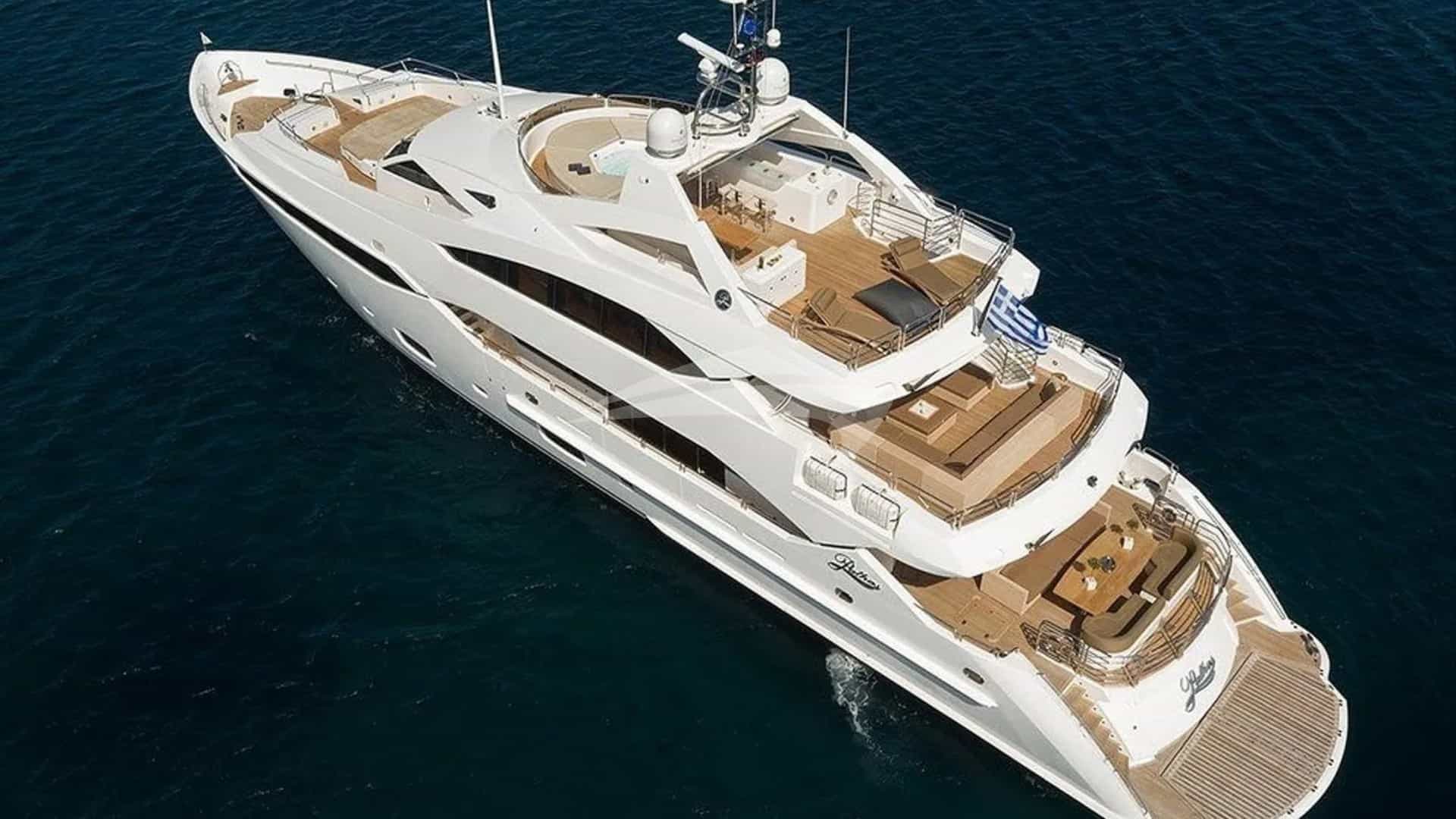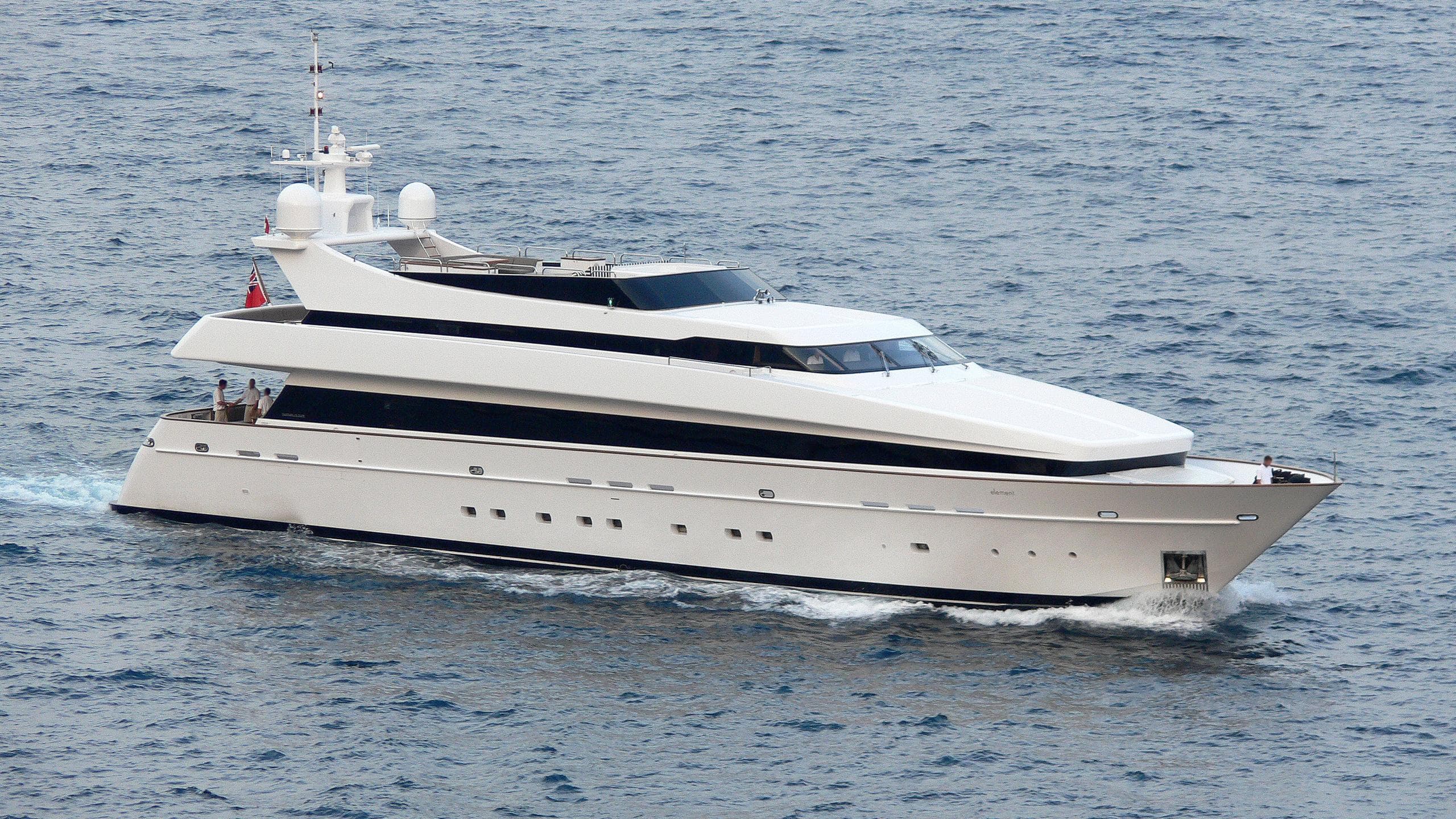
Charter in Ios: What to Expect
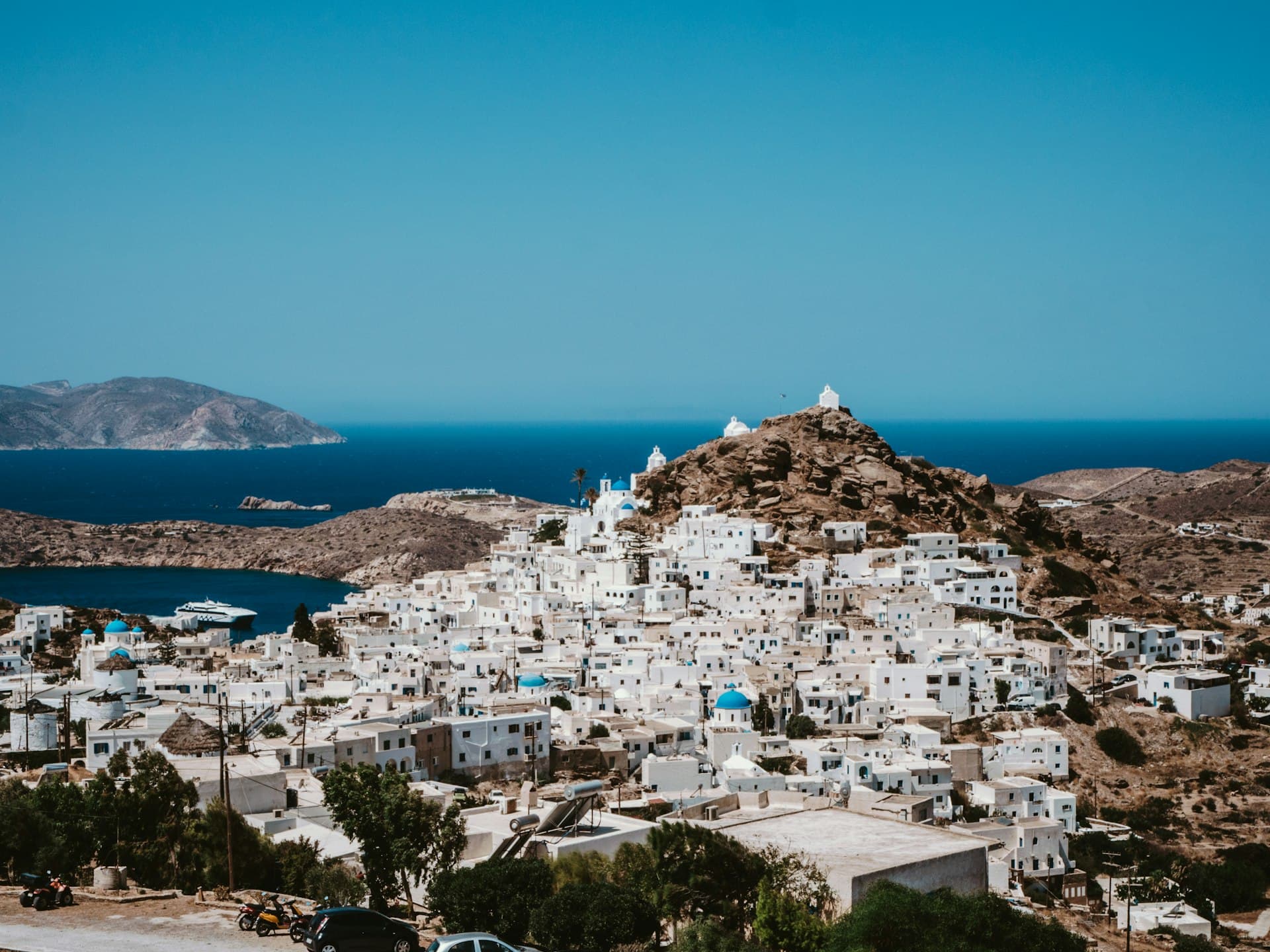
Ios sits in the central Cyclades, between Santorini to the south and Naxos to the north — a natural waypoint on an Aegean charter itinerary. The island is smaller than its reputation suggests, so a yacht gives you the advantage: move between the exposed beaches and sheltered coves at will, arriving before the day-trippers and leaving at sunset with the horizon to yourself. Expect sculpted hills, deep-blue inlets, and a port town — Ios Town, known locally as the Chora — that glows amber at dusk from any anchorage in the bay.
Anchorages & Highlights
Ios has a range of anchorages for different winds and crew preferences. Mylopotas Bay, the island's widest beach, is a sandy anchorage with good holding and easy tender access — a swim-stop that suits families before pressing on. For more privacy, Koumbara Bay to the northwest is more secluded, with rocky surrounds and fewer vessels at anchor. Magganari Bay in the deep south is the best anchorage on Ios: a double-headed bay with turquoise shallows, little swell, and the stillness that makes a full-day stop worth it. The main harbour at Ios Port (Ormos) handles provisioning, shore excursions, and overnight berths when the weather demands, though the anchorage in the bay ahead of it is preferable in settled conditions.
Best Time to Charter in Ios
The Meltemi — the prevailing northerly of an Aegean summer — reaches Ios with moderate force through July and August, a competent sailor's season that needs an experienced eye on routing. June and September are the balance: warm seas, manageable winds, and noticeably thinner crowds ashore and at anchor. Early October still works for experienced crews after near-empty anchorages and clear autumn light. Aris Drivas Yachting has sailed these waters since 1972 and can advise on departure timing, vessel selection, and itinerary sequencing around Ios and the wider Cyclades.
Getting There
Ios is most easily reached by yacht from Piraeus or Lavrion on the Attic coast — roughly 90 to 110 nautical miles depending on routing, an overnight sail or a full day's motor in light airs. Santorini (Thira) is about 20 nautical miles south, Naxos about 25 to the northwest, so Ios fits naturally into a charter arc through the southern Cyclades. For guests joining mid-itinerary, high-speed ferries from Piraeus allow easy crew changes at Ios Port. Contact our charter team to discuss an itinerary built around Ios and the wider Cyclades.
- Magganari Bay: a deep, double-headed anchorage in the south with strong shelter and turquoise shallows
- Koumbara Bay: a secluded northwest cove with rocky scenery and little charter traffic
- Mylopotas Bay: wide sandy anchorage with good holding, suited to families and longer swim-stops
- Central Cyclades position — Santorini 20nm south, Naxos 25nm northwest — for efficient multi-island routing
- Ios Chora reached by tender from the bay, with hilltop views over the anchorage at dusk
- June and September for the best wind-to-crowd balance of the season
June and September are the best window for an Ios charter: warm sea, a manageable Meltemi, and anchorages quieter than July or August allow. Peak summer brings reliable winds of 15–25 knots from the north — good for performance sailing but calling for careful passage planning, especially on the exposed southern approaches. Early October extends the season with calm seas, clear visibility, and an island back to its own quieter rhythm.
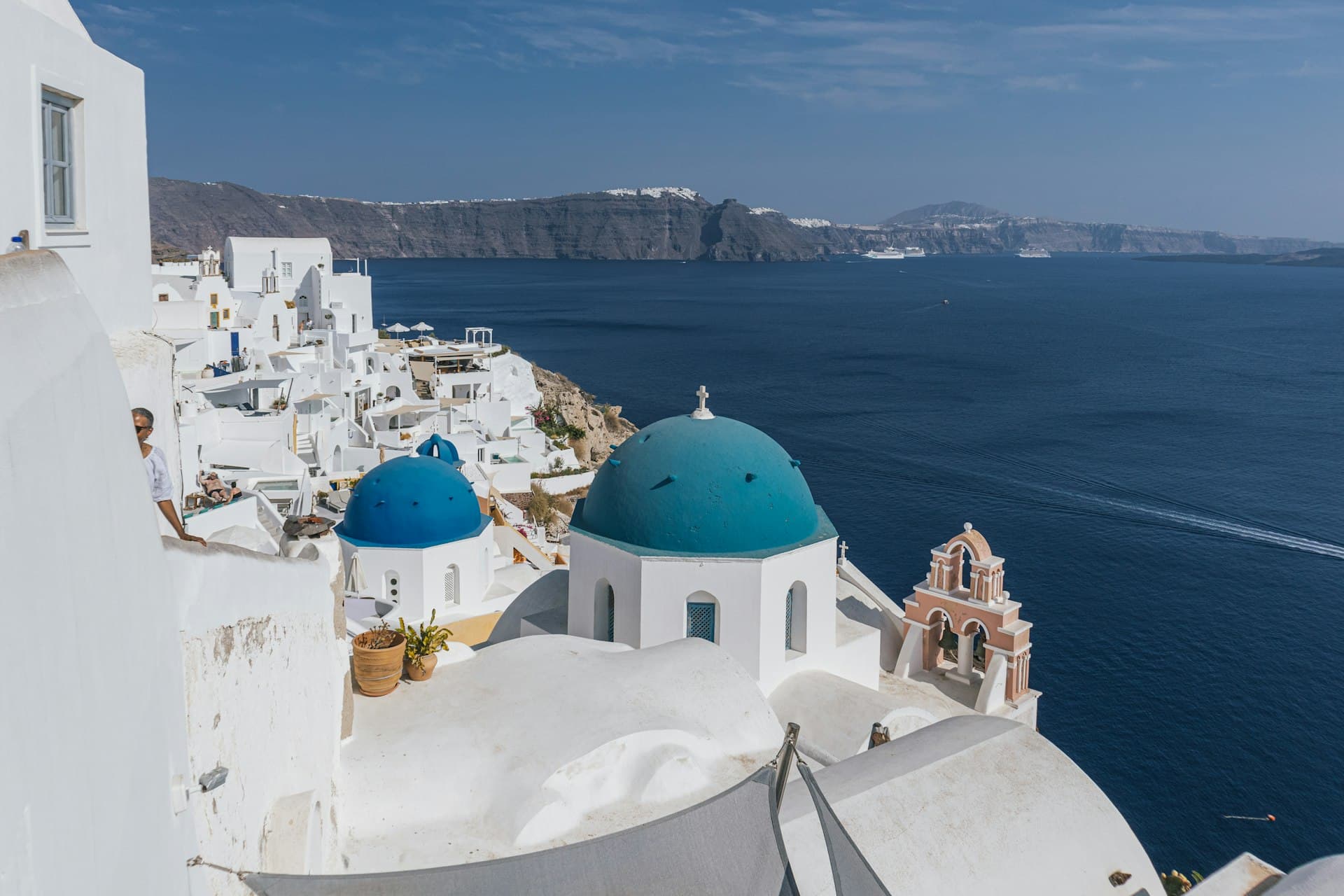
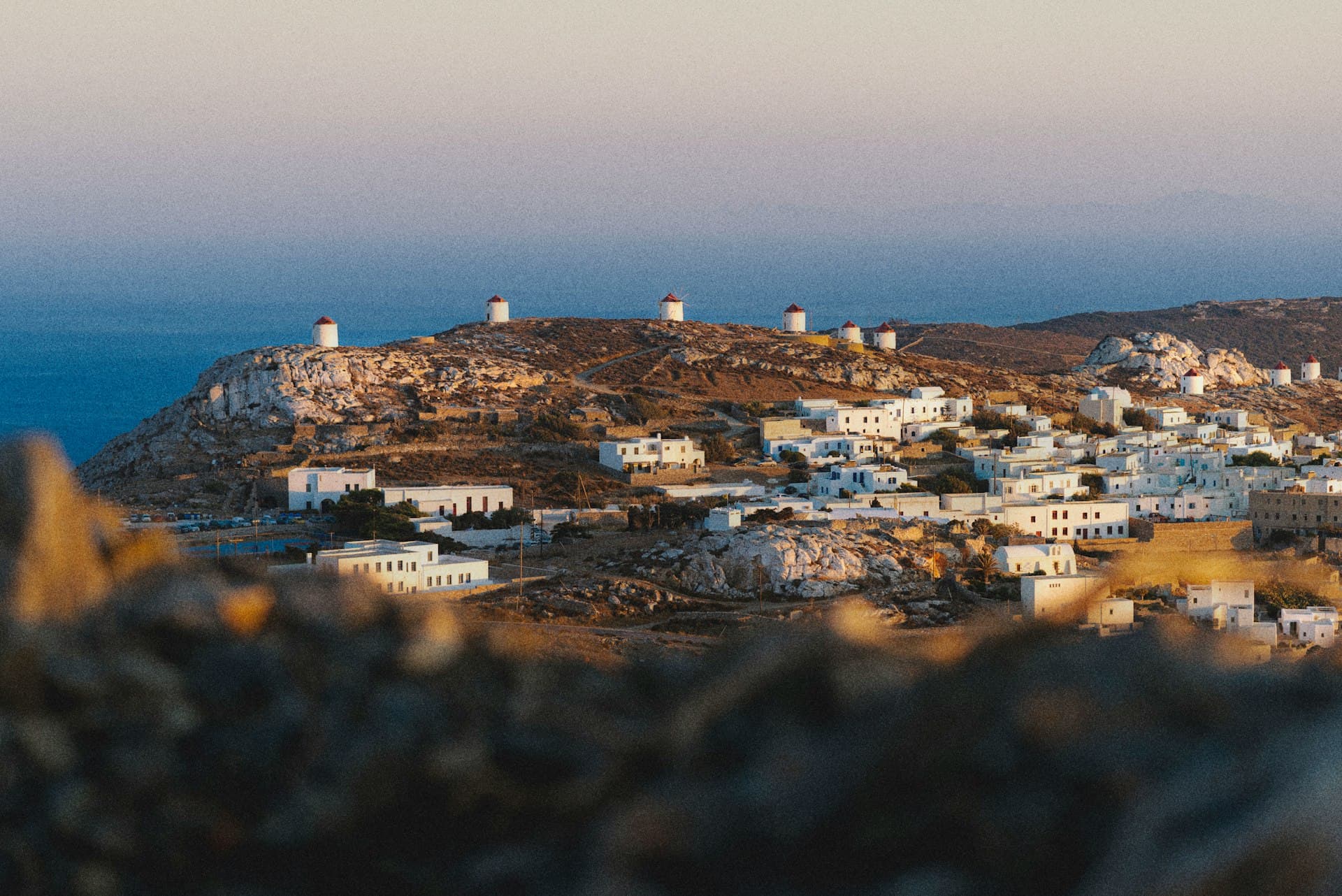
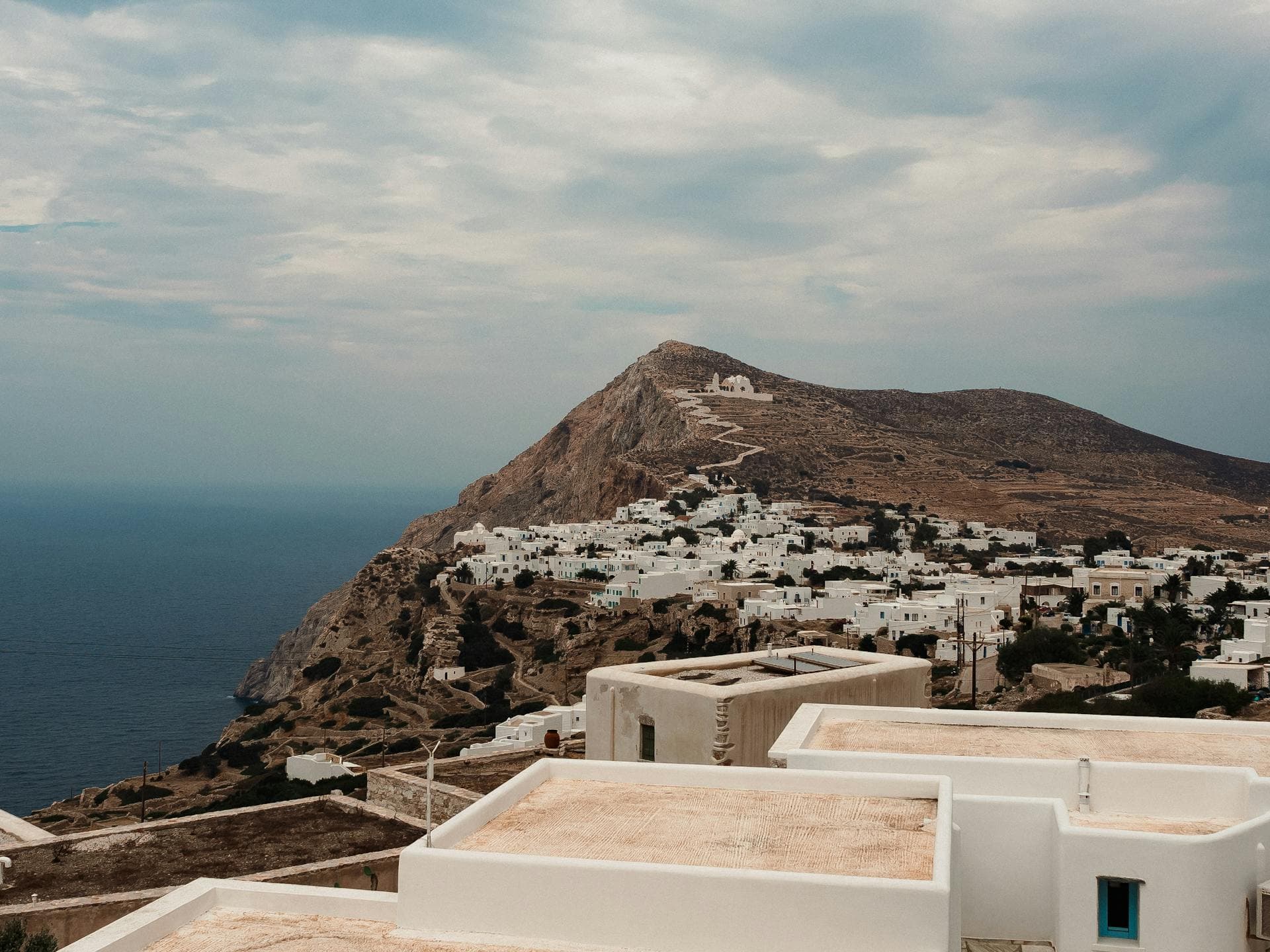
Ios lies between Naxos and Santorini in the heart of the Cyclades, and it has quietly evolved from its reputation as a backpacker party island into one of the most appealing stops on any Cycladic charter. The hilltop Chora is stunning — a labyrinth of whitewashed alleys, blue-domed churches, and windmills overlooking the harbour.
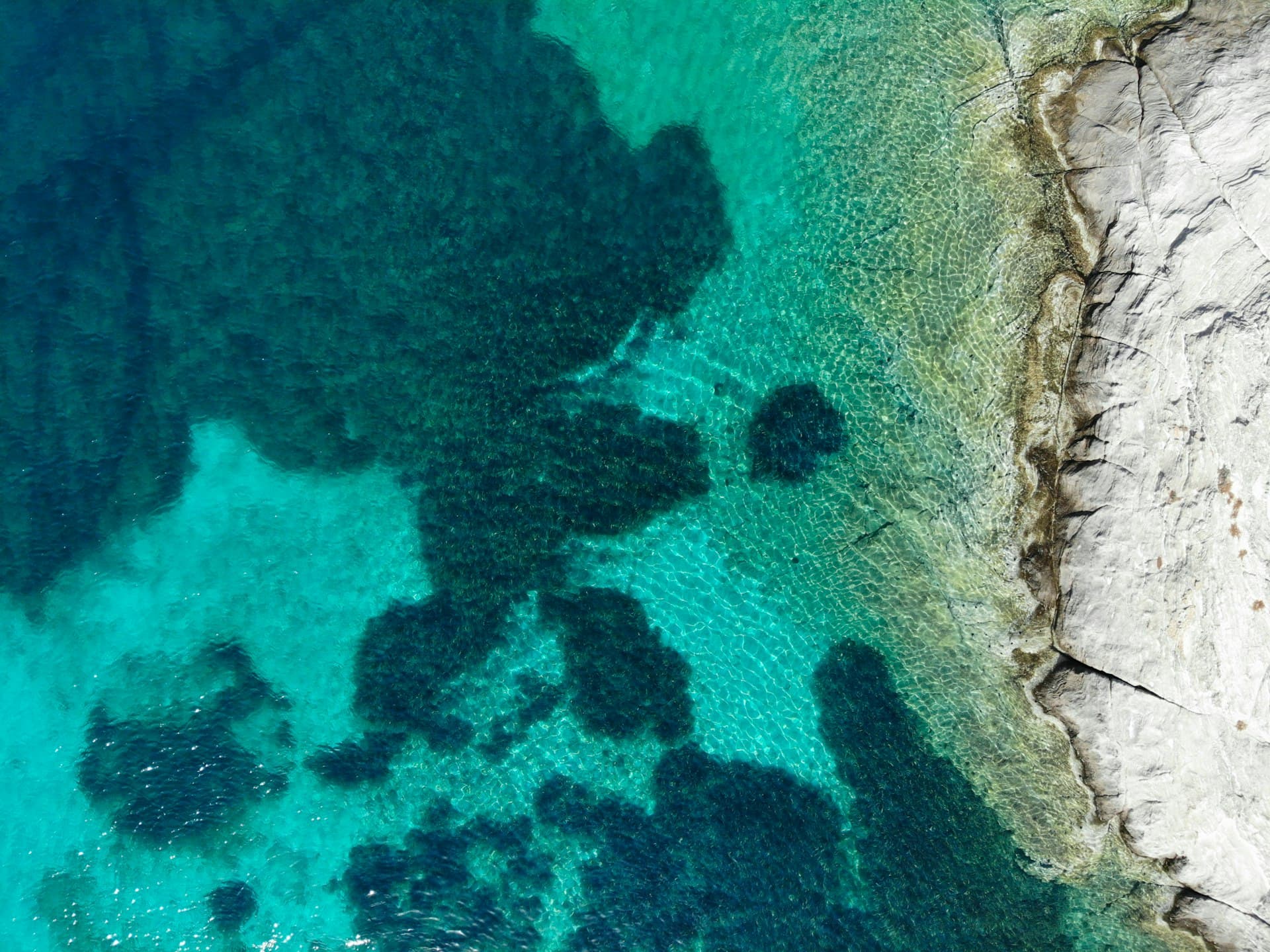
Mylopotas, the main beach, is a long crescent of golden sand considered one of the finest in the Cyclades. But by yacht you can reach Manganari on the south coast — a series of connected bays with turquoise water and almost no development — or the secluded cove at Kalamos.
Ancient tradition holds that Homer is buried on Ios, and a site in the island's north is still known as Homer's Tomb. The island's nightlife is concentrated in the Chora and can be as lively or as quiet as you choose — a yacht anchored in the bay gives you the best of both worlds.
Mylopotas — one of the finest beaches in the Cyclades
Manganari bays — turquoise water, boat-access serenity
Hilltop Chora with windmills and sunset views
Homer's Tomb — ancient burial site on the north coast
Midway between Naxos and Santorini