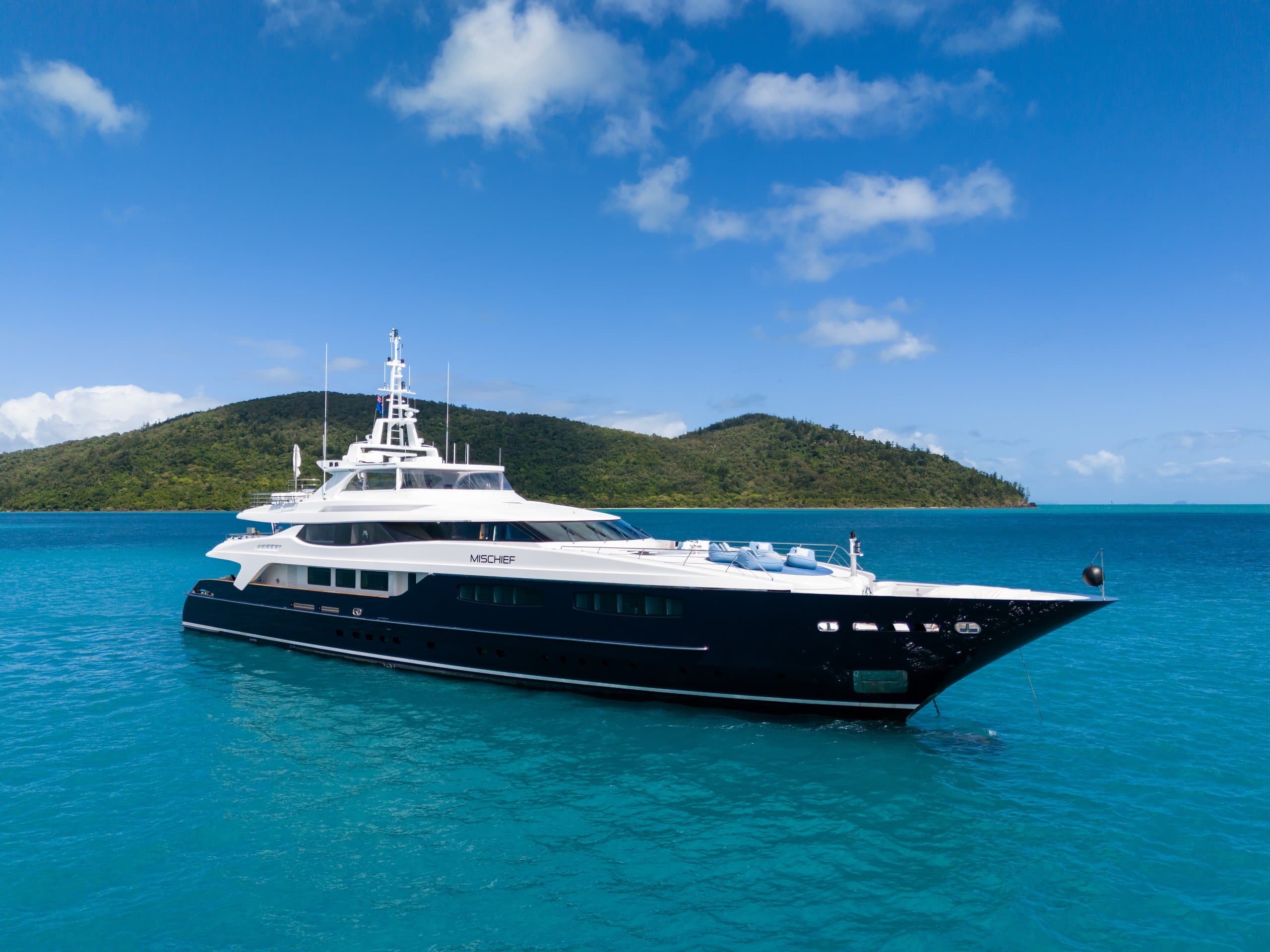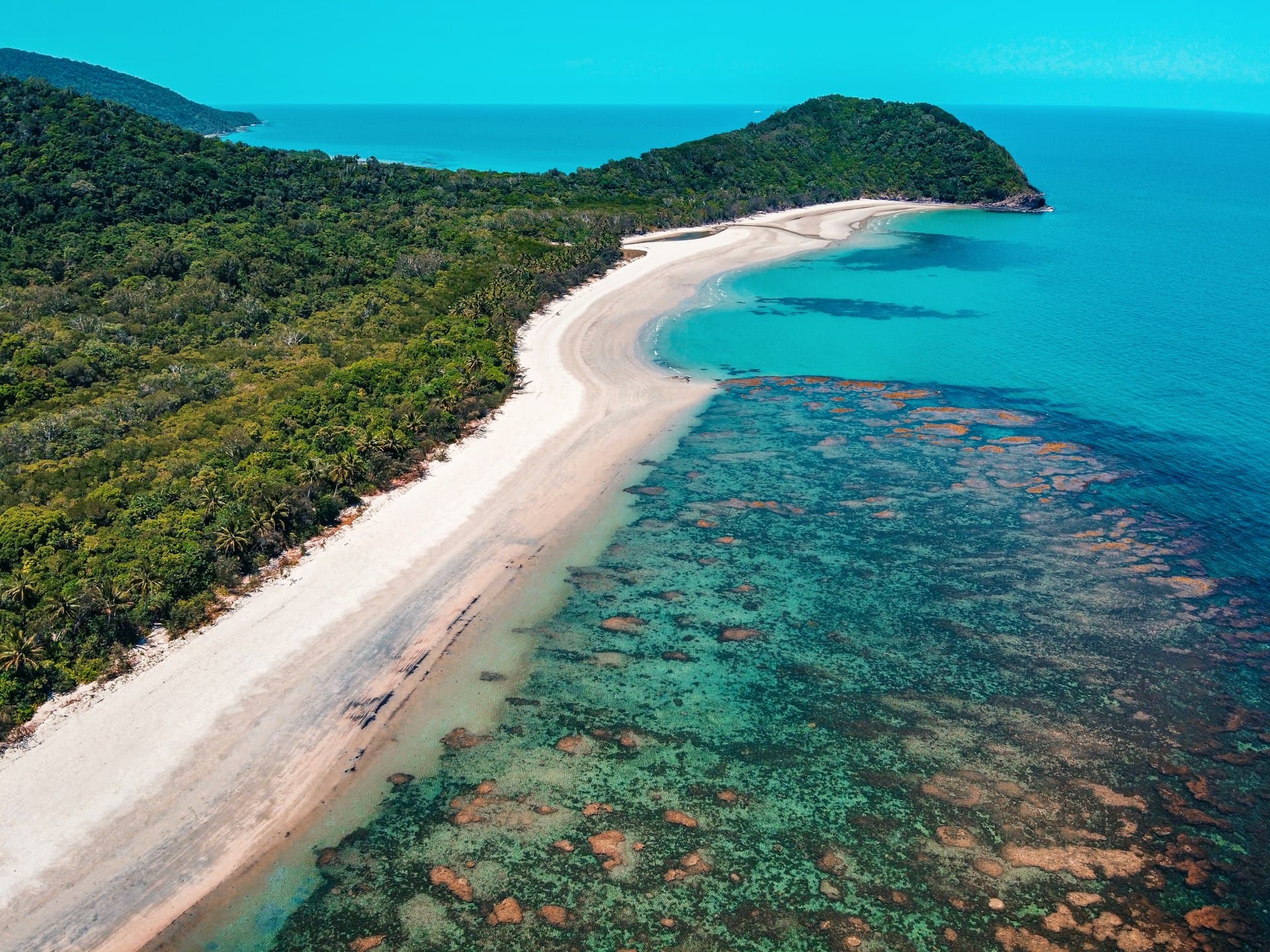
The figures are difficult to absorb: 2,900 individual reefs, 900 islands, a coral structure visible from space. The Great Barrier Reef superyacht charter offers something the numbers cannot convey — the particular quality of light through forty metres of clear water, the way a coral bommie rises from deep blue to turquoise in the space of a few body-lengths, the silence beneath the surface.
The Whitsunday Islands, halfway along the reef’s length, are the charter hub — sheltered anchorages, white silica beaches (Whitehaven Beach is among the finest in the world), and reliable trade winds for sailing. Further north, the Coral Sea and the ribbon reefs of the outer barrier offer a more remote experience, accessible only by a vessel with genuine offshore capability.
The season runs broadly from June to October — outside the cyclone season, with settled southeast trades and water temperatures around 24°C. November to April brings higher temperatures, occasional cyclone risk and exceptional diving visibility in the Coral Sea.
- Outer ribbon reefs — diving and snorkelling in near-pristine conditions
- Whitehaven Beach — 7km of silica sand accessible only by sea
- Coral Sea crossing to isolated Osprey Reef and Holmes Reef
- Whitsunday Islands sailing in steady southeast trades
The Australian winter (June–October) brings settled southeast trade winds, clear skies and water temperatures of 22–24°C — ideal for diving and sailing. The Whitsundays are at their best in July and August. November to April is the wet season, with higher humidity and cyclone risk in the Coral Sea, though diving visibility in some outer reef areas peaks during this period.