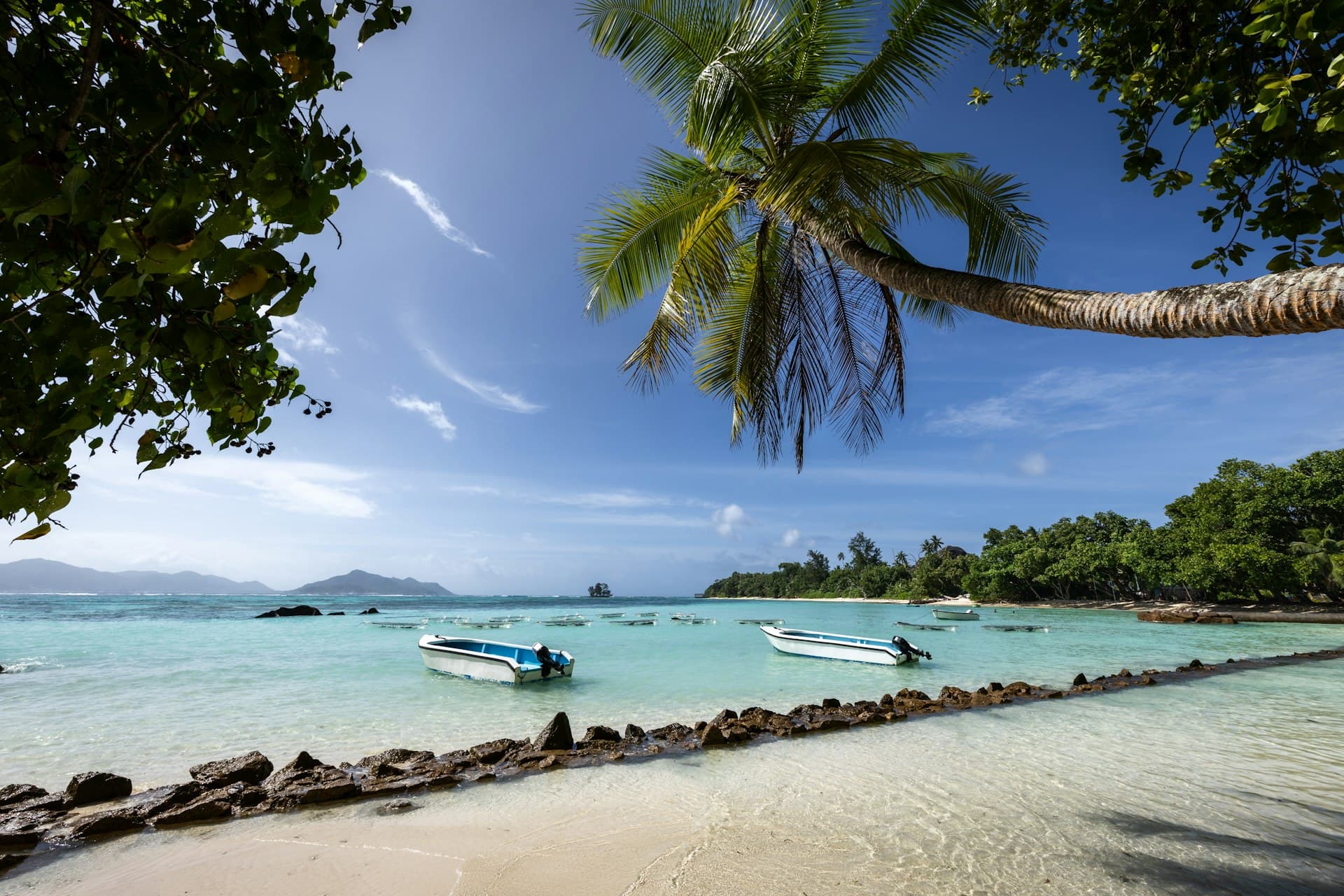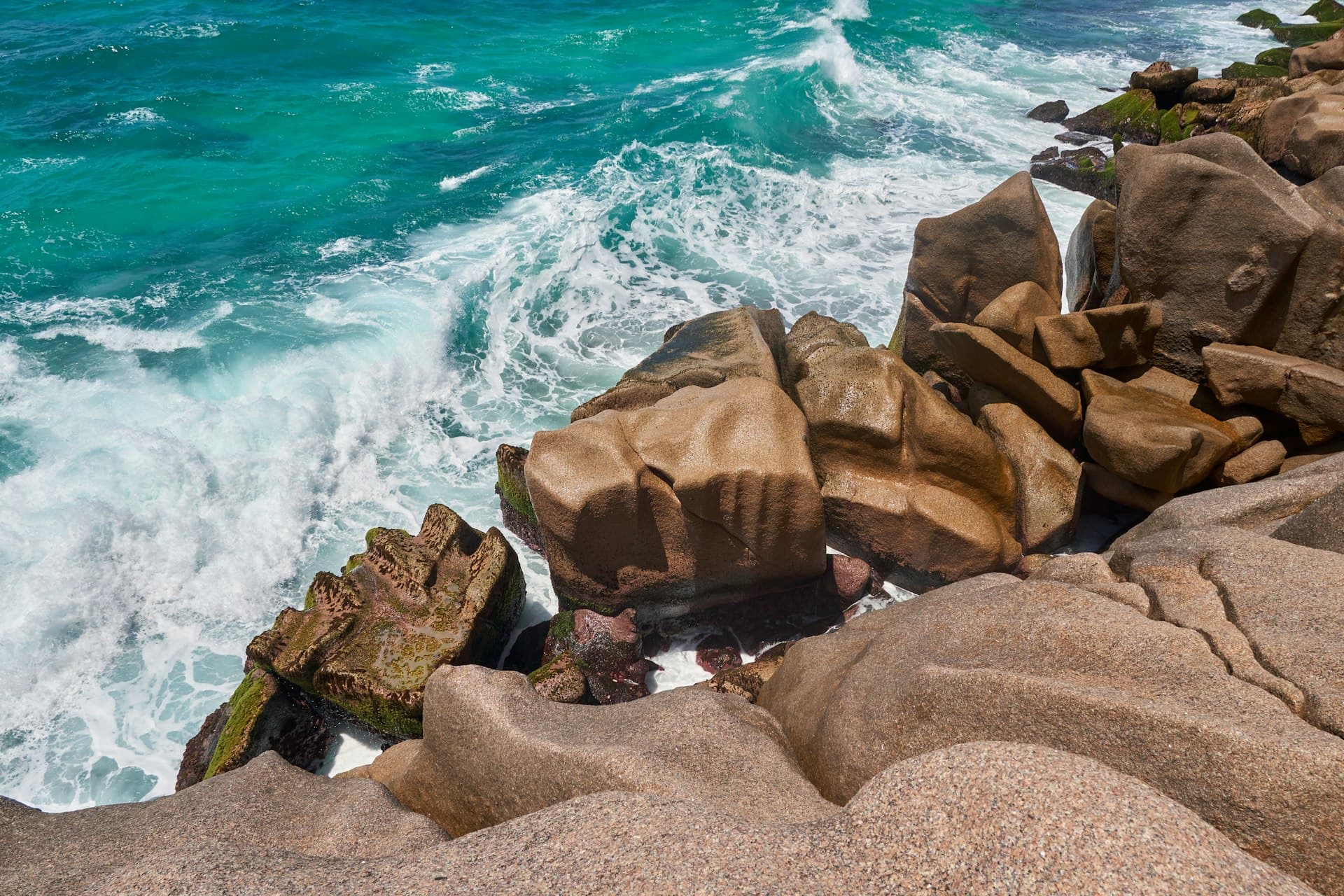
Granite. That is what distinguishes the Seychelles from every other Indian Ocean archipelago. While neighbouring island groups are built on coral and sand — low, flat, and vulnerable — the inner Seychelles rise from billion-year-old rock, the remnants of Gondwana’s break-up. The result is an archipelago of forested peaks, boulder-framed coves, and beaches that look sculpted rather than deposited. For a charter yacht, this geological drama translates into anchorages with genuine shelter, varied topography ashore, and a visual landscape that changes with every headland.
Granite islands in a warm sea — landforms old enough to predate most life on Earth, surrounded by water full of it.
The Inner Islands
The west coast of Mahe holds the best anchorages: Baie Ternay and Port Launay are marine parks with mooring buoys, clear water over sandy bottoms, and reef snorkelling within swimming distance of the yacht. The southeast coast is more exposed but rewards with empty beaches and stronger currents that attract larger fish.
The Outer Islands and Aldabra
Beyond the inner granitic group, the Seychelles extends across 1.4 million square kilometres of ocean to include low-lying coralline islands and atolls. The most significant is Aldabra, a raised coral atoll 1,100 kilometres southwest of Mahe and a UNESCO World Heritage Site since 1982. Aldabra supports the world’s largest population of giant tortoises — roughly 100,000 — and its lagoon, which empties and fills with the tide through four main channels, hosts significant populations of green turtles, manta rays, and reef sharks.
Reaching Aldabra requires a dedicated expedition charter of at least two weeks, with passages across open ocean. The reward is one of the most ecologically intact environments remaining on the planet, managed by the Seychelles Islands Foundation with strict visitor protocols.
A Typical Charter Week
A seven-day inner islands itinerary typically follows this rhythm:
Transit distances in the inner islands are short — rarely more than 20 nautical miles between stops — leaving most of each day available for shore excursions, diving, and water sports.
Season and Conditions
The Seychelles lies outside the cyclone belt, making it a year-round charter destination with important seasonal variations. The northwest monsoon (November to March) brings warmer, calmer conditions — air temperatures around 30C, lighter winds, and the best underwater visibility (up to 30 metres). This is peak season.
The southeast trades (May to September) are cooler (25-27C), windier (15-25 knots), and the sea on exposed southern coasts can build. However, this is also when whale sharks appear around Mahe and Praslin, drawn by the plankton-rich currents. The western coasts remain sheltered during this period, and many experienced charterers prefer the southeast season for its sailing conditions and reduced traffic.
The transition months (April and October-November) are the calmest overall — light winds, flat seas, warm water — and represent the best windows for reaching the outer islands or diving exposed sites that are uncomfortable in either monsoon.
Cuisine and Character
Seychellois cuisine reflects the islands’ position at a crossroads of African, Indian, Chinese, and French influences. Grilled fish with chilli-lime sauce, octopus curry in coconut milk, breadfruit chips, and ladob (a dessert of plantain and sweet potato cooked in coconut cream) are staples. Local restaurants on Mahe and Praslin range from beachside grills to refined Creole kitchens. A good charter chef will source from the Victoria market and adapt the local repertoire for on-board dining — expect fresh-caught tuna seared with local vanilla, and fruit you may not have encountered before.
- Aldabra Atoll — UNESCO World Heritage site and one of the world's great wildernesses
- Vallée de Mai on Praslin — primeval palm forest, home of the coco de mer
- Snorkelling the granite boulders of Anse Source d'Argent, La Digue
- Watching giant Aldabra tortoises in their natural habitat
The Seychelles operates on two monsoon seasons separated by transitional periods that are, for a Seychelles yacht charter, the most reliable windows. April and May — the transition from the northwest to the southeast monsoon — offer calm seas, moderate winds and excellent visibility for diving. October and November provide the equivalent transition in the other direction. The northwest monsoon (November through March) brings its best weather to the inner islands but makes the passage to Aldabra inadvisable. The southeast monsoon (May through September) is the primary Aldabra season — the trades are reliable and the passage is manageable for a well-found vessel, but the inner islands experience more swell. For those focused on the inner islands only, December through March offers warm, calm conditions on Mahé, Praslin and La Digue.
The Seychelles are geologically unique — the only granite islands in the world's oceans. While most tropical archipelagos are coral or volcanic, the inner Seychelles islands are ancient fragments of the supercontinent Gondwana, sculpted by 750 million years of erosion into the smooth, house-sized boulders that frame the beaches of Anse Source d'Argent and Anse Lazio.
The archipelago comprises 115 islands spread across the western Indian Ocean. The inner granite islands (Mahé, Praslin, La Digue, Silhouette, and surrounding islets) are where most charters operate. The outer coral islands (Aldabra, Desroches, Alphonse) are remote and expedition-grade.
Praslin is home to the Vallée de Mai, a UNESCO World Heritage Site where the coco de mer palm — with the world's largest seed — grows wild in a prehistoric forest. La Digue has Anse Source d'Argent, arguably the most photographed beach on Earth. Curieuse Island has wild giant Aldabra tortoises. The snorkelling and diving are outstanding, with granite reef formations unlike anything in the Caribbean or Pacific.
The sailing season is year-round, though the calmer inter-monsoon periods (April and October–November) are optimal. Charterers base from Victoria, Mahé, or Eden Island Marina.
Anse Source d'Argent — the most photographed beach on Earth
Vallée de Mai — UNESCO prehistoric palm forest with coco de mer
Giant Aldabra tortoises on Curieuse Island
Granite boulder landscapes unique in the world
Year-round warm water (27–30°C)
Silhouette Island — untouched rainforest and endemic wildlife