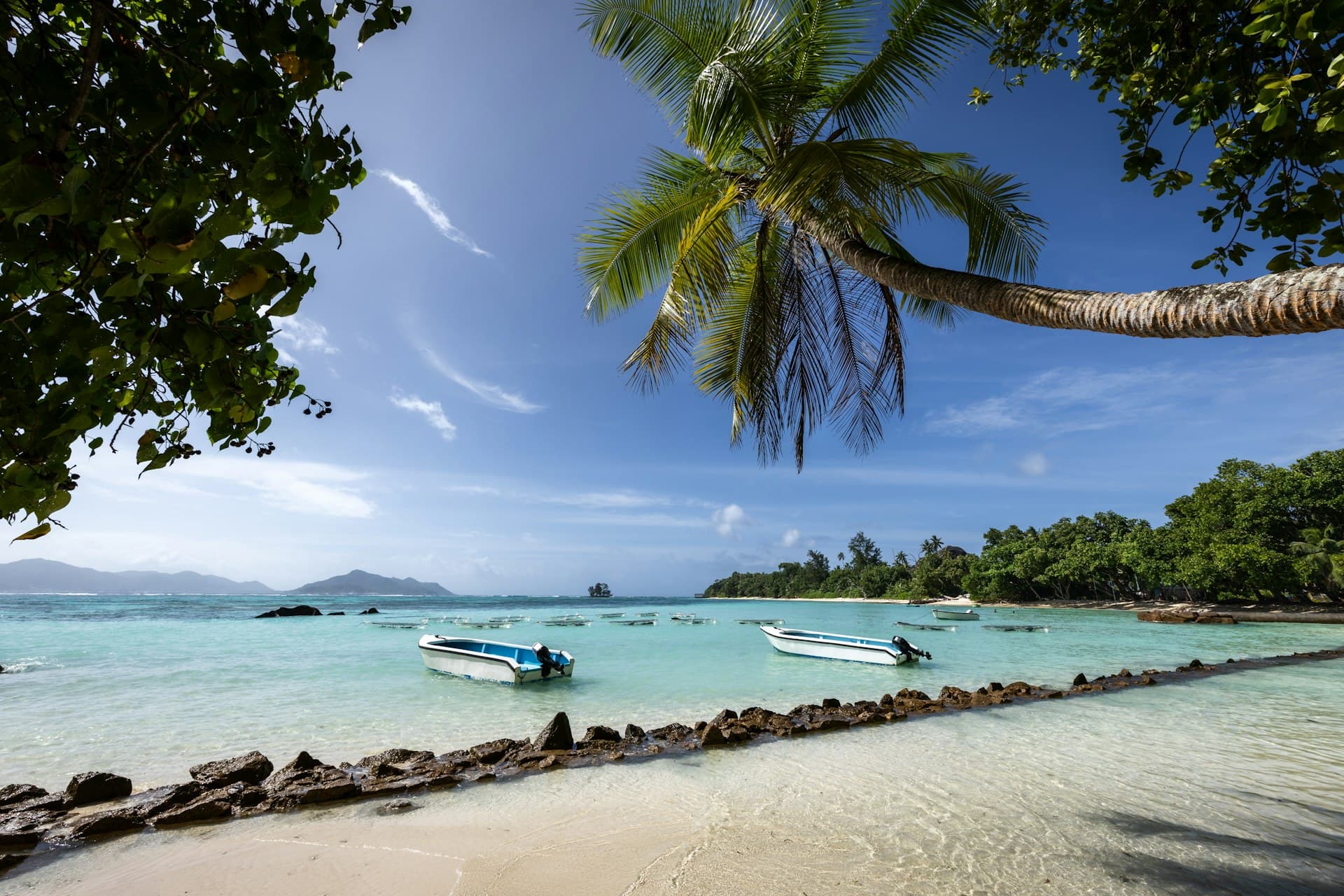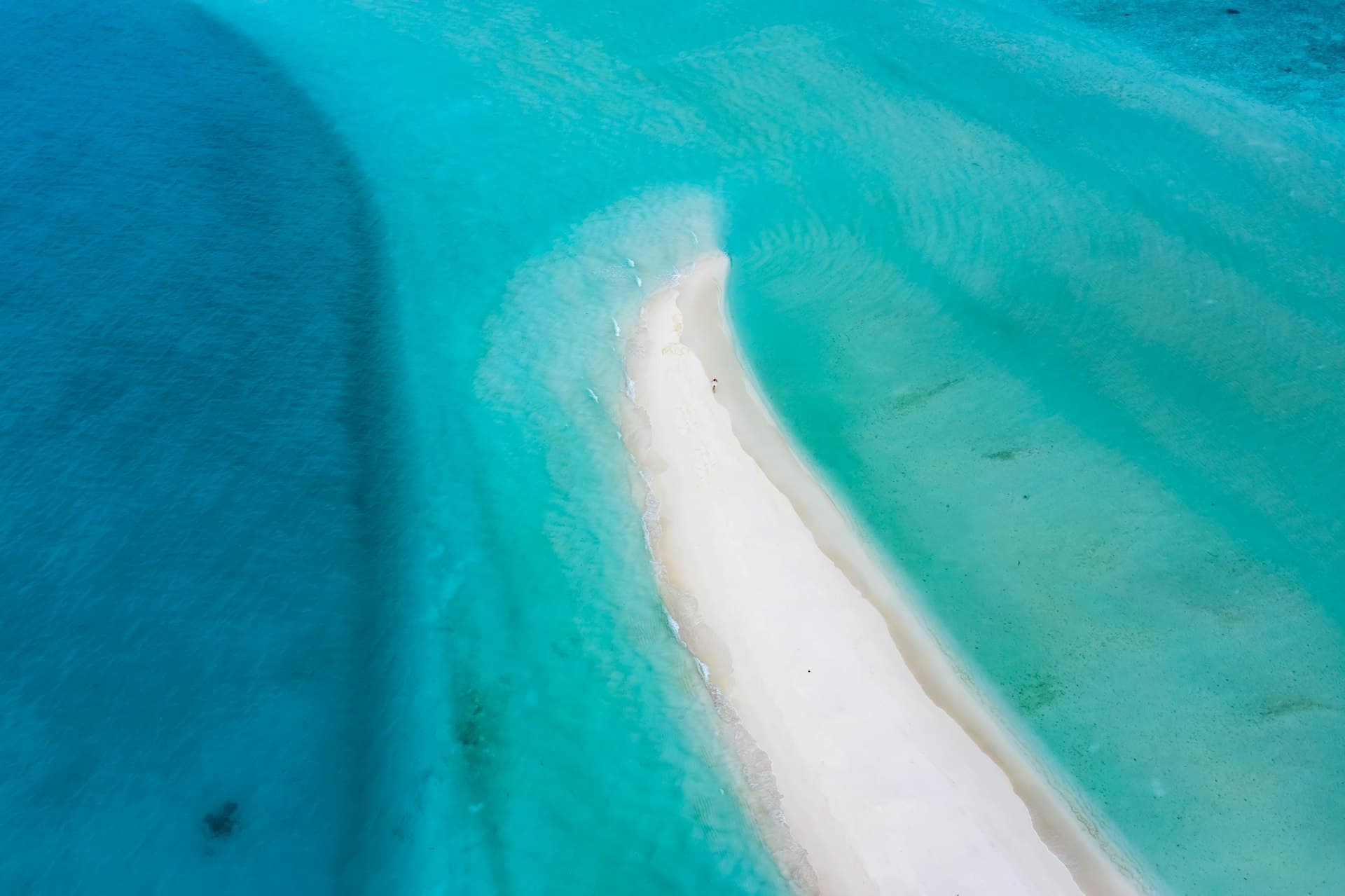
Roughly 1,200 coral islands arranged in 26 atolls, stretching 870 kilometres north to south across the equator — the Maldives is less a country than a scattering of reef across open ocean. Only 200 islands are inhabited. The rest are sand, coral, and coconut palms ringed by water so clear it seems to have no depth at all. For a charter yacht, this is a destination where the sea itself is the attraction, and the itinerary writes itself around tides, currents, and what is moving beneath the surface.
A country built on coral, where the deepest experiences happen at the waterline.
Geography and Key Atolls
Most charters embark from Male, the compact capital perched on a 2-kilometre island in the centre of the archipelago. From here, the principal cruising grounds fan out across several distinct atoll groups.
Diving and Reef Systems
The Maldives’ reef architecture is built around three formations: the outer reef slope dropping into deep ocean, the inner lagoon reefs, and the thilas. Each supports different marine life. Outer reefs draw pelagics and schooling fish. Lagoon reefs host juvenile species, cleaning stations, and macro life. Thilas concentrate everything — soft corals, overhangs, and the predators that patrol them.
Visibility typically ranges from 20 to 40 metres, peaking during the northeast monsoon (January to April). Water temperature sits between 27C and 30C, allowing extended immersions without thermal protection.
A Typical Charter Week
A well-planned seven-day itinerary from Male might run north through North Male Atoll on Day 1, cross to Baa Atoll by Day 3, spend two days exploring Hanifaru Bay and the surrounding reefs, then loop through Raa Atoll before returning south. Transit distances between atolls average 25 to 40 nautical miles — comfortable overnight passages or half-day runs at cruising speed.
Liveaboard Culture
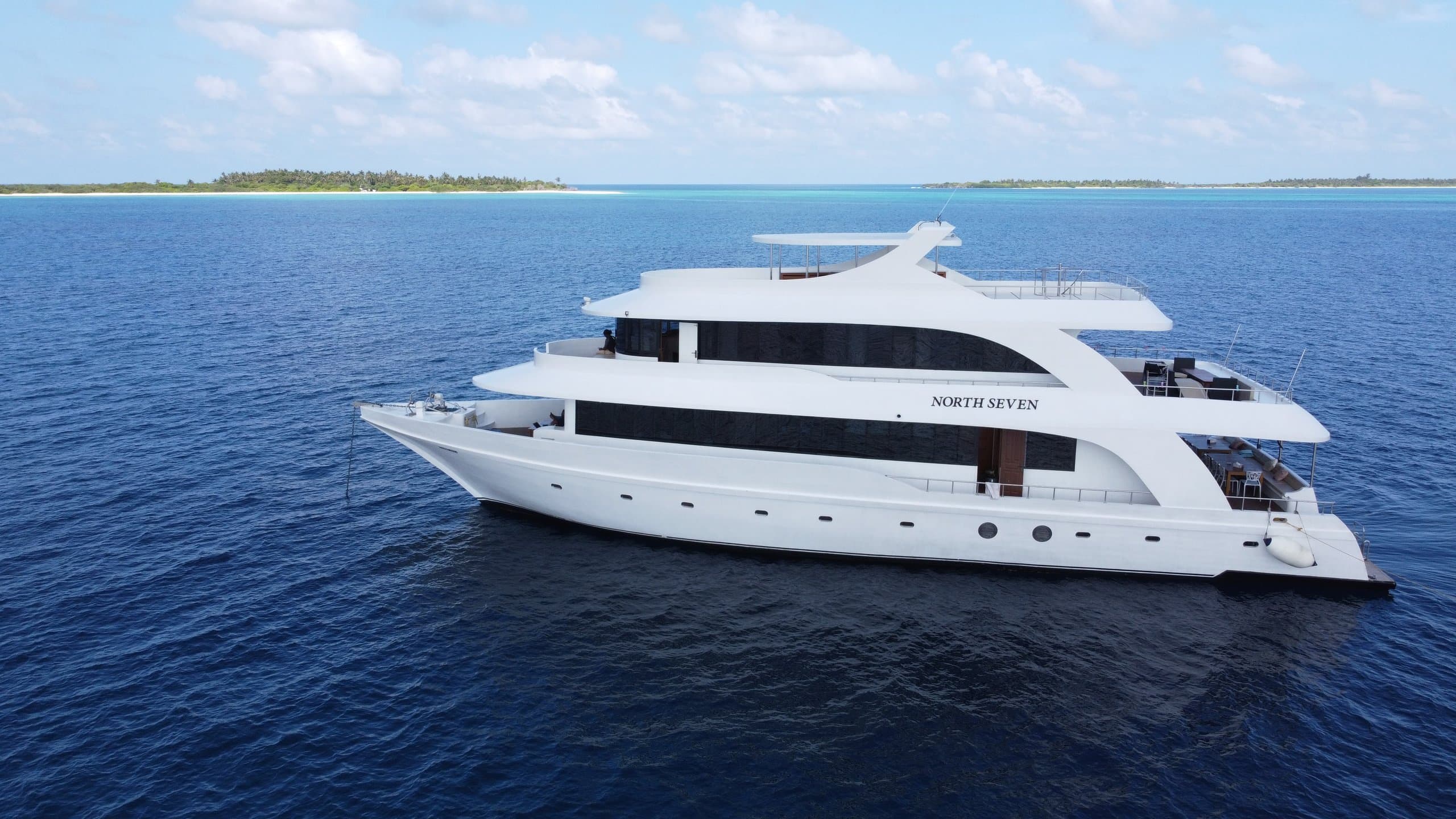
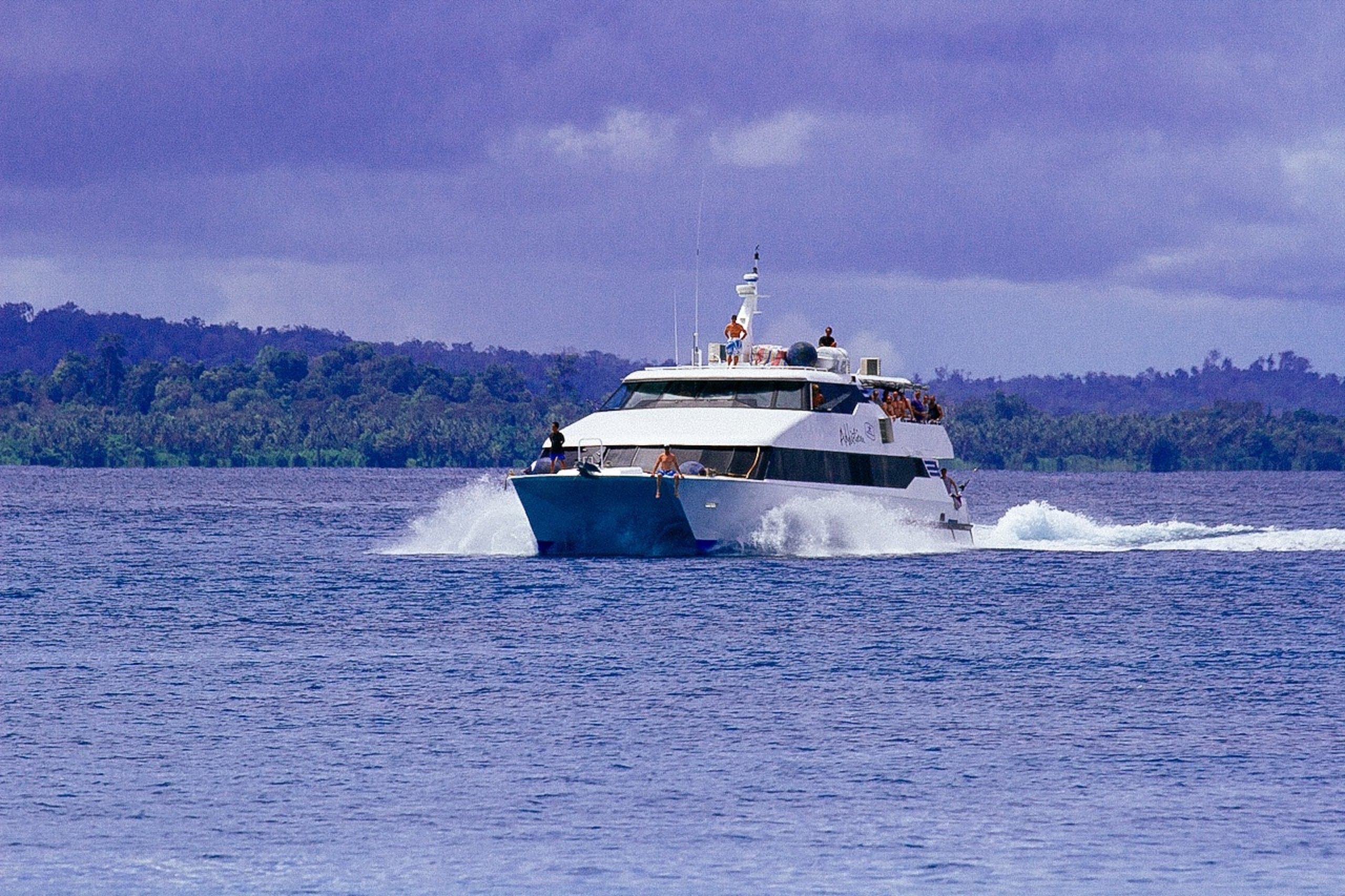
The Maldives has the most developed liveaboard tradition of any Indian Ocean destination. Local dhoni-style support vessels have serviced diving operations here since the early 1980s, and Maldivian crews bring a level of reef knowledge that comes from growing up on these atolls. Many charter yachts operate with a dedicated dive dhoni — a smaller vessel that carries tanks, compressors, and dive gear, keeping the main yacht free of equipment clutter while allowing the dive operation to run independently.
Season and Conditions
The northeast monsoon (Iruvai), from November to April, is the primary charter season. Winds are light (10-15 knots), skies are clear, and the sea state rarely exceeds half a metre inside the atolls. The southwest monsoon (Hulhangu), from May to October, brings stronger winds (15-25 knots), periodic rain squalls, and nutrient-rich water that reduces visibility but dramatically increases marine encounters — this is when the mantas mass at Hanifaru and whale sharks appear more frequently on the western atoll fringes.
Chartering during the shoulder months (April-May, October-November) often delivers the best balance: reasonable weather, fewer vessels, and transitional marine activity as species shift patterns between monsoon phases.
- Outer atoll exploration — reefs and sandbanks inaccessible to resort guests
- UNESCO Biosphere Reserve diving — manta rays, whale sharks and reef sharks
- Bioluminescent plankton beaches after dark
- Private sandbank dining at sunset
The Maldives operates on two monsoon seasons that split the archipelago into distinct windows. November through April is the northeast monsoon — the dry season in the north, with calm seas, good visibility for diving and the main manta season in Baa Atoll. This is the primary Maldives superyacht charter window. May through October is the southwest monsoon: rougher seas in the north but often clearer conditions in the south (Addu and Huvadhu atolls), which are partially sheltered from the southwest swell. Experienced charterers with the right vessel combine the two seasons with a north-to-south passage. Water temperatures average 28–29°C year-round; visibility in good conditions reaches 30 metres.
The Maldives is a nation built on coral — 26 atolls containing 1,190 islands spread across 90,000 km² of Indian Ocean. Most islands are uninhabited, and many are so low-lying that palm trees are their highest point. The water ranges from shallow lagoon turquoise to deep ocean sapphire, often within metres.
A yacht charter transforms the Maldives from a resort holiday into an expedition. Rather than being confined to a single island resort, you move between atolls, anchoring off deserted sandbanks, diving pristine reef systems, and visiting local fishing islands where life has barely changed in centuries. The diving and snorkelling are world-class — manta rays at Hanifaru Bay, whale sharks along the outer atoll edges, and coral gardens in the inner lagoons.
Most Maldives charters operate in the central atolls (North and South Malé, Ari, Baa) reachable from the capital, Malé. The season divides into a dry northeast monsoon (November–April) and a wetter southwest monsoon (May–October), though the Maldives is warm year-round. A yacht with local knowledge navigates the channels between atolls safely and finds the best conditions for diving each day.
Whale shark encounters in South Ari Atoll
Manta ray season at Hanifaru Bay (UNESCO Biosphere Reserve)
1,190 islands — most uninhabited, many with private sandbanks
World-class channel diving with sharks and rays
Year-round warm water (28–30°C)
Bioluminescent plankton on night snorkels