The advertised weekly rate is only the starting point of what a yacht charter in Greece costs. On top of the charter fee come VAT and the Advance Provisioning Allowance, or APA — the fund that pays the charter's running expenses — and, depending on the booking, delivery or redelivery charges and a security deposit. Crew gratuity is separate and discretionary. As a working rule of thumb, VAT, APA and gratuity together usually add around 55–70% to the advertised charter fee: a yacht offered at €80,000 per week will require an all-in budget of roughly €125,000–€135,000. Compare yachts on the realistic all-in requirement, not the headline rate.
For most clients, my preferred weeks are early June and mid-to-late September. Most first-time enquiries begin with the Cyclades. The Ionian is the calmer, greener answer for many families. The Saronic gives you culture, proper island towns and short passages within easy reach of Athens.
I am Panos Moraitis, and I run Aris Drivas Yachting, founded in Piraeus in 1972. I grew up around Marina Zeas and the Athens Riviera — Lightning class at twelve, offshore racing later, roughly thirty years around ships and yachts. When I put a yacht or an itinerary in front of a client, it comes from the water, not only from a brochure. What follows is what I actually tell them.
Why charter a yacht in Greece rather than somewhere else in the Mediterranean?
Greece has 13,676 km of coastline — the longest in the Mediterranean — and approximately 6,000 islands and islets, around 227 of them inhabited. But the number is not the point. The point is how different the stops can be inside one cruising region.
In a single week you can move from a busy island town to a completely quiet anchorage; from whitewashed Cycladic villages to the neoclassical waterfront of Syros; from a serious restaurant evening ashore to lunch cooked from whatever the chef found that morning. The islands can sit close together and still feel completely different.
That variety is the argument for Greece. It is also why you should not try to cover the whole country in one week. The Cyclades, Ionian, Saronic, Dodecanese and Sporades are separate charters. Pick one cluster and use the yacht properly.
For food-led groups, I would put Greece against any destination in the Mediterranean. A capable chef working with local fish, vegetables, olive oil, cheeses and wine can build the menu around where the yacht actually is. Imported luxury labels have their place, but they are not automatically better than what was landed ten miles from the anchorage.
Greek charter VAT can also be lower than the effective VAT charged on comparable charters elsewhere in the Mediterranean. The rate depends on the individual yacht and charter structure, so it should be confirmed booking by booking — not lifted from a generic table.
How Greece compares for a one-week charter:
| Greece | Croatia | Italy | French Riviera | |
|---|---|---|---|---|
| Charter VAT | effective 5.2–13% (confirm per booking) | generally higher | generally higher | generally higher |
| Stops per week | 5–7 typical | typically fewer | typically fewer | typically fewer |
| Season | May–early Nov | Jun–Sep | May–Oct | Jun–Sep |
| Character | Island clusters, short legs, radically different stops in one week | Coastal, walled towns | Coast + culture | Glamour, short coast |
What does it mean to run a Greek charter house founded in 1972?
Aris Drivas founded Aris Drivas Yachting in Piraeus in 1972. He was one of the early Greek brokers to represent the country internationally and in 2014 was inducted into the Charter Yacht Brokers Association's Charter Yachting Hall of Fame.
The firm has watched the Greek charter market change from caïques and motor-sailers to modern sailing yachts, large motor yachts and custom superyachts. More importantly, it has watched client expectations change with them: what first-time charterers ask for, what returning clients notice, how crew standards evolve, and which yachts maintain their reputation beyond one good season. Today we represent over 690 yachts worldwide, with deep specialisation in the Mediterranean.
That history matters only if it improves the advice. Today the company remains independent, owner-operated and based in Athens — and a MYBA member of long standing. Those things together are rarer in this industry than you'd think. The job is still the same: recommend the right yacht, set a realistic itinerary and remain accountable before, during and after the charter.
The two mistakes first-time charter clients make
The first is building the whole week around Mykonos.
I like Mykonos, but when you are chartering a yacht, my advice is normally to give it one or two nights and use the yacht to explore the surrounding islands. Remaining there for the entire week often means paying for a yacht without using its principal advantage: the ability to move.
When a client really wants seven days centred on Mykonos, a villa with a suitable day boat may be the more sensible arrangement. It can provide better value and better access to the island itself.
The second mistake is miscalculating distance.
Greece looks compact on a map, but its charter regions are spread across a large area. You cannot sensibly combine Corfu and Santorini in a normal week, or treat Mykonos and Symi as neighbouring stops, unless the group is prepared to spend much of the charter underway.
In Greek yacht charter, "possible" and "advisable" are not the same thing. A yacht may technically cover the distance, but that does not mean the guests should spend their week doing it.
Pick one principal cruising region per week.
What is the best time to charter a yacht in Greece?
Mid-to-late September, and the first half of June. Not automatically July or August — unless the client specifically wants the busiest part of the season.
By September, the sea around the Cyclades is commonly around 24–25°C because it has been heating all summer, with daytime highs of 27–29°C. June gives you the same warm air and long days, but a cooler swim — typically 21–23°C. Both periods usually give you a more comfortable balance of weather, availability and island life.
The meltemi — the northerly summer wind across the Aegean — is generally most frequent and persistent in July and August. When established, it can reach Force 6–7 in exposed areas and occasionally stronger. The crew can handle it; the real question is whether your guests want rougher crossings and an itinerary that may need changing.
That does not make July and August bad months. They are the heart of the season. The islands are fully alive, the water is warm and every service is operating. But they are not the right answer for every group.
Both shoulder windows also mean real berth availability at the busy marinas — across premium Mediterranean marinas, low-season berth fees run 20–40% below peak — which in practical terms means walking off the yacht into the town instead of taking the tender in from a crowded anchorage.
The first week of June can still produce a late cool spell. Mid-June is safer if swimming temperature matters. September is usually more consistent, and the sea remains warm into early October.
No broker can promise the weather. The correct approach is to choose the right region for the dates and build a route with alternatives. A client may ask for Mykonos, Santorini and Milos in one week. On paper, that may be possible. The useful question is what happens if the meltemi strengthens on day three. A good itinerary should still work when one planned crossing no longer does.
What does it actually cost to charter a yacht in Greece?
A yacht is not chartered at one number. There is the charter fee, VAT, APA and — if the service warrants it — a discretionary crew gratuity. Depending on the yacht's position and the agreement, there may also be delivery or redelivery charges and a security deposit.
Any useful quotation should show those items separately. The headline weekly rate is only the beginning. The quickest way to estimate the real number: take the advertised weekly rate and add 55–70% for VAT, APA and the crew gratuity. A yacht advertised at €80,000/week comes to roughly €125,000–€135,000 all-in.
As a broad planning range, smaller crewed sailing yachts may begin at approximately €15,000 per week before extras. A 25–30m motor yacht can sit anywhere from roughly €50,000 to €100,000 per week, while 40m yachts generally begin around €120,000 and rise quickly from there.
The final cost depends less on length alone than clients expect. Season, yacht quality, fuel consumption, itinerary, provisions, berth choices and crew all matter.
Indicative weekly charter ranges:
| Yacht category | Indicative charter fee / week | All-in estimate (+VAT, APA, gratuity) |
|---|---|---|
| Crewed sailing yacht | from ~€15,000 | ~€24,000–€26,000 |
| 25–30m motor yacht | ~€50,000–€100,000 | ~€80,000–€170,000 |
| 40m+ motor yacht | ~€120,000 and above | ~€190,000 and above |
These are broad market-planning figures, not quotations. Availability, yacht quality and the season can produce significant differences within the same size category.
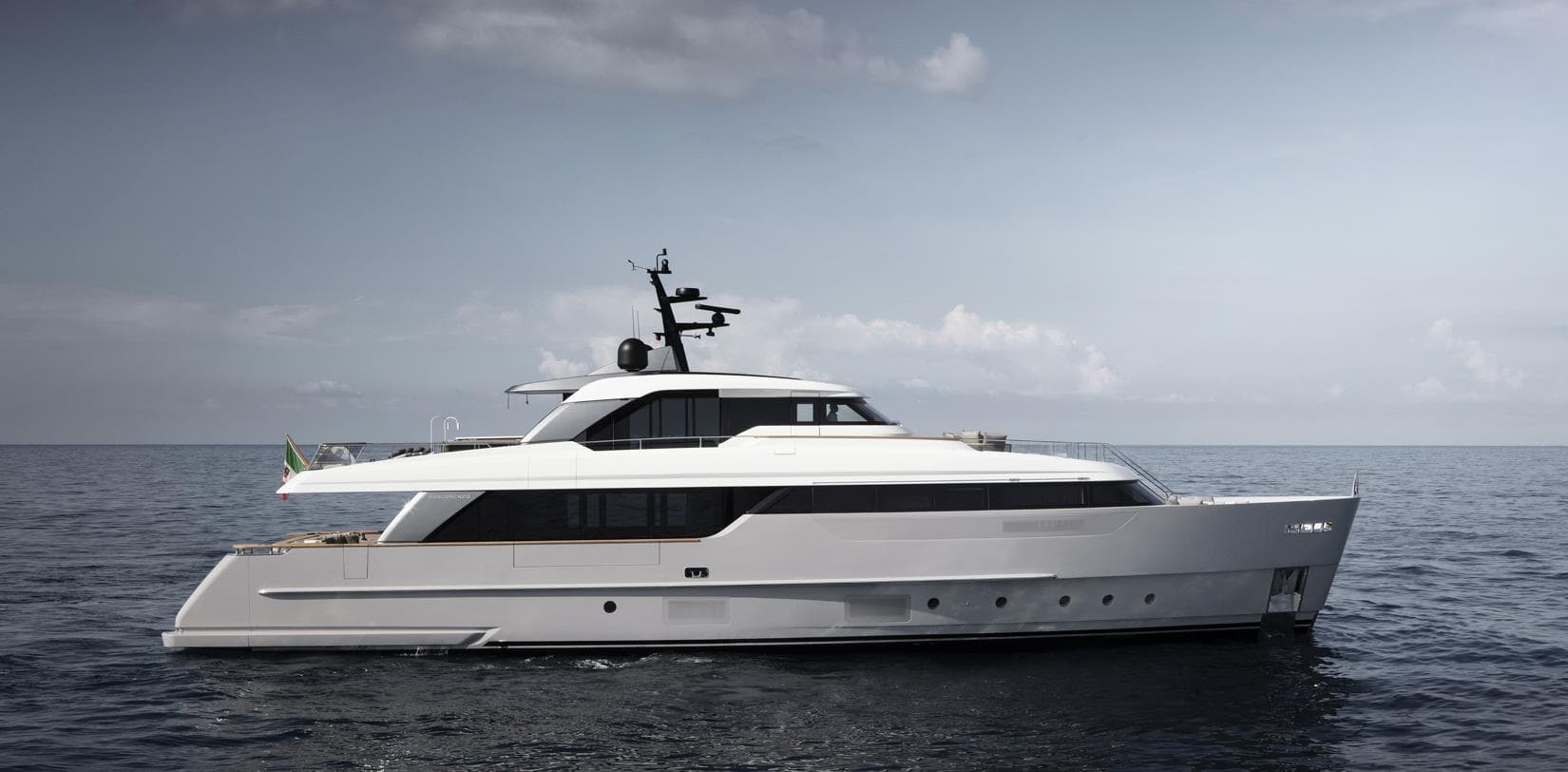
As a live example, our Sanlorenzo SD96 Flori is offered at €85,000 per week in low season and €95,000 per week in high season, plus VAT and APA.
What is included in the charter fee?
The charter fee normally covers the use of the yacht and its equipment, the crew, the yacht's insurance and the ordinary cost of maintaining the yacht in operational condition.
It does not normally include the charterer's variable expenses, such as:
- fuel for the yacht, tenders and water toys;
- food and drinks;
- berthing and port charges;
- shore-side transport and excursions;
- communications charged separately by the yacht;
- personal laundry in some cases;
- local taxes or fees not included in the charter fee.
The contract and cost summary for the particular yacht should state the position clearly.
How much VAT applies to a yacht charter in Greece?
For qualifying crewed yacht charters in Greece, the effective VAT charged may fall between approximately 5.2% and 13%, depending on the yacht's certification, navigation status and the specific charter structure.
The applicable rate must be confirmed for the individual yacht. It should not be assumed from the yacht's size alone, and it can be affected by how and where the charter is performed.
Greek VAT can be lower than the effective rate charged on comparable charters elsewhere in the Mediterranean, but comparisons should be made booking by booking. France, Italy and Croatia do not all apply the same rate or the same charter-tax treatment.
How does APA work?
APA stands for Advance Provisioning Allowance. It is an advance fund used by the captain to pay the variable expenses incurred on the charterer's behalf.
APA is typically 35–40% of the charter fee, although a higher percentage may be requested for a fuel-intensive itinerary, a shorter charter or an unusually demanding provisioning brief — running costs don't shrink in proportion to the charter fee.
It normally covers:
- fuel;
- food and drinks;
- berthing and port fees;
- shore-side arrangements;
- laundry charged to the charter;
- local agents;
- other charter-specific expenses.
The percentage is not a fixed MYBA rule. It is set for the particular yacht and charter.
During the charter, the captain or authorised crew maintain records of the expenditure. At the end, the charterer receives an account. Any unused balance is returned, while any shortfall must be settled.
APA is not additional income for the broker or owner. It remains the charterer's money, spent on the charterer's behalf and subject to reconciliation.
Is the MYBA Charter Agreement really the standard?
Yes. For professionally crewed yacht charters in the Mediterranean, the MYBA Charter Agreement is the form I normally expect to see.
MYBA — The Worldwide Yachting Association — was founded in 1984 and describes its Charter Agreement as one of the industry's most respected and widely used contracts. It gives both sides a recognised framework for the yacht, charter period, delivery and redelivery, payment dates, APA, insurance, cancellation, delay, failure to deliver, dispute resolution and the obligations of owner and charterer. Aris Drivas Yachting has been a MYBA member for decades.
That does not mean you sign it without reading it. The commercial particulars, special conditions and any addenda matter. Delivery ports, cruising limits, tax treatment, cancellation terms and any cross-border plan should all be clear before money moves.
A non-MYBA agreement is not automatically wrong; different jurisdictions and charter structures use different forms. But for a crewed Mediterranean charter, your broker should be able to explain plainly why another agreement is being used and how it differs.
What is the biggest cost clients fail to plan for?
Fuel. Consistently.
Clients understand that the yacht burns fuel while moving. They are often less prepared for how quickly the number changes with speed, or for the fact that fuel consumption continues at anchor, because the generators may be running air conditioning, galley equipment, water-makers, laundry and the rest of the hotel load.
As an indicative example, a fast 30-metre motor yacht may consume around 400–500 litres per hour at approximately 20 knots, while consumption at displacement speed can be materially lower. The exact figure is yacht-specific, which is why the useful calculation is cruising hours multiplied by the captain's stated consumption at the intended speed — plus a realistic generator load for the week.
If you want to cross the Cyclades quickly, use every motorised toy and keep the yacht at anchor with every system running, the captain should size the APA accordingly. Fuel comes out of APA. If the itinerary changes, the fuel estimate changes with it.
Two other items clients underestimate are berthing and premium provisions. Busy marinas can be expensive in peak periods — a night alongside the main quay in Mykonos or Santorini in August can cost several times what the same berth costs in June or September — and specific wines, Champagnes and spirits are charged at their actual provisioning cost. A case of Krug costs what a case of Krug costs. There is nothing wrong with ordering it; it should simply be part of the budget.
Deposit and payment schedule
A common Mediterranean charter-payment structure is:
- 50% of the charter fee when the agreement is signed;
- the remaining 50%, together with VAT and APA, before embarkation — often at least 30 days beforehand.
This is common practice, not a payment schedule automatically imposed by every MYBA agreement. The binding amounts and dates are those written into the signed contract.
There may also be other agreed amounts, such as delivery or redelivery fees, depending on the yacht's position and the charter itinerary.
Crew gratuity is separate and discretionary. In Mediterranean charter practice, clients are often guided towards approximately 10–15% of the charter fee when service has met or exceeded expectations. It is normally given to the captain for distribution among the crew.
Charter cancellation insurance may be available separately for high-value bookings. Its availability, coverage and exclusions should be checked with an appropriate insurance broker.
Where should you sail: Cyclades, Ionian or Saronic?
Every region has its own character. None is universally better. The correct answer depends on the group, the dates, tolerance for wind, preferred pace and where the charter begins.
| Region | Character | Usually suits | Principal consideration |
|---|---|---|---|
| Cyclades | Open Aegean, varied islands, lively towns and strong food culture | First-time Greek charters, active groups, island variety | Greater exposure to the meltemi |
| Ionian | Greener landscape and generally calmer cruising | Families, relaxed groups, guests sensitive to rougher crossings | A quieter and less classically Cycladic atmosphere |
| Saronic | Close to Athens, shorter passages and town-based evenings | Shorter charters, culture, walkability | More compact cruising area |
The Cyclades
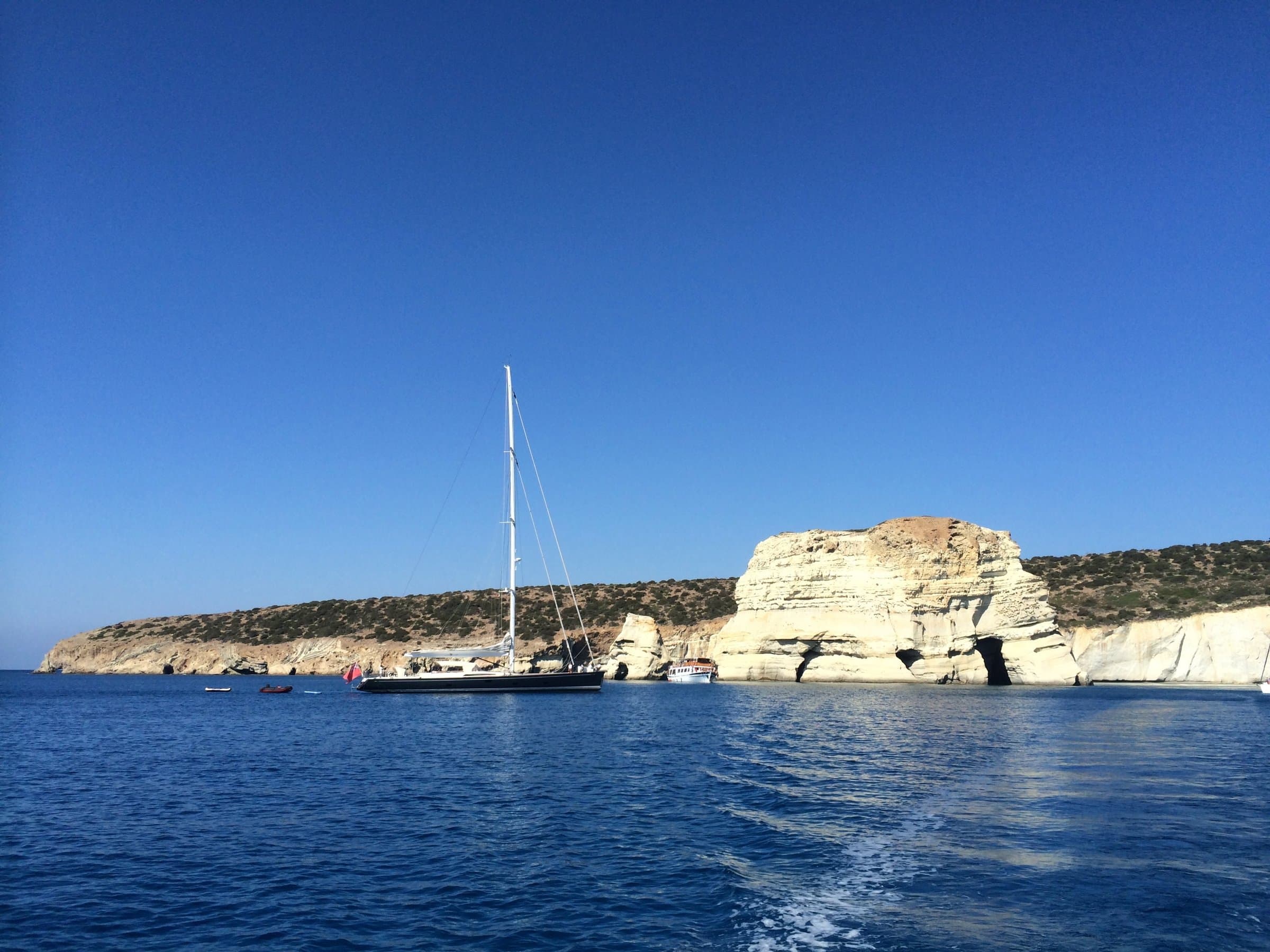
The Cyclades are the region many first-time Greek charter clients initially request. They include internationally known islands such as Mykonos, Santorini and Paros, but the most rewarding itineraries often combine these with islands such as Sifnos, Milos, Kythnos, Folegandros and smaller anchorages.
The attraction is variety. One island may be selected for its food, another for its landscape, another for its town and another simply for a quiet night at anchor.
The main operational consideration is the meltemi, particularly in July and August. It does not make a Cyclades charter impossible, but the itinerary needs flexibility and should not depend on every crossing taking place exactly as planned.
The Ionian
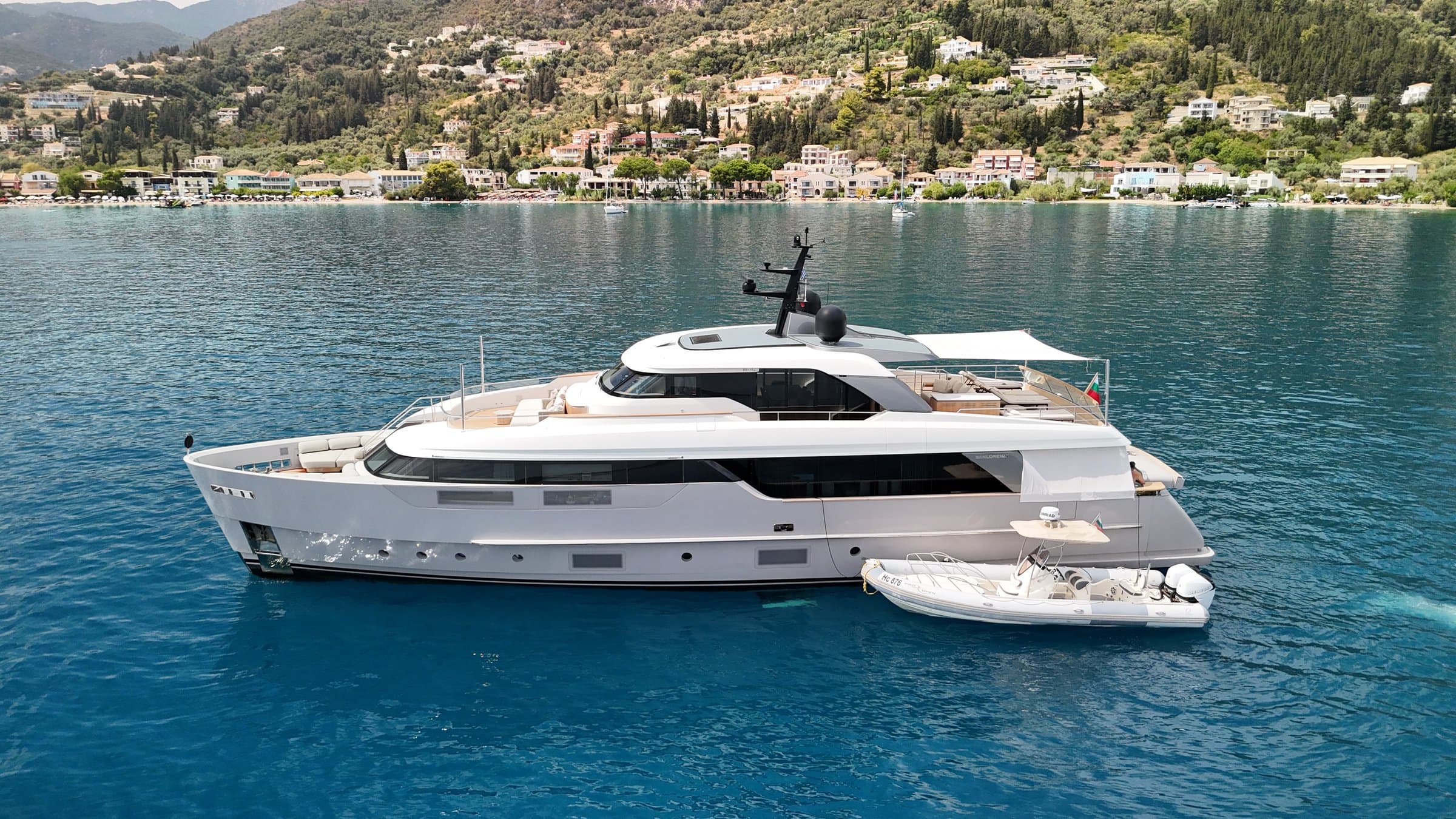
The Ionian islands — including Corfu, Paxos, Lefkada, Ithaca, Kefalonia and Zakynthos — are greener and generally less exposed to the Aegean meltemi.
For families, guests who prefer shorter or calmer passages, or groups primarily interested in swimming and relaxed cruising, the Ionian is often the better answer.
It is not a lesser version of the Cyclades. It is a different charter environment, with different scenery, architecture and weather patterns.
The Saronic Gulf
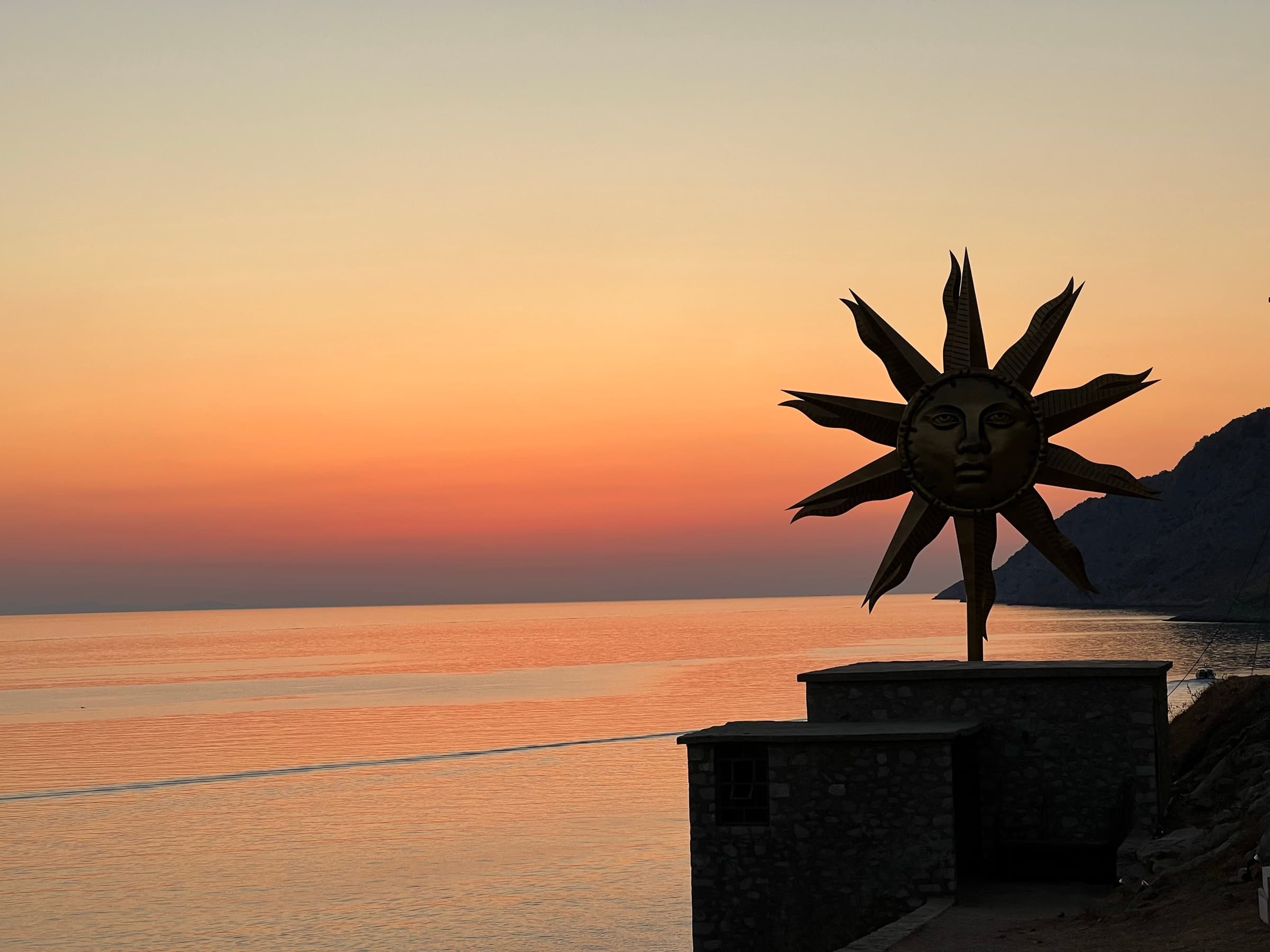
The Saronic is the closest principal cruising region to Athens and works particularly well for shorter charters or groups that prefer town-based evenings and cultural stops.
Hydra has no ordinary private motor traffic. Movement is mainly on foot, by water taxi and, for goods and luggage, with working animals and limited authorised vehicles. Its harbour, architecture and pedestrian character make it one of the most distinctive stops close to Athens.
The region can also include Poros, Spetses, Aegina and suitable points on the Peloponnese, depending on the yacht, dates and embarkation arrangements.
A realistic seven-night Cyclades framework
This is the type of route I would consider for a group that wants variety without making Mykonos or Santorini the centre of the week.
It is a planning framework, not a guaranteed schedule. The captain would adjust the sequence around:
- the embarkation and redelivery ports;
- yacht speed;
- weather;
- berth availability;
- the group's preferred pace.
The named stops below are first-hand recommendations, not permanent guarantees. Restaurants change, so we reconfirm every booking before the charter — but these are the kinds of stops I currently build the route around.
Day 1: Kythnos. A practical first stop from the Athens area, giving the group an immediate transition from the city into the Cyclades. Loutra can work as an evening stop, subject to berth availability and conditions — dinner at Margiora in Chora, or Aria's Restaurant at Agia Eirini Bay.
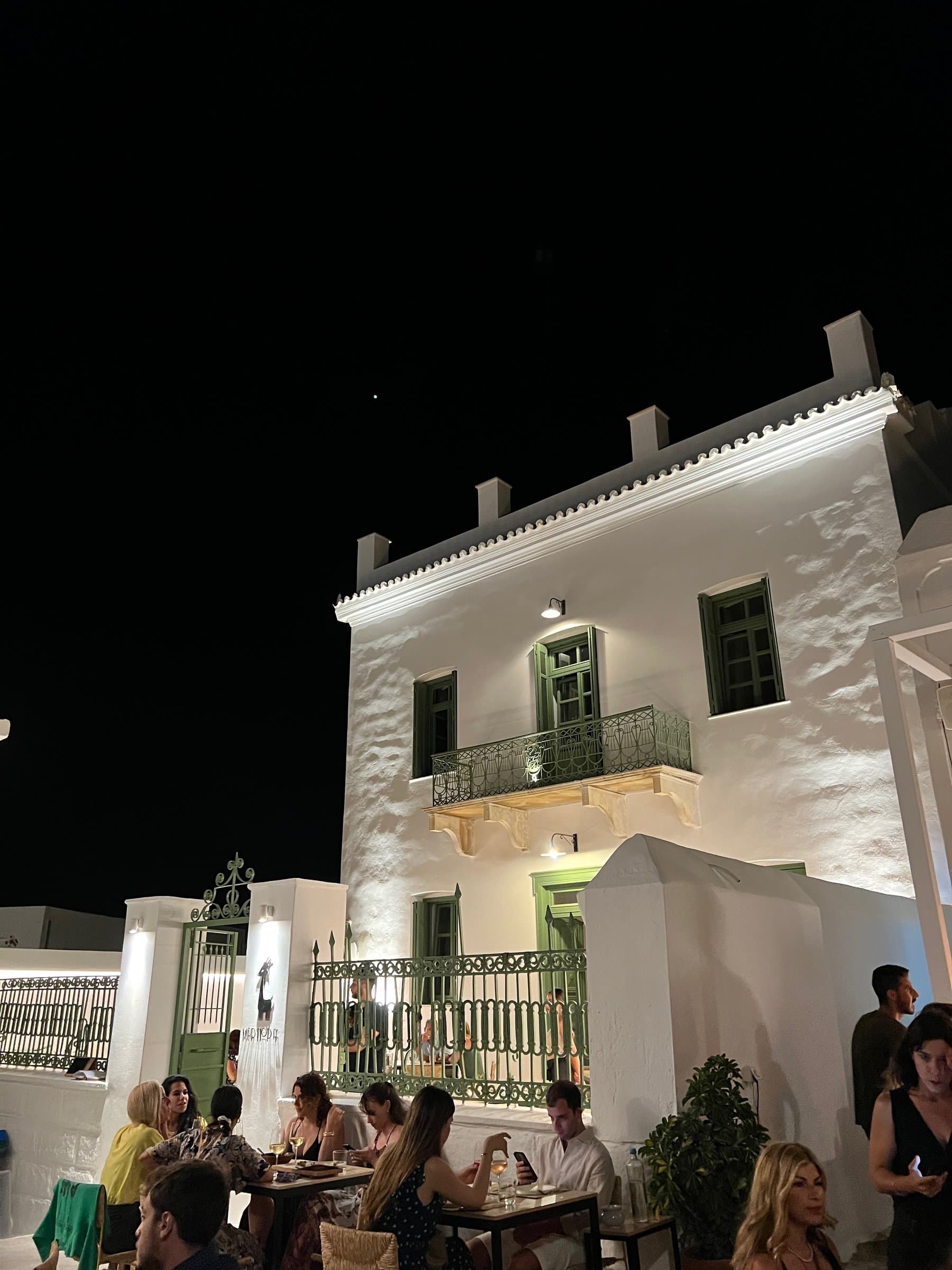
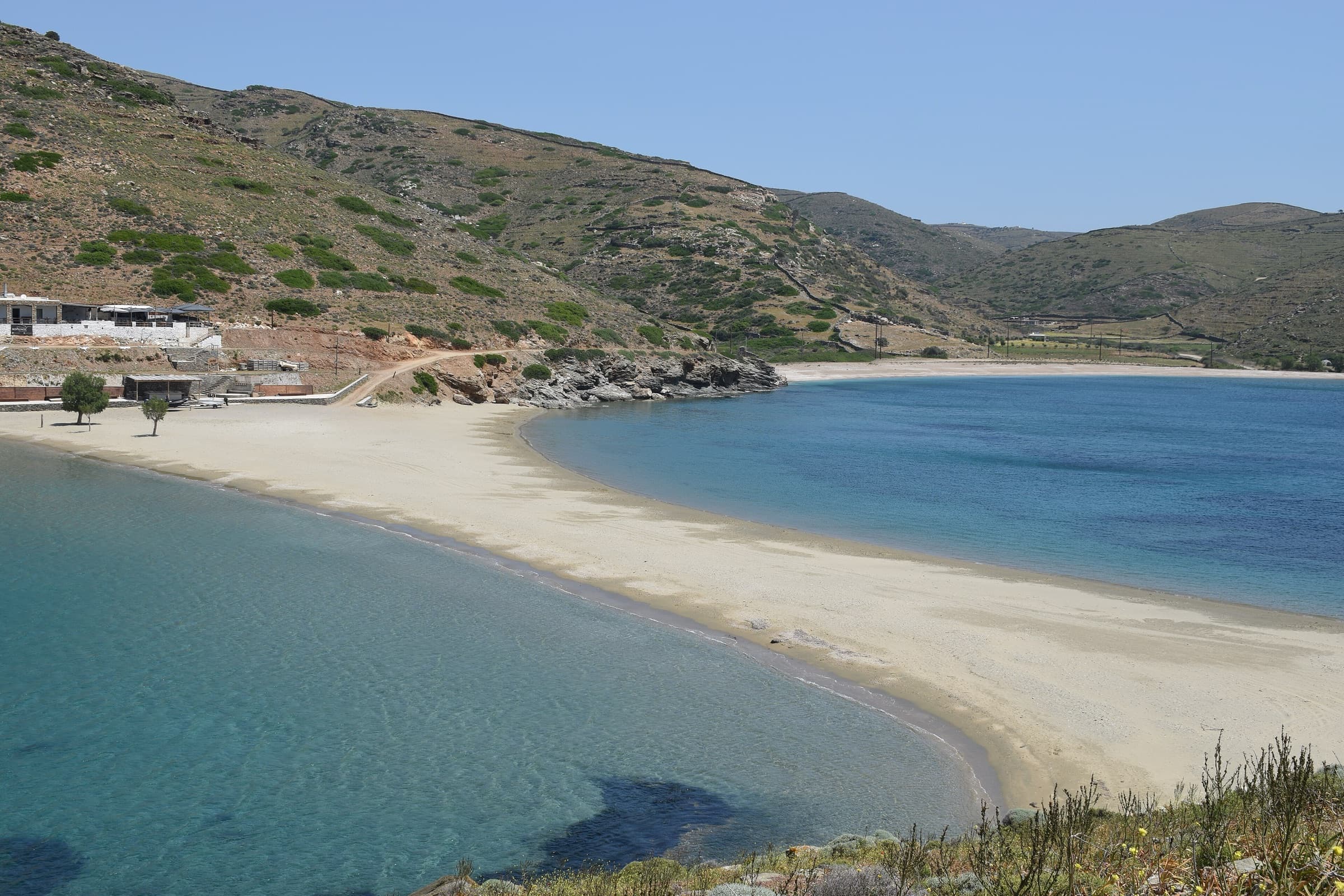
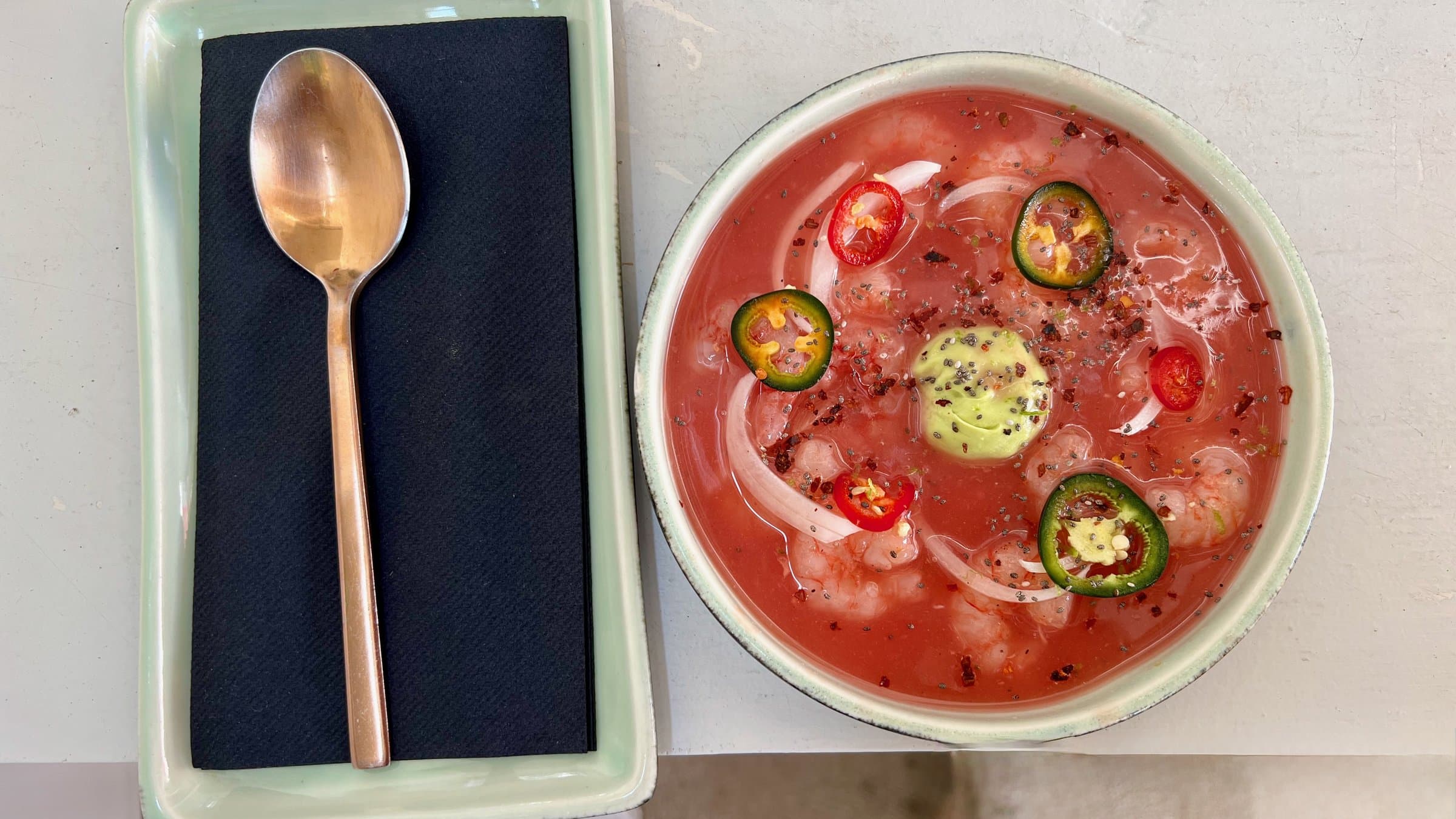
Day 2: Sifnos. One of the strongest food destinations in the Cyclades — Omega 3, and Cantina at Seralia beach are the kind of places worth planning the evening around. It is a good place to combine a swim stop with an evening ashore rather than treating the island as a quick pass-through.
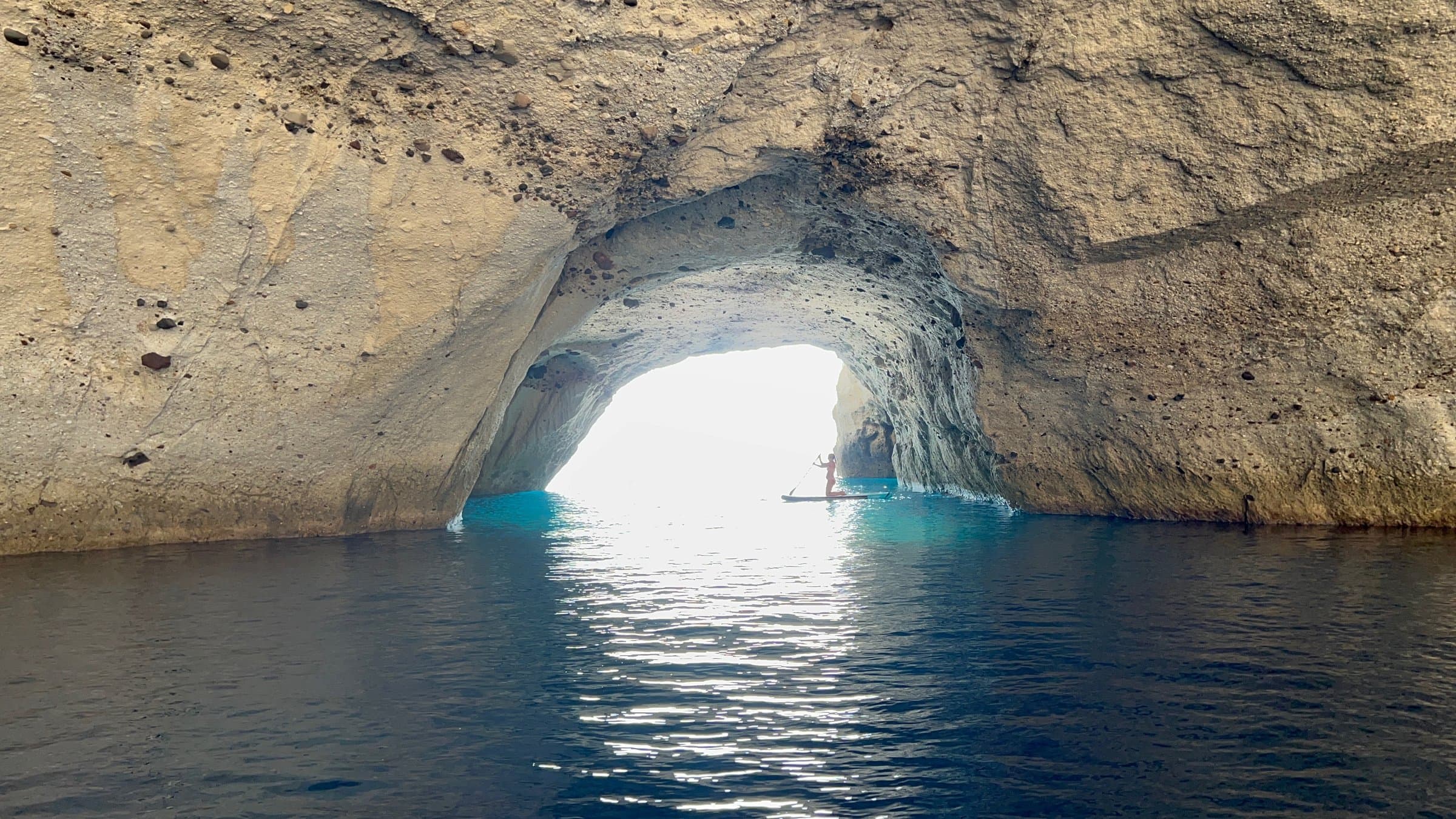
Day 3: Milos. Milos is defined by its geology and coastline. Kleftiko is normally approached from the water, while Sarakiniko offers a very different landscape ashore. The day's sequence depends on wind, anchoring conditions and tender access.
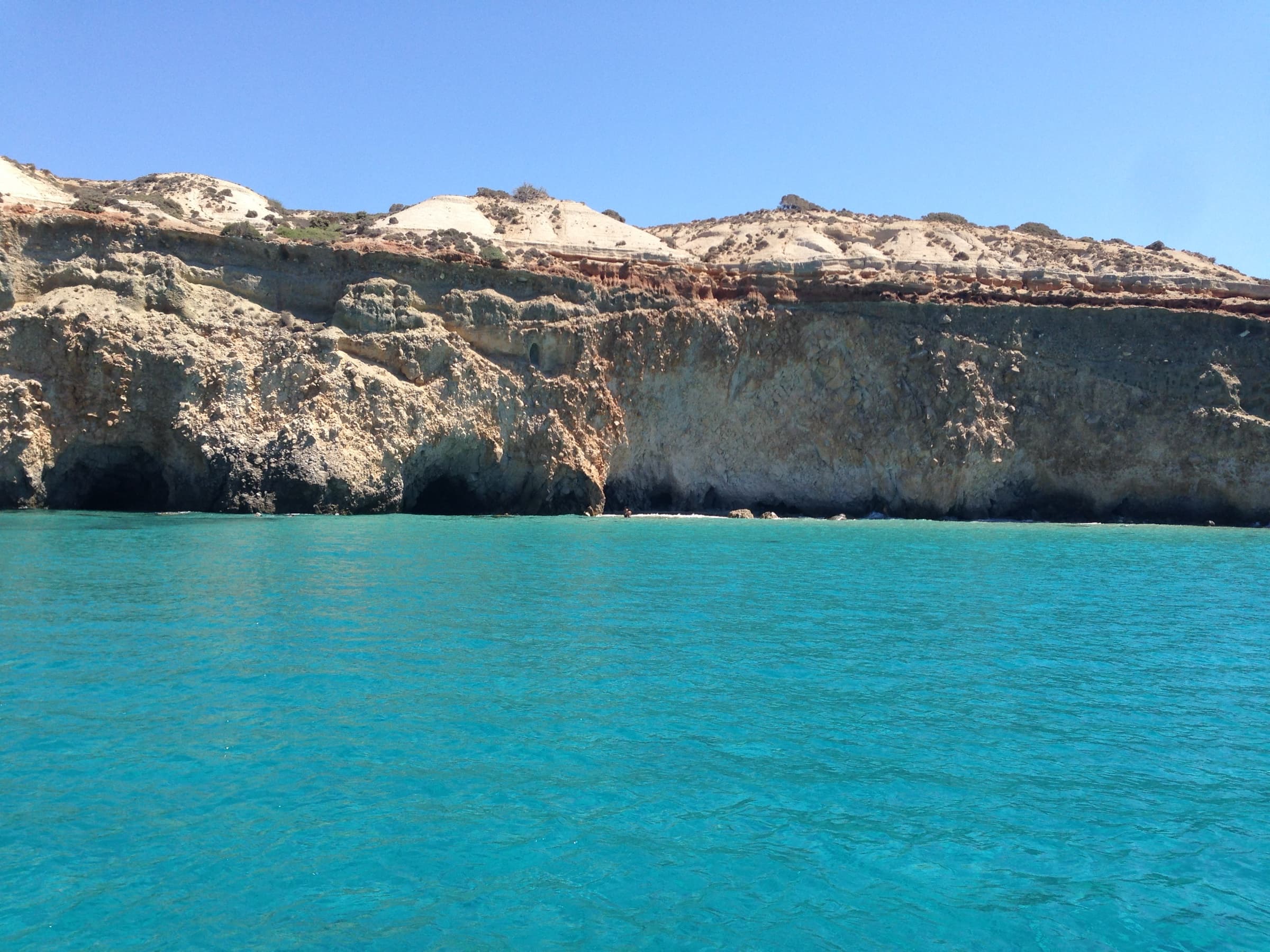
Day 4: Polyegos. Uninhabited and valued primarily for its water and anchorages — the type of stop that justifies chartering a yacht rather than moving between hotels. An overnight stay is subject entirely to weather and the captain's assessment of the anchorage.
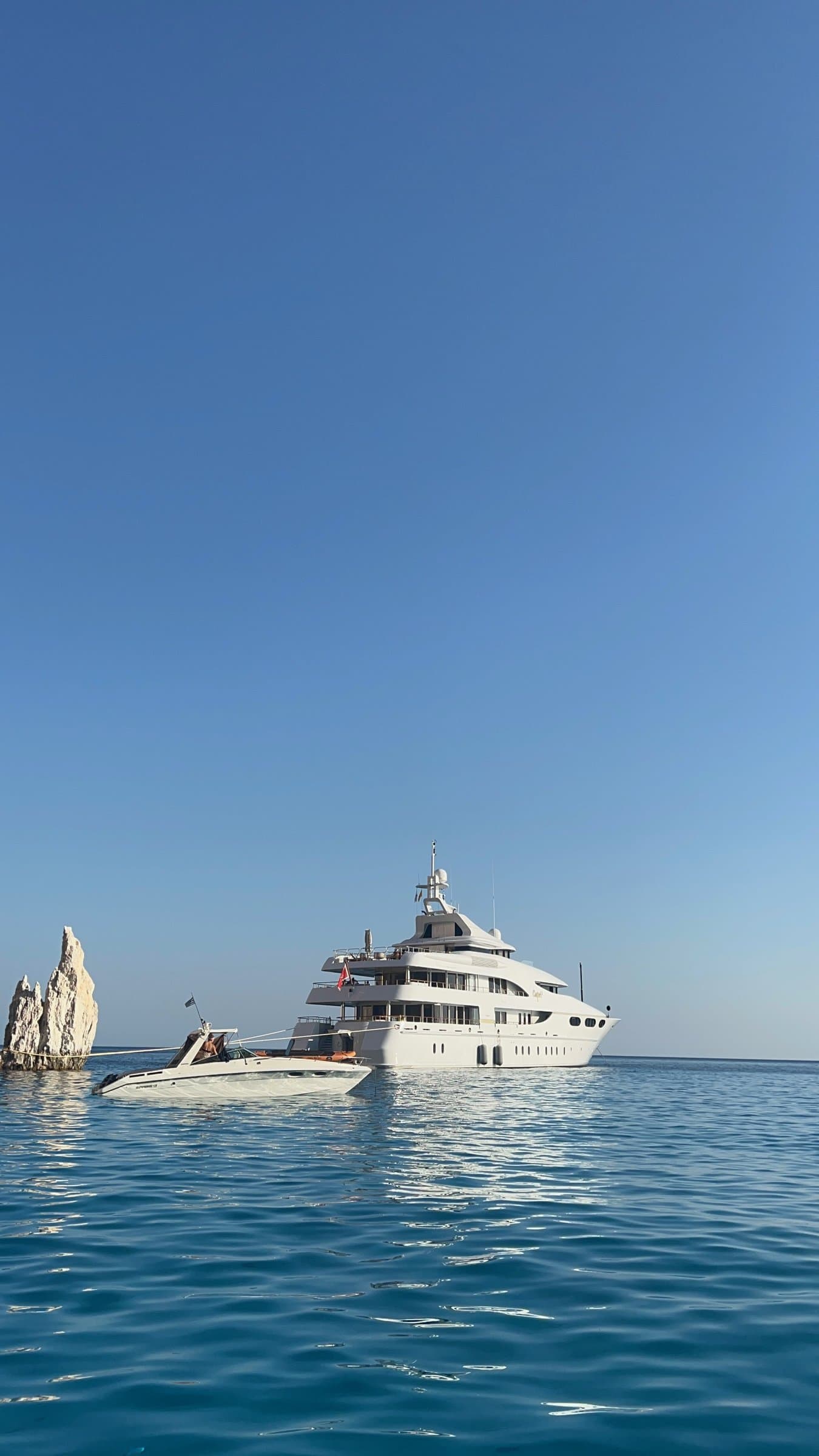
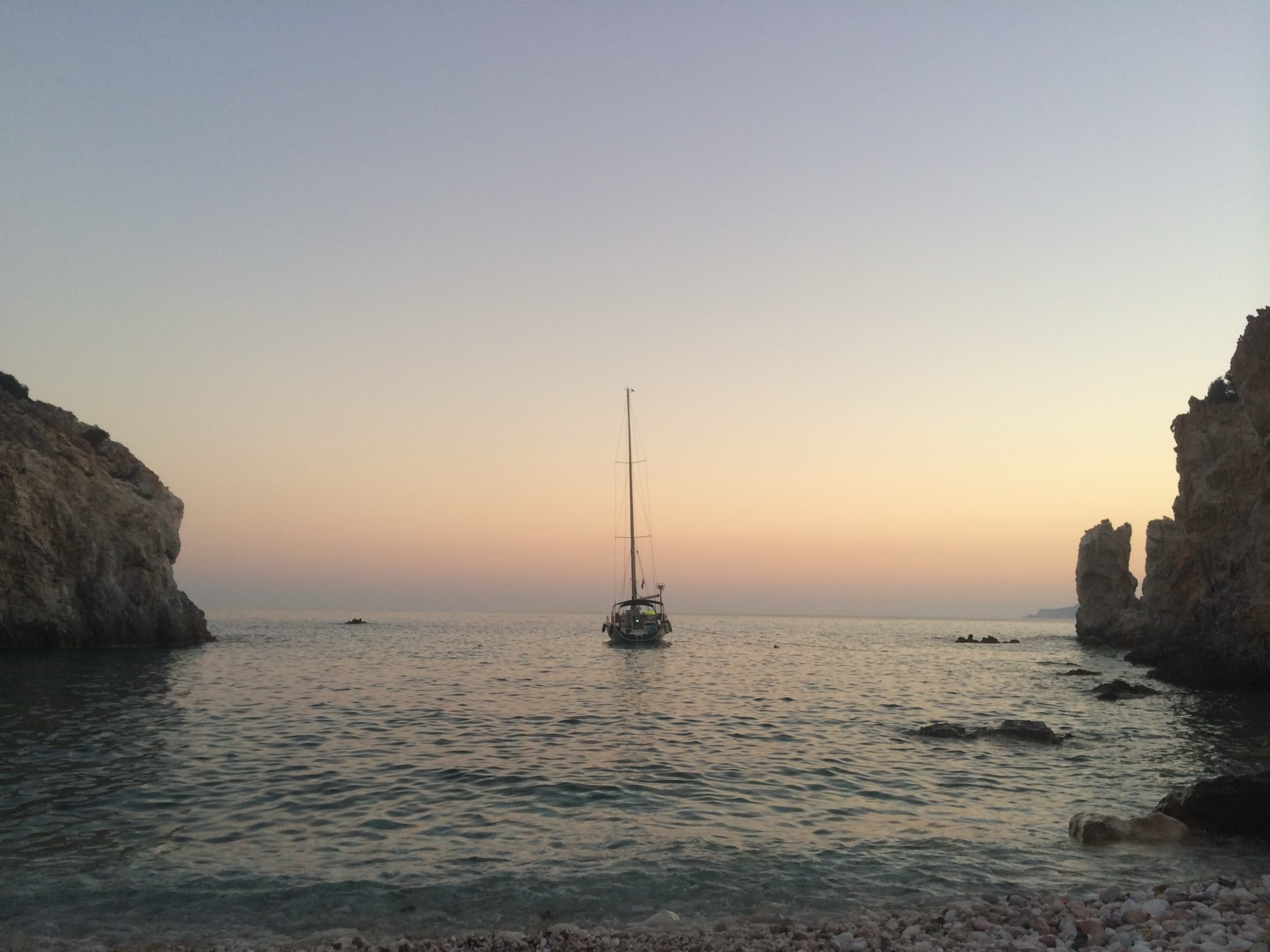
Day 5: Folegandros. A change of pace, with a compact Chora — one of the most intact Cycladic villages left — and a less developed atmosphere than the larger islands.
Day 6: Paros. Paros works when the group wants a livelier evening and more choice ashore. Naoussa is the usual focus, but access, tender arrangements and reservations should be organised in advance during busy periods.
Day 7: Syros. Syros gives the itinerary a different architectural and historical finish. Ermoupoli, Ano Syros and Vaporia — the old shipowner neighbourhood — are markedly different from the whitewashed villages normally associated with the Cyclades.
Once inside the cluster, the legs are short: most runs are roughly 18–34 nautical miles — one to two and a half hours' cruising for most motor yachts — with the longest passages the positioning runs to and from the Athens area (around 49 nm to Kythnos, and roughly 70 nm back from Syros).
The strength of this route is the contrast between its stops and the availability of alternatives. If the wind makes one crossing unattractive, the captain can modify the sequence without losing the character of the charter.
Can a Greek charter include Turkey or Croatia?
Greece and Croatia should not normally be combined within a standard seven-day charter. The distances are too great to make the result enjoyable for most guests.
Greece and Turkey can be a more realistic combination in certain areas, particularly around the eastern Aegean and Dodecanese. But the mechanics matter:
- Turkish customs and port clearance require a transit log — a document issued by a Turkish agent allowing the yacht to move between Turkish ports. Arranged in advance; not instant.
- An agency fee is charged at each Turkish port of call, typically handled by a local agent appointed by the yacht.
- Re-entry to Greek waters requires a new clearance; in practice, expect roughly a day absorbed by formalities each way.
- Cross-border cruising can affect tax treatment, embarkation and disembarkation permissions, and the yacht's commercial and flag status. There is no safe blanket rule that VAT automatically becomes 20% the moment a yacht enters Turkish waters — the treatment depends on the yacht, charter structure, flag, commercial status, embarkation arrangements and itinerary.
- The charter agreement should explicitly permit cross-border cruising. Not every contract does; confirm at signing if you might want to cross.
Any proposed Greek–Turkish charter must therefore be checked by the yacht's central agent, captain and appropriate local agent before the contract is signed.
For many clients, the better answer is to remain in Greek waters. The Dodecanese — including islands such as Symi, Rhodes, Patmos, Kos and Lipsi — can provide the eastern-Aegean landscape and Turkish-coast proximity without making an international crossing part of the charter plan.
How to assess the yacht and crew
How can you tell a great yacht and crew from an average one?
Crew continuity. Start there.
The strongest charter yachts tend to retain their captain, chef and chief stewardess. Those three positions drive most of how the charter feels. They know the yacht, know each other, understand the owner's standards and solve problems before the guest sees them.
A yacht is a complicated operating environment: navigation, stabilisers, generators, tenders, toys, air conditioning, water production, galley, laundry and safety systems. A crew that has run the yacht for several seasons handles it like their own house. A team assembled five weeks before embarkation is still learning where everything lives.
Ask two direct questions: how long has the captain been aboard, and how long have the chef and chief stewardess worked on the yacht? A newly formed team is not automatically bad, but it is another variable.
Look at the crew profiles too. Are the photos taken aboard the yacht, in uniform, consistent lighting, same deck in the background? That's a stable crew that has had time to produce a proper set. A collection of CVs with different backgrounds and photo quality usually means the team was assembled recently.
One more signal: returning charter clients. Repeat business does not prove the yacht suits everyone, but it normally tells you that the crew, management and operating system are doing something right.
Flori is a good example. She is a Sanlorenzo SD96 we represent, with a stable crew and chef Manolis Kalogerakis, whose galley has developed a recognisable style of its own. That continuity matters: the food, service and rhythm on board do not need to be reinvented for every charter. A meaningful share of our charter weeks on her are repeat bookings.
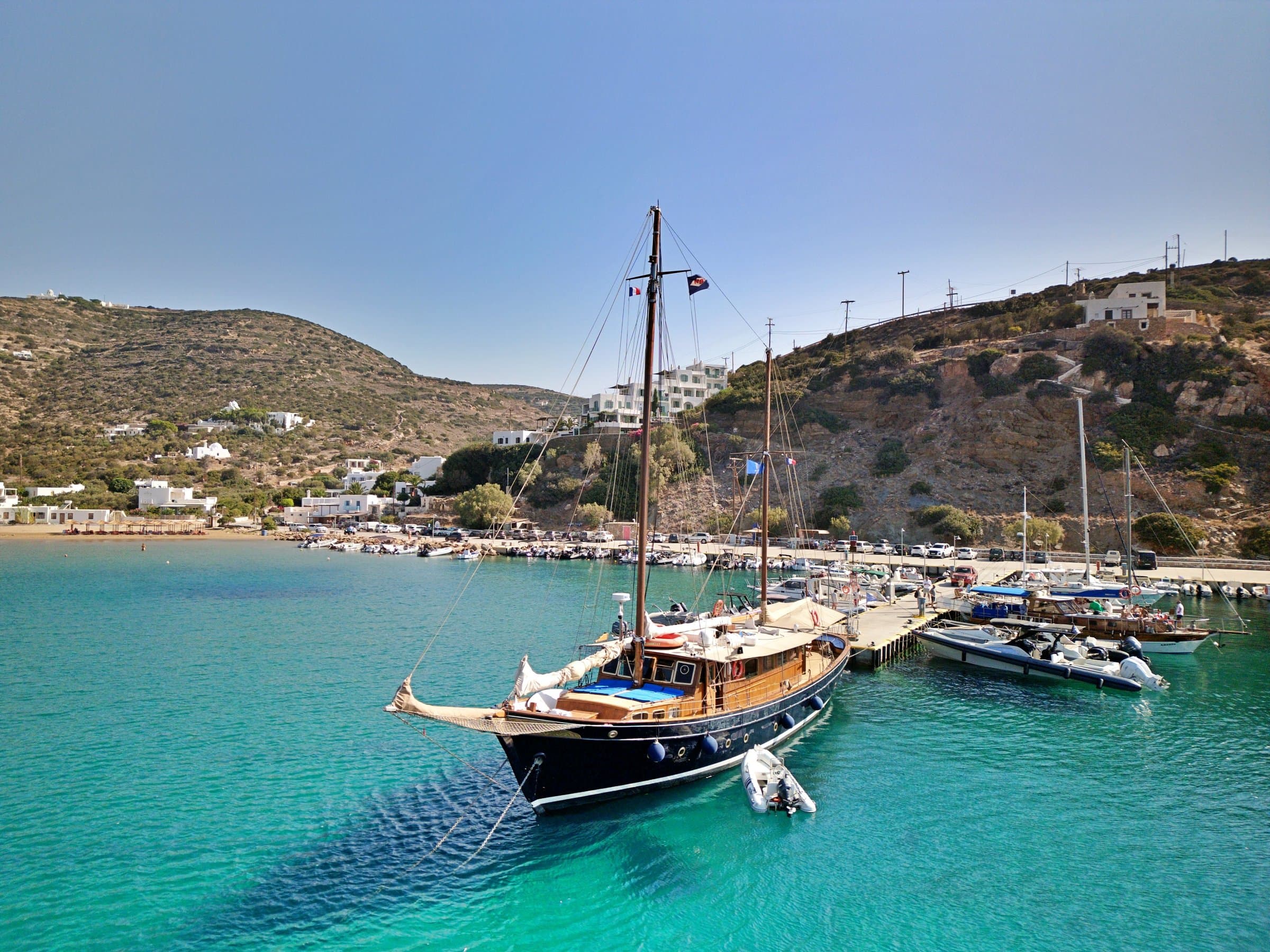
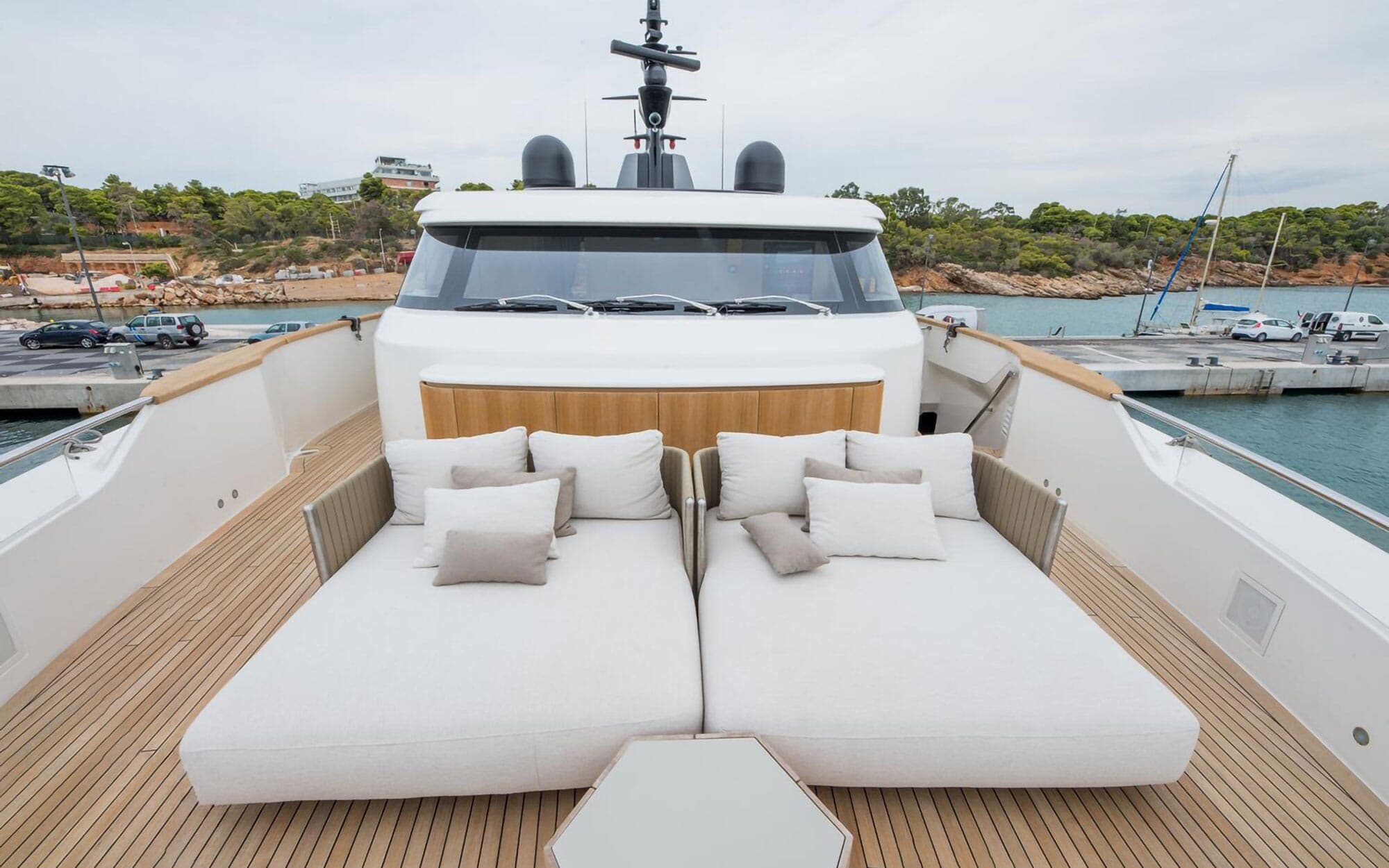
Crew continuity, however, is only part of it. A yacht is a brand. It should have its own personality, service standards and recognisable way of operating. The food, housekeeping, guest communication, water-sports programme and rhythm of the day should feel designed for that specific yacht — not improvised by whichever crew member joined most recently.
Crew members will inevitably change. The guest experience should not be reinvented every time they do. Clear procedures, proper handovers and structured training allow new crew to enter an established system, understand its standards and improve it rather than replace it with their own version.
The strongest charter yachts deliver a coherent experience from one season to the next, while evolving through guest feedback, crew observations and operational lessons.
When I inspect a yacht, I am not only looking at décor. I look at cabin practicality, storage, noise and vibration, water access, exterior shade, tender operation, galley organisation, crew presentation and how the senior crew speak to each other. A yacht can photograph beautifully and still be wrong for the client.
How provisioning and the preference sheet work
Before embarkation, the charterer completes a preference sheet. This gives the crew the information needed to provision the yacht and plan the service.
It normally covers:
- arrival and departure logistics;
- guest names and cabin allocation;
- food likes and dislikes;
- allergies and dietary restrictions;
- preferred meal times;
- dining style;
- wines, spirits and soft drinks;
- planned celebrations;
- preferred activities and water toys;
- desired balance between anchorages and ports;
- any medical or accessibility requirements relevant to the crew.
Be specific.
If you want a particular Champagne, wine, spirit, vintage or mixer, identify it. If one guest drinks decaffeinated coffee or eats earlier than the rest of the group, say so. The chef and interior team can only work from the information they receive.
Certain requirements should be raised before yacht selection rather than left until the preference-sheet stage:
- Kosher catering. Requires a chef trained in kosher cuisine, a galley that can be kashered, and scheduling that respects Sabbath. A small number of yachts can do this properly; most cannot. Match at yacht selection.
- Strict halal requirements. Easier than kosher, but still benefits from a chef with halal experience and clean sourcing. Flag upfront.
- A fully vegan group. Any good chef can do vegan for one or two guests; feeding an entire vegan party well for seven days is a different skillset. Confirm the chef's background.
- Severe or life-threatening allergies — especially airborne (nuts) or life-threatening reactions (shellfish, coeliac gluten). The galley needs protocols and the crew needs training. Safety-critical, not a preference.
- Medical equipment requiring refrigeration.
- Substantial mobility or accessibility requirements.
The general rule: if the requirement rises to the chef or crew needs to actively plan around this, flag it at yacht selection. If it's preference-level, the preference sheet is enough.
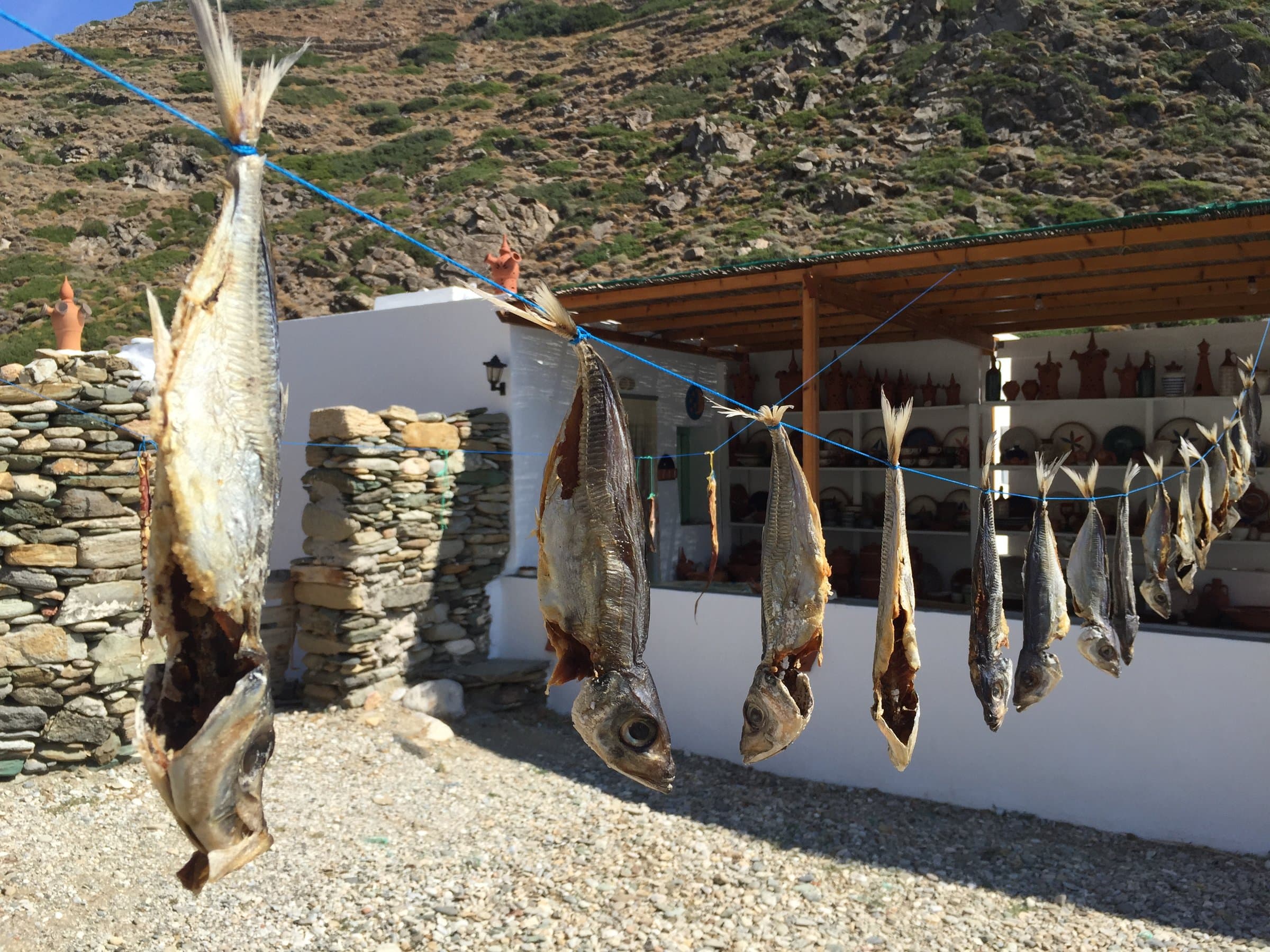
Provisioning in Greece can be exceptionally good. A capable chef working with reliable local suppliers can use fish, vegetables, cheeses, olive oil and wines from the regions being visited. For many groups, that is preferable to building the entire menu around imported luxury labels. On Flori, chef Kalogerakis leans into exactly this — what's landed that morning, what's in season, what the specific island is known for.
Does the broker's job end when the contract is signed?
It should not.
Before embarkation, the broker should coordinate the preference sheet, payments, transfers, yacht and crew information, proposed itinerary and any dietary, medical or accessibility requirements. During the charter, the captain remains responsible for the yacht and all safety and operational decisions. The broker remains available to deal with the commercial, logistical and service issues around them.
What actually comes up?
The weather changes. The meltemi strengthens and the planned crossing becomes uncomfortable. The captain proposes another route. The broker helps reorganise reservations, transport and shore plans so the replacement still feels like a decision — not a loss.
The guests change their minds. On day three, the group decides to stay at anchor instead of going ashore. Fine. But restaurant bookings, berthing, transport and galley planning may all need to change. Someone has to coordinate it.
Something technical misbehaves. The captain and yacht manager handle the technical response. A local broker can help find the right technician, organise shore-side support and keep the charterer properly informed without turning their holiday into a service call.
The service is missing the brief. If the food or interior service is not quite landing for one guest, the broker can speak discreetly with the captain and central agent and help recalibrate it before the issue becomes the story of the week.
Something genuinely urgent happens. A medical issue, a guest needing to fly out early, a transfer changing at midnight. These situations are rare, but they are when you want someone in Greece who answers the phone and knows who to call.
That is the value of a local broker over a listing platform. A platform can display yachts. It cannot take responsibility for how a specific yacht, crew and itinerary work together.
What surprises repeat Greek-charter clients
That the same itinerary, a year later, produces an entirely different charter.
Greece isn't one destination; it's six or seven distinct charter regions — Cyclades, Ionian, Saronic, Dodecanese, Sporades, the Peloponnese coastline, Crete — plus hundreds of islands inside them, plus real variation between two islands half an hour apart. Kythnos and Sifnos are neighbours and different planets. Kea is forty minutes from Athens and feels like Tuscany. Donousa is two hours from Naxos and you'll be alone in a bay all afternoon.
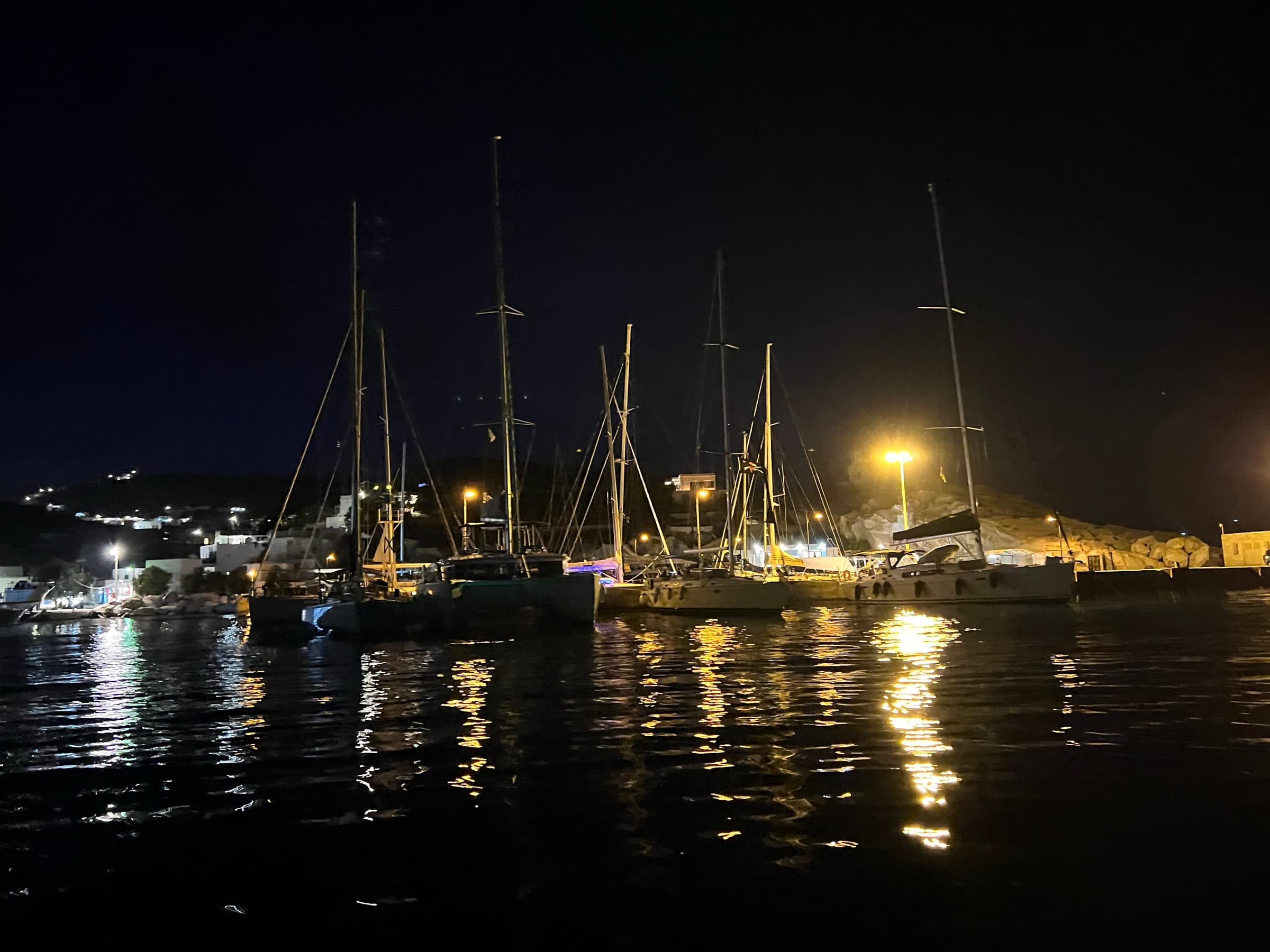
Change two islands and the charter is new. Change the yacht — the same route on a sailing catamaran feels nothing like a 40m motor yacht — and it's new again. Change the month and the sea, the wind, the crowd and the food are all different. Clients who come back year after year never stop finding new places, because the country keeps producing them.
How booking a yacht charter in Greece works
The process normally follows six steps. (This is the sequence the HowTo schema marks up.)
1. Send the initial brief. Provide: preferred dates; charter length; guest numbers; required cabins; ages of any children; preferred region, if known; previous charter experience; the group's priorities; a realistic all-in budget.
2. Review a focused shortlist. The broker should present yachts that suit the actual brief, not simply every yacht available within a wide price range. The shortlist should explain the trade-offs between the yachts, including crew, cabin layout, exterior space, water access, toys, speed, fuel use and itinerary suitability.
3. Select the yacht and agree the principal terms. Confirm: dates; delivery and redelivery ports; charter fee; VAT; APA; any positioning charges; any special conditions; cruising limits.
4. Sign the charter agreement and pay the first instalment. The amount and deadline are those stated in the agreement. A 50% first instalment is common, but the signed contract controls.
5. Complete the preference sheet and settle the balance. The final instalment, VAT, APA and any other agreed amounts must be paid by the contractual deadline.
6. Embark. The captain assumes operational responsibility for the charter, administers APA expenditure and adjusts the itinerary as required by weather, safety and the group's preferences. At the end of the charter, the APA is reconciled.
What a useful first charter enquiry looks like
Four pieces of information transform the yacht-selection process.
The group profile. Is it a family charter, couples' trip, group of friends, corporate programme or multi-generational holiday? State the number of guests, ages of children and cabin requirements. Eight guests do not necessarily require four identical cabins. A multi-generational family may need easy boarding, shaded exterior space, cabin separation and fewer internal steps. A group of eight friends may care more about equal-sized cabins, sound separation and a large exterior dining area. The same budget can produce two completely different shortlists.
The priority. What should the charter be built around? Quiet anchorages; island towns and evenings ashore; food; water sports; wellness facilities; nightlife; long sailing passages; privacy; time together as a family. The yacht with the largest volume is not necessarily the right yacht. The chef, crew style, water access or cabin arrangement may matter more.
The budget. Give an all-in range rather than only a desired charter fee. A range such as "€100,000–€150,000 in total" is much more useful than asking for yachts advertised around €100,000 without accounting for VAT, APA and gratuity. Tell me the real number and I will tell you plainly what it buys.
Previous experience. If you have chartered before, explain what worked, what did not, which yacht you used, what you would change, and whether the pace felt too fast or too slow. This can reduce the selection process substantially.
Why use a Greek broker rather than a global aggregator?
A database can show length, cabins, rates and photographs. It cannot tell you the yacht's current condition, whether the senior crew work well together, whether the chef suits your group, how noisy the master cabin is underway, or whether the itinerary makes sense for your dates.
A broker with first-hand knowledge can. Concretely, local knowledge produces: an itinerary that respects the weather pattern on your specific dates rather than a template; a berth already lined up at the busy ports; a table at restaurants that don't take online reservations; a yacht inspected recently rather than known from a brochure.
Local knowledge also shows up after embarkation. Weather changes. A berth falls through. A guest needs to leave early. A technician is needed on a Saturday night. Those are not brochure problems; they are operational problems, and they require people who know the yacht and the place.
There is one more dimension. The best yachts — the ones with the most returning clients, the most stable crews, the strongest reputations — are usually managed by a small number of central agents, and those central agents place them preferentially with brokers they trust. That network is built over decades; it is not replicated by software.
Large platforms have their place. They are useful for initial research and work well at scale. But a high-value crewed charter should not be reduced to a search result and a customer-service ticket. For this level of charter, you want a broker who knows the yacht, understands the cruising area and remains directly accountable throughout the booking.
Who is a crewed yacht charter actually for?
More people than first-time clients assume — but not everyone.
A crewed charter works particularly well for families, couples, groups of friends and multi-generational parties who value privacy, flexible timing and the ability to move without changing accommodation.
Think about what the format actually gives you. The same cabins all week. Food written around your preference sheet. A crew looking after only your group. No strangers at the next table. No repacking. The yacht moves and you wake somewhere new.
For families, the practical benefit is substantial: children keep the same bed and routine, parents brief one crew, and the group shares one private space rather than reorganising itself at every hotel.
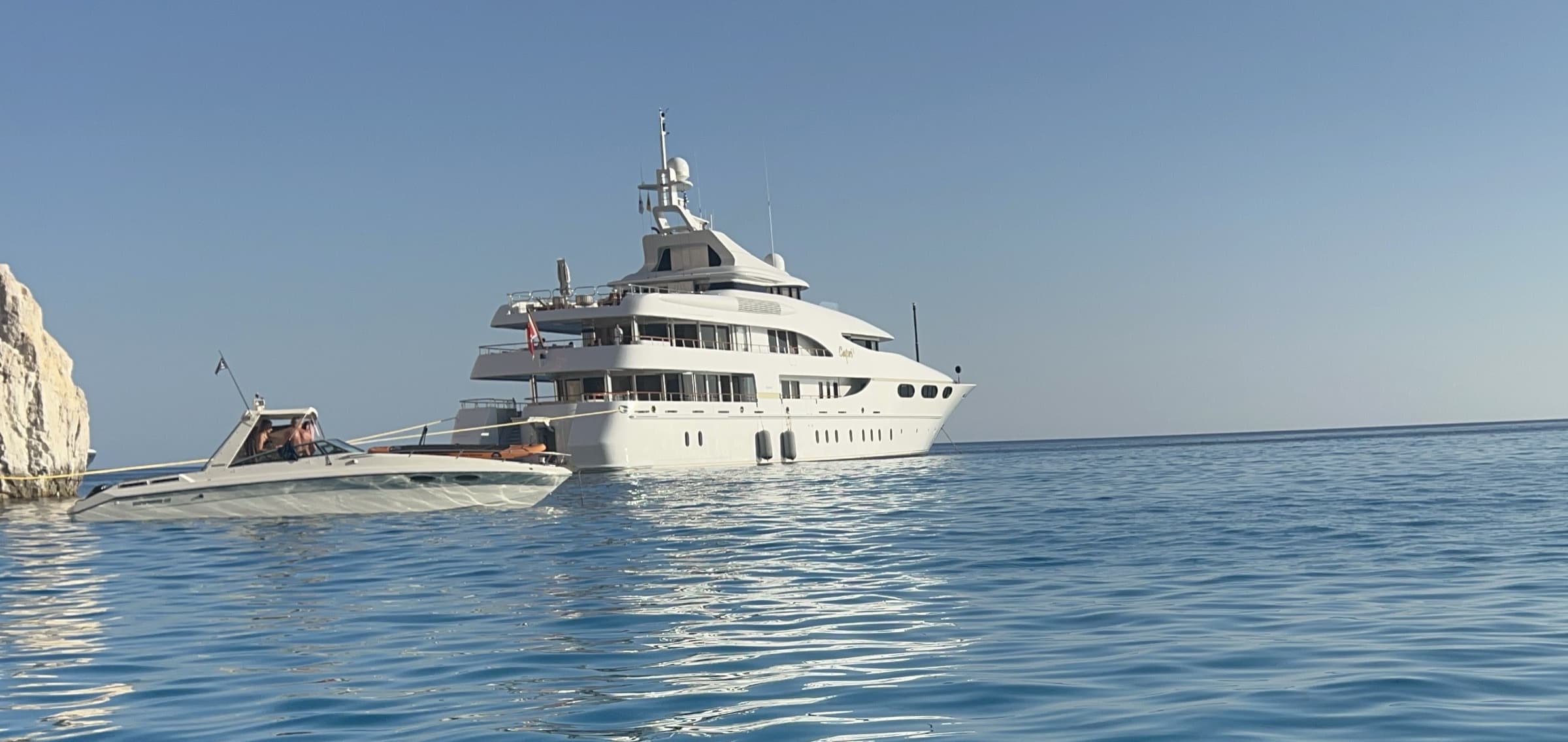
Who should not charter? Someone who fundamentally dislikes being at sea, needs immediate access to advanced medical facilities, wants to remain in one city, or has no interest in using the yacht to move, swim, anchor or explore. In those cases, a villa or hotel may be the better holiday.
The first decision is whether the format suits the group. The second is which yacht and Greek cruising region fit it best.
Request a Greek yacht charter shortlist
Send us:
- preferred dates and charter length;
- number of guests and required cabins;
- ages of any children;
- preferred cruising region, if known;
- previous charter experience;
- the group's principal priority;
- realistic all-in budget.
We will recommend a focused selection of crewed yachts, explain the differences between them and identify any itinerary, weather or cost considerations before you commit.
About the Author
Frequently Asked Questions
How much does it cost to charter a yacht in Greece?+
A crewed yacht charter in Greece is priced through the charter fee, VAT (an effective 5.2–13% for qualifying Greek charters, confirmed per booking) and APA, typically 35–40% of the charter fee. Crew gratuity is separate and discretionary. As a rule of thumb, budget 55–70% on top of the charter fee to cover VAT, APA and gratuity together. Smaller crewed sailing yachts begin around €15,000 per week before extras; 25–30m motor yachts run roughly €50,000–€100,000 per week; 40m+ yachts begin around €120,000 per week. Ask for an all-in estimate for the particular yacht and itinerary.
What is included in the yacht charter fee?+
The charter fee normally covers the use of the yacht, its equipment, crew, insurance and ordinary operational maintenance. Fuel, food and drinks, berthing, port charges, shore arrangements and other variable charter expenses are normally paid from APA.
What is APA in yacht charter?+
APA is the Advance Provisioning Allowance — an advance fund, typically 35–40% of the charter fee, administered by the captain to pay variable charter expenses such as fuel, provisions, drinks, berthing and local agents. It is reconciled at the end of the charter, with any unused balance returned and any shortfall settled by the charterer. APA is not income for the broker or owner; it remains the charterer's money, spent on their behalf.
How much VAT applies to a yacht charter in Greece?+
For qualifying Greek crewed yacht charters, the effective VAT may fall between approximately 5.2% and 13%. The rate depends on the yacht's certification, navigation status and charter structure and must be confirmed for the specific booking.
When is the best time to charter a yacht in Greece?+
For many clients, early to mid-June and mid-to-late September offer the best balance of warm weather, fewer crowds and less exposure to the peak July–August meltemi. September sea temperatures around the Cyclades commonly reach 24–25°C — the warmest of the year. July and August remain appropriate for clients who want the busiest part of the season and accept higher demand and a greater possibility of strong Aegean winds.
Is the Cyclades too windy in July and August?+
Not necessarily, but July and August are the principal meltemi months, when the wind can reach Force 6–7 in exposed areas. It can affect crossings, anchorages and the planned sequence of islands. A Cyclades charter during this period should have a flexible itinerary and suitable alternatives.
Which is better: the Cyclades, Ionian or Saronic?+
Choose the Cyclades for varied Aegean islands and a more active itinerary; the Ionian for greener scenery and generally calmer cruising; and the Saronic for shorter passages, easy access from Athens and town-based evenings.
How many islands can a yacht visit in one week?+
It depends on the region, yacht speed, weather and the group's preferred pace. Five to seven stops can be realistic within a compact island cluster, but the objective should not be to maximise the island count. A good itinerary leaves enough time to swim, eat, explore and respond to weather changes.
Can the captain change the itinerary because of weather?+
Yes. The captain is responsible for the yacht's safety and may alter the itinerary when weather, sea conditions, port restrictions or operational considerations require it. A well-designed charter plan includes alternatives rather than depending on every stop taking place exactly as proposed.
How far in advance should I book?+
For July and August, six to twelve months ahead normally provides a better selection of yachts. June and September may offer more flexibility, but the strongest yachts and crews can still book well in advance.
Is crew gratuity mandatory?+
No. Gratuity is discretionary. In Mediterranean charter practice, clients are commonly guided towards approximately 10–15% of the charter fee when the service has met or exceeded expectations. It is normally given to the captain for distribution among the crew.
What should I include in my first enquiry?+
Send your dates, guest and cabin requirements, ages of children, preferred region, previous charter experience, principal priorities and realistic all-in budget. This allows the broker to prepare a focused shortlist rather than a broad list of loosely suitable yachts.