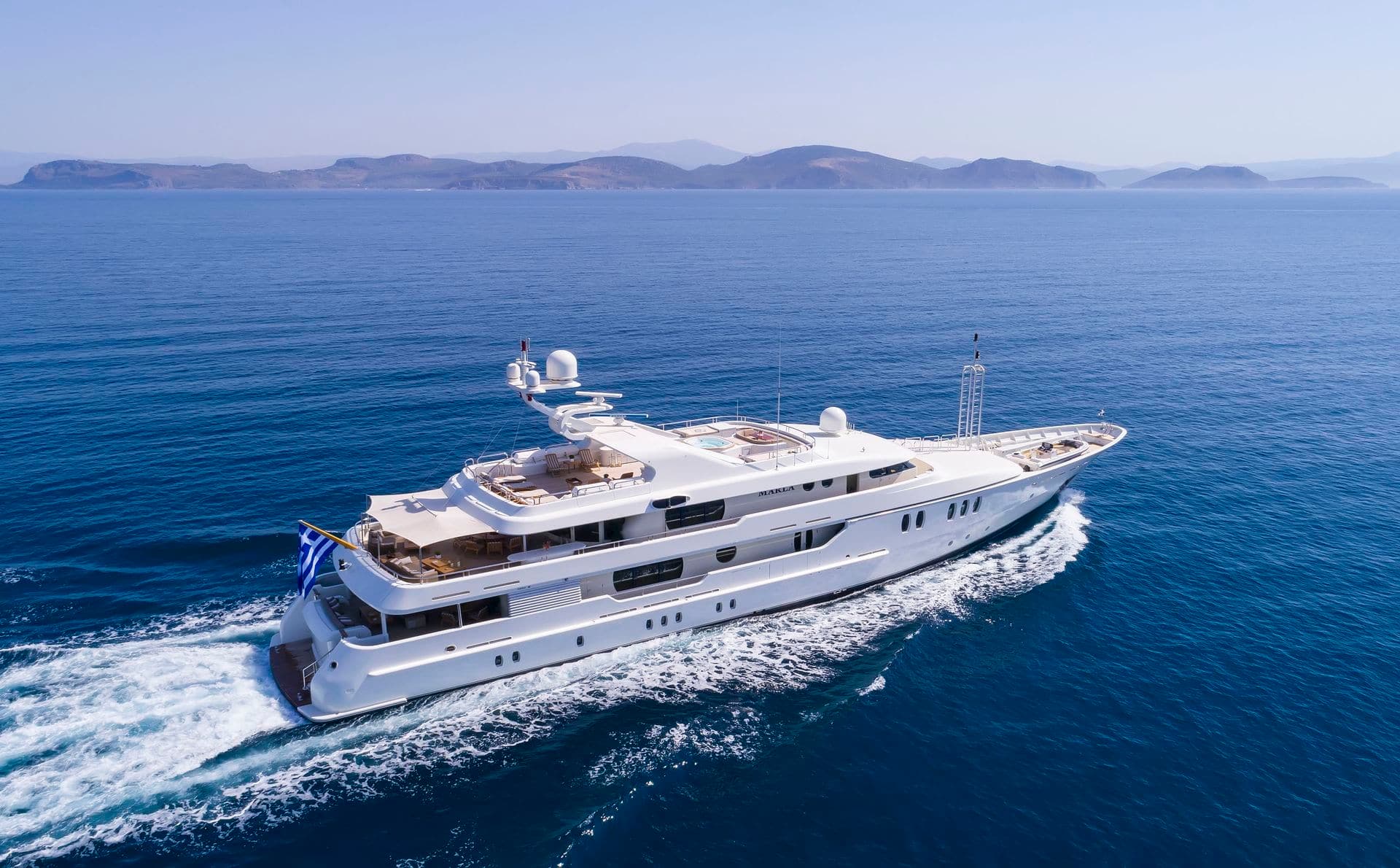
The ancient Greeks built a temple to Poseidon on the southernmost cape of Attica, where the Aegean meets the Saronic Gulf. Approaching it by yacht at sunset remains one of the most moving experiences in Mediterranean sailing.
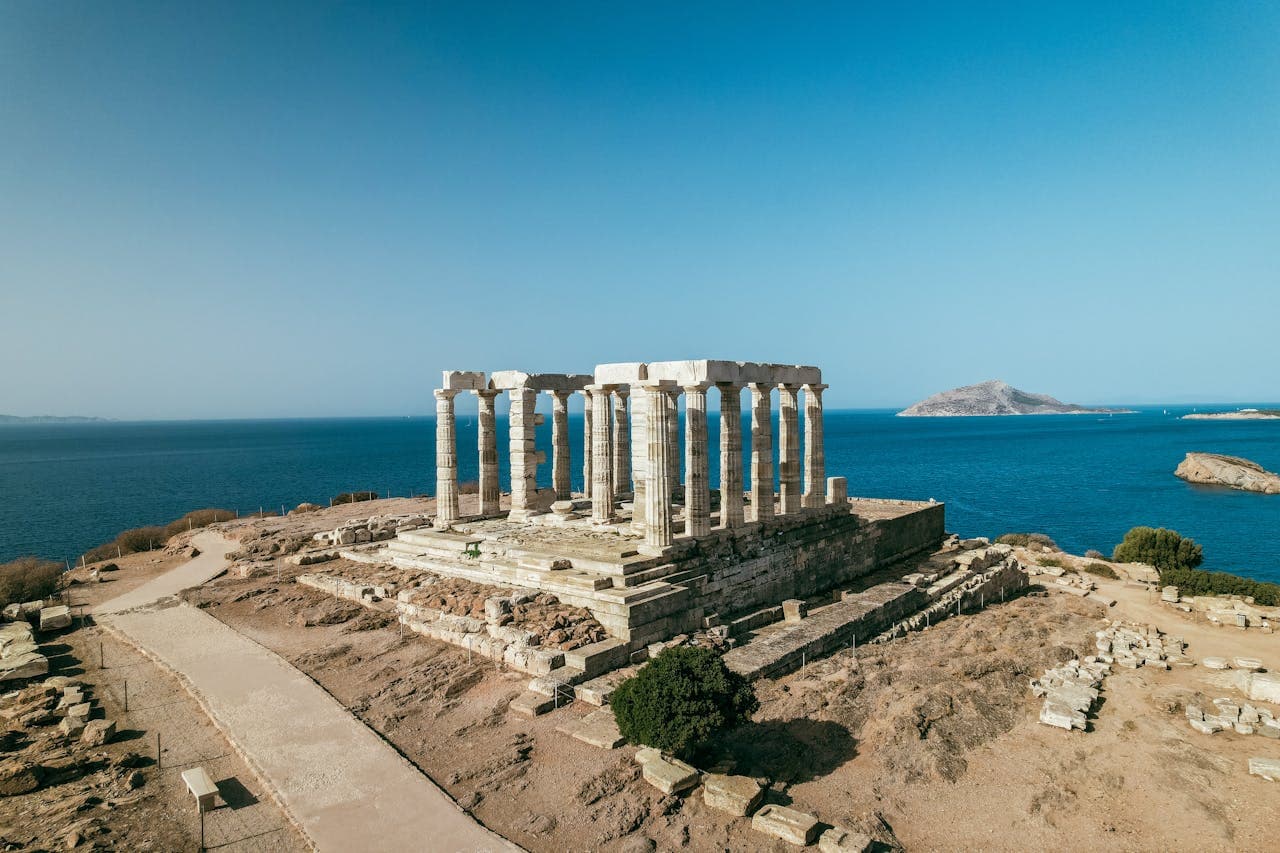
The Temple of Poseidon at Cape Sounion occupies one of the most dramatic positions in the ancient world: a marble colonnade perched on a headland 60 metres above the Aegean, marking the point where Attica ends and the sea begins. The ancient Greeks placed it here for good reason — it was the last thing sailors saw when leaving Athens, and the first sign of home on their return.
The Approach by Sea
Approaching Sounion by yacht is an experience that no land-based visit can replicate. The temple appears gradually as you round the cape from the east, its Doric columns silhouetted against the sky. In the late afternoon, the white marble turns amber, then gold. The effect is quietly theatrical — a building designed to be seen from the water, seen exactly as intended.
The anchorage below the cape is on the western side, protected from the prevailing northerlies that dominate in summer. The bottom is sandy with patches of rock, and the depth drops quickly — 5 to 8 metres within 100 metres of shore. In calm conditions, the crew will set the anchor and guests can swim in water that is startlingly clear, with the temple directly above.
History and Context
The current temple dates to 444 BC — roughly contemporary with the Parthenon. It was built on the ruins of an earlier temple destroyed by the Persians in 480 BC. Fifteen of the original 34 columns still stand. One of them carries the carved graffiti of Lord Byron, who visited in 1810 and could not resist leaving his name. The site has been drawing visitors for a very long time.
Timing
The ideal approach is from the south or east in the late afternoon, arriving around 17:00 in summer. This allows time to anchor, swim, and watch the sunset from the water. The light at this hour is extraordinary — a quality particular to the eastern Mediterranean that painters and photographers have tried to capture for centuries.
For charters departing Athens, Sounion makes an ideal first-afternoon stop. It is roughly 35 nautical miles from Vouliagmeni — two hours at a comfortable cruising speed — and sets a standard for the week that is difficult to surpass.
A Note on Conditions
The anchorage at Sounion is not suitable in strong southerlies. When the wind blows from the south — uncommon in summer but possible in spring and autumn — the swell wraps around the cape and the anchorage becomes untenable. A good captain will monitor conditions and adjust. In settled weather, however, it is one of the finest evening anchorages in the Aegean.
1 photograph