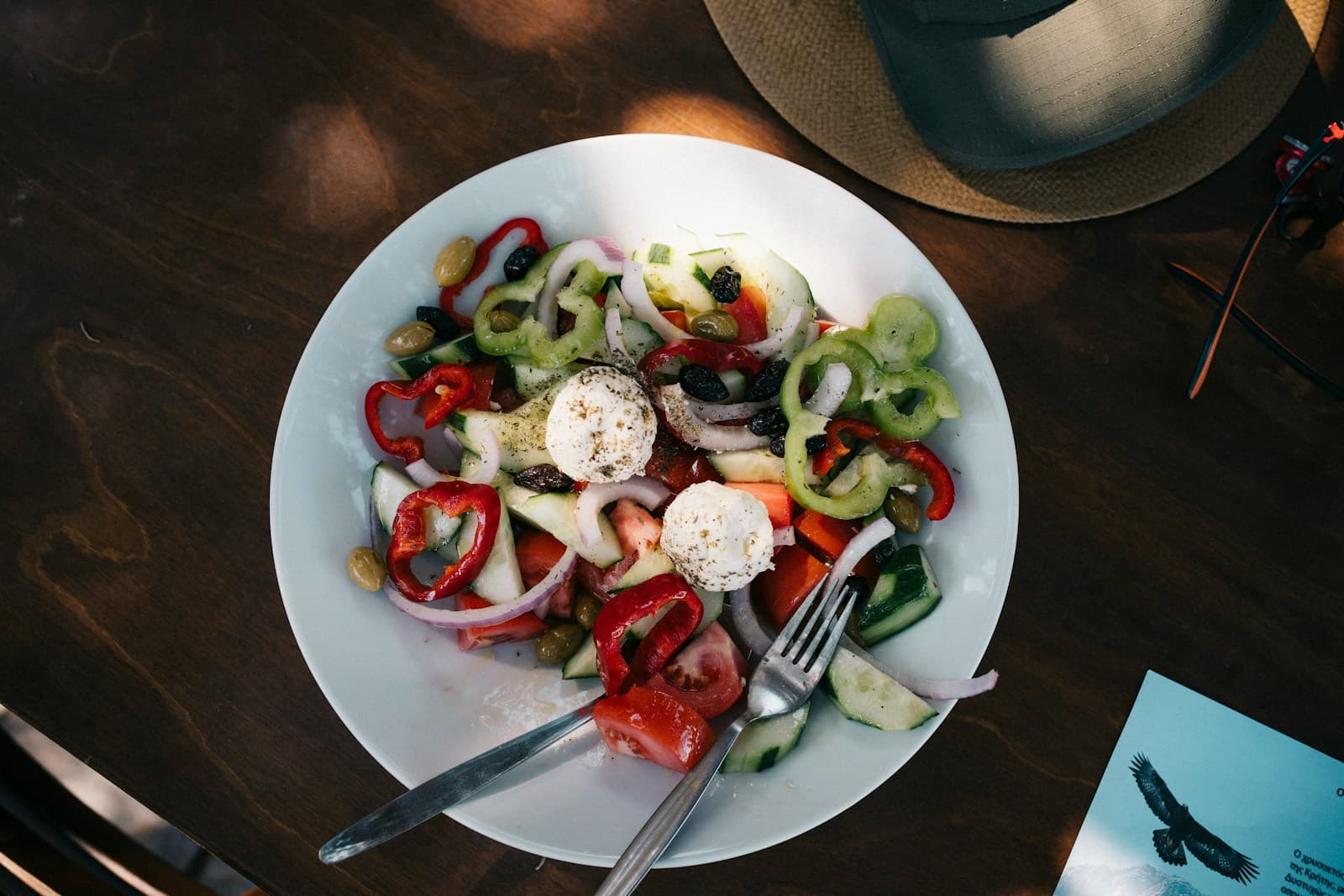
Seven islands, seven dinners, one unforgettable week. A gastronomy charter through the Aegean is more than a meal at sea — it is a journey through Greece's culinary heritage.
A gastronomy charter through the Greek islands is not a restaurant tour at sea. It is something more specific: a week spent eating the way Greece eats when no one is watching — in small harbours, at kitchen tables, from clay pots and charcoal grills, with ingredients that were in the ground or the sea that morning.
The Premise
Greece's culinary tradition is hyper-local. Every island, every village, every family has its own version of the same dishes — and the differences, while subtle, are the point. The tomato in Santorini tastes different from the tomato in Sifnos because the soil, the water, and the microclimate are different. The octopus in Lesvos is hung to dry in a different wind than the octopus in Naxos. A gastronomy charter follows these threads from island to island, meal to meal.
The Yacht's Role
The chef aboard a charter yacht is not cooking from a fixed menu. They are responding to what is available, what is local, and what the islands offer that day. A good charter chef — and the best in Greece are very good — will visit the morning market, buy from fishermen on the quay, and adapt the evening menu to what they found.
This is not performative. It is how the Mediterranean has always eaten: seasonally, locally, and without the pretence that a menu written three weeks ago has anything to do with what is actually good today.
An Island-by-Island Table
Sifnos
The gastronomic capital of the Cyclades. Sifnos has a culinary tradition built on clay-pot cooking — chickpeas, lamb, cheese pies — that predates tourism by centuries. The island's revithada (slow-baked chickpea stew) is cooked overnight in wood-fired ovens and served on Sunday mornings. A charter timed for a Sunday in Sifnos should not miss this.
Milos
Volcanic soil gives Milos its distinctive ingredients: cherry tomatoes, capers, and a white cheese called xyno that exists nowhere else. The waterfront tavernas in Pollonia serve fish that was swimming two hours ago. The preparation is minimal because the ingredients need nothing added.
Naxos
The largest and most fertile of the Cyclades. Naxos produces potatoes, citrus, dairy, and meat — a rarity in the island chain. The local graviera cheese is excellent, and the kitron liqueur (made from citron leaves) is unique to the island.
Santorini
The volcanic caldera produces three ingredients of global reputation: cherry tomatoes, white aubergines, and Assyrtiko wine. The tomatoes are grown without irrigation in volcanic ash, concentrated by the summer sun into something intensely flavoured. A salad made with Santorini tomatoes, local capers, and xyno cheese — dressed with nothing but olive oil — is one of the finest things you can eat in Greece.
Crete
If the charter extends to Crete, the culinary depth increases exponentially. Cretan cuisine is the foundation of the Mediterranean diet — wild greens, olive oil, mountain herbs, lamb, snails, and a tradition of hospitality that borders on obligation. A meal in a Cretan village is not a transaction. It is an invitation.
The Wine
Greek wine has undergone a quiet revolution. Assyrtiko from Santorini, Vidiano from Crete, Xinomavro from Naoussa — these are serious wines from serious producers, and they pair with the local food as naturally as you would expect from grapes and ingredients that share the same soil. A charter chef will source wines from the islands you visit, building a cellar that mirrors the itinerary.
Why It Matters
A gastronomy charter is not about eating expensive food. It is about eating honest food — food that is specific to a place, a season, a tradition. The yacht provides the means to move between these places. The islands provide the rest.