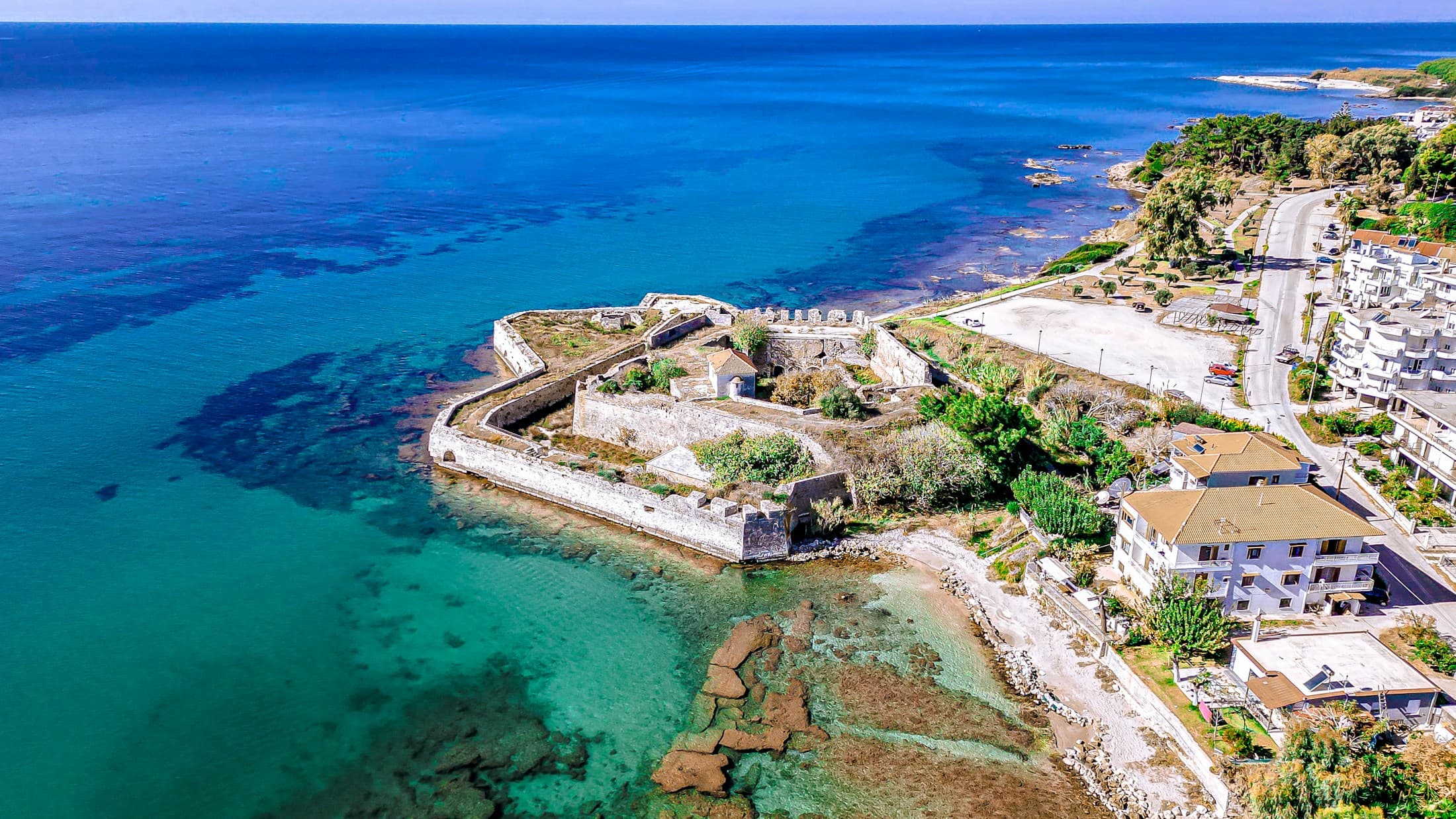
The Aegean is an open-air museum of uncommon depth. A culturally focused charter approaches sacred islands, fortified harbours, and Bronze Age landscapes in the order they were meant to be seen: from the sea.
A Sea of Layers
The Greek world makes the most sense when approached by water. Too much historical travel in Greece begins on roads and coach routes, which flatten the logic of the landscape into a sequence of inland stops. Yet the civilisations that shaped these islands were maritime cultures. Sanctuaries, harbours, fortified promontories, trade routes, and island alliances all depended on movement by sea. To come to them aboard a yacht is not simply more comfortable. It is closer to the original order of things.
This is the fundamental advantage of a culturally oriented charter in Greek waters. It restores geography to history. Delos appears not as a ticketed excursion from Mykonos but as a sacred island rising from the central Cyclades exactly where it must. A fortress on a headland explains itself because you have seen the channel it controlled. A Minoan harbour site becomes legible because you have arrived from the sea that sustained it. Even islands already known through tourism alter when one reaches them quietly and at the right hour.
At ADY we plan these itineraries for guests who are interested in history not as a checklist but as a way of reading place. Some want classical archaeology, some Byzantine and Venetian fortifications, some Bronze Age Crete, some an itinerary that simply weaves serious cultural stops into a charter week without becoming academic. The route depends on that distinction. The common requirement is judgment: there are far more possible sites than one can sensibly include, and a good itinerary values depth over accumulation.
The Cyclades and the Sacred Centre
Any serious Aegean cultural programme must consider Delos. There are few places in the Mediterranean where the relation between sea power, commerce, religion, and urban form is so plainly visible. Anchoring nearby and landing at opening time transforms the visit. Day visitors rush. A yacht itinerary allows time. You see the theatre quarter in quiet, move slowly through the sanctuaries, and stay long enough for the island's strange stillness to register.
Nearby islands offer useful contrasts. Mykonos is rarely valued for culture itself, yet it serves as a logistical counterpoint to Delos. Syros, with its neoclassical capital Ermoupoli, reveals the nineteenth-century mercantile afterlife of the Aegean. Naxos carries Venetian remnants layered over a much older island story. Amorgos, with its monastery set against sheer rock, shows how later religious history continued to use the dramatic architecture of the islands.
East Aegean, Crete, and the Broader World
The eastern Aegean is often underused in cultural itineraries, which is precisely what makes it attractive. Samos, Chios, and Lesbos contain major historical material without the exhaustion of the more publicised Cyclades circuit. The Heraion of Samos is one of the great sanctuaries of the ancient world, and the island's position opposite Asia Minor places it within a wider eastern Mediterranean story that becomes obvious when one traces the route by sea.
Crete belongs to another scale entirely. A charter focused on the island's south coast can connect the better-known palace cultures with harbour sites and settlements that receive a fraction of the traffic. Knossos may remain inevitable for some guests, but there is often more to be learned from quieter sites such as Phaistos or Kommos, where the relation between the built remains and the coastline has not been obscured by the volume of visitors.
The Ionian, meanwhile, offers a different historical texture. Corfu, Paxos, Lefkada, Ithaca, and Kefalonia speak less of the classical Aegean city-state world and more of Byzantine continuity, Norman interventions, Venetian rule, and the western-facing orientation of these islands. A charter that begins in the Ionian and then returns east mentally maps how varied the Greek maritime world really was.
Why the Yacht Changes the Experience
The practical superiority of the yacht lies in time and sequence. You can be ashore when a site opens, not when the ferry arrives. You can leave when the light changes or when the place has yielded what it has to offer, not when a tour guide gathers the group. Lunch can happen back on board after a long morning among ruins rather than at the nearest convenient taverna. If a site proves more interesting than expected, the day can adjust around it.
A yacht also lets us include places that are difficult to fit into land itineraries because they make no sense as hotel-to-hotel transfers. Small fortifications, monastery landings, little-used museum towns, islands where the anchorage itself is part of the historical picture: these become easy to integrate when the vessel serves as your moving base.
For some guests, specialist guidance makes all the difference. We can arrange archaeologists, classicists, architectural historians, or local scholars to join for a portion of the charter where the subject genuinely warrants it. Done properly, this enriches the week without turning it into a lecture series. The purpose is not to over-explain every stone, but to help guests notice what they would otherwise miss.
How We Build a Cultural Charter
The first question is always one of emphasis. If a guest wants Bronze Age sites, one route follows. If they want classical sanctuaries and island urbanism, another. If they care more about later Greek, Venetian, and Byzantine overlays, the chart shifts again. We then balance site visits with the realities that still define a good charter: sea conditions, pacing, lunches, swims, and evenings that do not feel dutiful.
Open hours, landing restrictions, permits, and guide availability all matter. Some places reward a long morning; others are best approached briefly and in context. We handle that in advance. The best cultural charters are never improvised from a guidebook. They are edited.
The result, when properly planned, is not simply a holiday with ruins included. It is a way of seeing the Greek islands in the logic that made them important in the first place. Their history was written on the water. To travel through them by yacht is still the clearest way to read it.