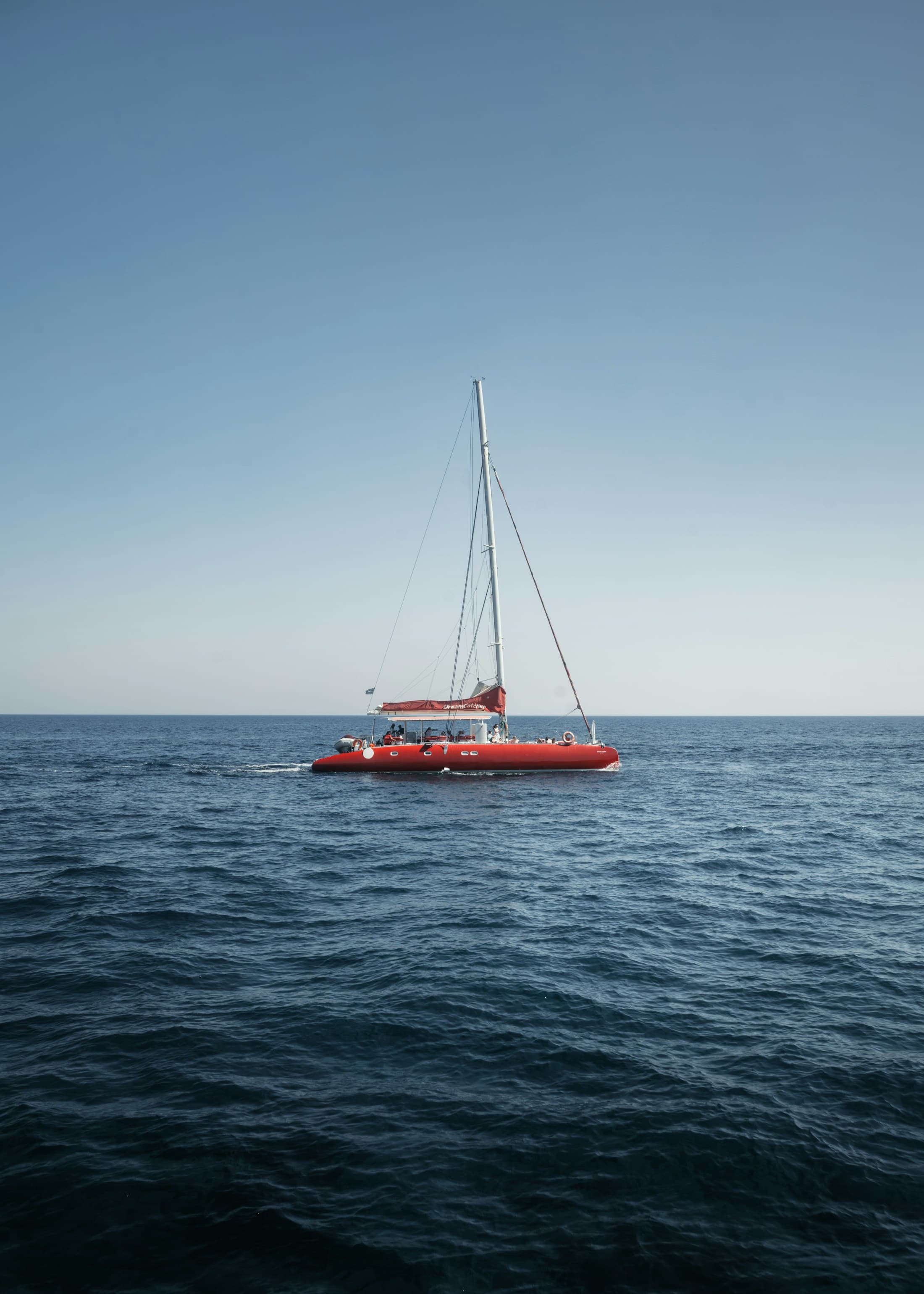
May, June, September, and October deliver the Mediterranean at its finest: clear water, quieter anchorages, and a charter rhythm that belongs to the sea rather than the crowd.
The Better Half of the Year
The Mediterranean high season has become so dominant in charter marketing that many guests assume July and August must be the best months to be on the water. They are certainly the most obvious. School holidays are fixed. Beach clubs are open at full stretch. Ports are animated late into the night and every quay appears to promise a version of summer at maximum volume. Yet the most experienced charterers tend, with time, to make a different calculation.
The finest Mediterranean charter often takes place at the edges of the season. In May, early June, September, and October, the same islands present themselves under calmer conditions. The sea is less crowded. Reservations do not govern the day. Captains have room to make sensible route choices rather than defensive ones. Guests step ashore into places that still feel inhabited rather than stage-managed for peak demand. That is why shoulder-season charters at ADY are not treated as a compromise. In many cases they are the more sophisticated choice.
We have been arranging shoulder-season programmes in Greek waters for decades, long before the term acquired its current marketing polish. In practice, the attraction has always been simple: the sea is more generous when fewer people are demanding the same experience from it. The light is better, the pace is better, and the standards ashore are often better too, because the people serving you are operating normally rather than under August pressure.
Why These Months Work
May is the month of reawakening. In the Ionian, the hills are still green from winter rains, the water has begun to warm, and harbours feel local rather than overrun. Corfu, Paxos, Lefkada, Kefalonia, and Ithaca all carry a freshness that disappears later in the summer. In the Cyclades, the island forms are at their clearest in May. The villages are white rather than dusty, the mornings cool enough for walking, and the bays still quiet when the yacht drops anchor.
June, particularly its first half, extends these advantages with slightly warmer water and more settled operating conditions. In the Saronic Gulf and the Argolic coast, one can move easily between Hydra, Spetses, Poros, Ermioni, and Nafplio without feeling pushed by traffic or wind. The meltemi has not yet established its summer authority over the central Aegean, so itineraries through the Cyclades remain flexible in a way they are not guaranteed to be later on.
September is, for many of us, the Mediterranean's most persuasive month. The sea has had all summer to warm and holds that heat well into the month. The worst congestion has passed. Crews are still at full strength, restaurants are still fully staffed, and suppliers have not yet begun to wind down. A September charter gives you the substance of summer without its compression. Swimming is at its best, passages are easier, and the social atmosphere ashore is civilised rather than frantic.
October is quieter still, and for the right guest it is exceptional. The Dodecanese and the southeastern Aegean hold warmth later than the central Cyclades, making Rhodes, Symi, Kos, Patmos, and nearby islands particularly attractive. Light becomes softer and more directional. Archaeological sites, local wineries, inland villages, and serious restaurants are easier to enjoy because the day no longer revolves around heat management and crowd avoidance.
The Difference on the Water
The practical consequences of chartering in the shoulder months are greater than outsiders often imagine. In high season, a captain may need to choose an anchorage early simply to secure space. In September or May, the same captain has time to read the bay properly, move if the swell changes, or wait until late afternoon light improves. A lunch anchorage can remain a swim anchorage. A swim anchorage can become the evening stop because there is no operational penalty for staying.
Shoulder season also changes the relationship with the places themselves. Delos in late spring can still be experienced with a degree of quiet. Hydra in September morning light is an entirely different proposition from Hydra on an August weekend. Nafplio in October feels like a town rather than an event. Even heavily visited islands such as Santorini become manageable if approached at the right hour and in the right month.
How We Plan These Charters
The important point is that shoulder-season itineraries should not simply be summer itineraries moved to a different date. They need to be designed for what the season offers. In May, we might build more walking, site visits, and lunches ashore into the programme because the temperature permits it. In September, we might use longer swim stops and more open-water passages because the sea is at its most inviting. In October, we may favour the southeast Aegean or a Saronic and Peloponnese route rather than the more exposed northern Cyclades.
We also build in the right degree of flexibility. Shoulder-season weather is often superior to peak summer, but it is less rigidly repetitive. That is an advantage, not a problem, provided the itinerary has been designed by people who know the alternatives. A route through the Saronic can be adjusted without loss of quality. The Dodecanese can be calibrated according to the wind. A Peloponnese-focused programme can mix ports, anchorages, cultural stops, and longer lunches ashore in a way that feels organic rather than improvised.
There is a financial case as well. Charter rates are often lower than in July and August for comparable vessels, and berth availability is materially better. But the real value lies less in price than in quality. The shoulder season gives guests more of what they thought they were paying for in the first place: space, discretion, flexibility, and time.
We are glad to discuss which window best suits your schedule, your sea tolerance, and the sort of atmosphere you want from the week. For many guests, the first shoulder-season charter is the one that permanently changes how they think the Mediterranean should be done.