One of the Mediterranean's most rewarding itineraries links Athens, the ancient Aegean capital, to Rhodes in the far south. This 350-nautical-mile, one-way cruise traverses the heart of the Aegean, threading through the Cyclades and Dodecanese archipelagos — islands steeped in mythology, Byzantine heritage, and classical beauty. The voyage includes the cosmopolitan pulse of Mykonos, the spiritual resonance of Patmos, and culminates in the medieval splendour of Rhodes.
Your VoyageAthens (Piraeus) to Kythnos
Depart Piraeus Marina Zea, the main sailing port of Athens, and head southeast 55 nautical miles toward Kythnos, the gateway island of the Cyclades. The initial passage crosses the outer Saronic Gulf; the approach to Kythnos is straightforward, with numerous protected anchorages. The island itself is lightly visited compared to its famous Cycladic neighbours. Loutra, the main village, offers a harbourfront restaurant scene and local provisioning. The island is known for thermal springs and excellent white wine; detours to smaller villages like Dryopida reveal whitewashed stone houses and narrow alleys. Kythnos sets the tone for the voyage — authentic, welcoming, and far less crowded than islands to the north.
Kythnos to Mykonos
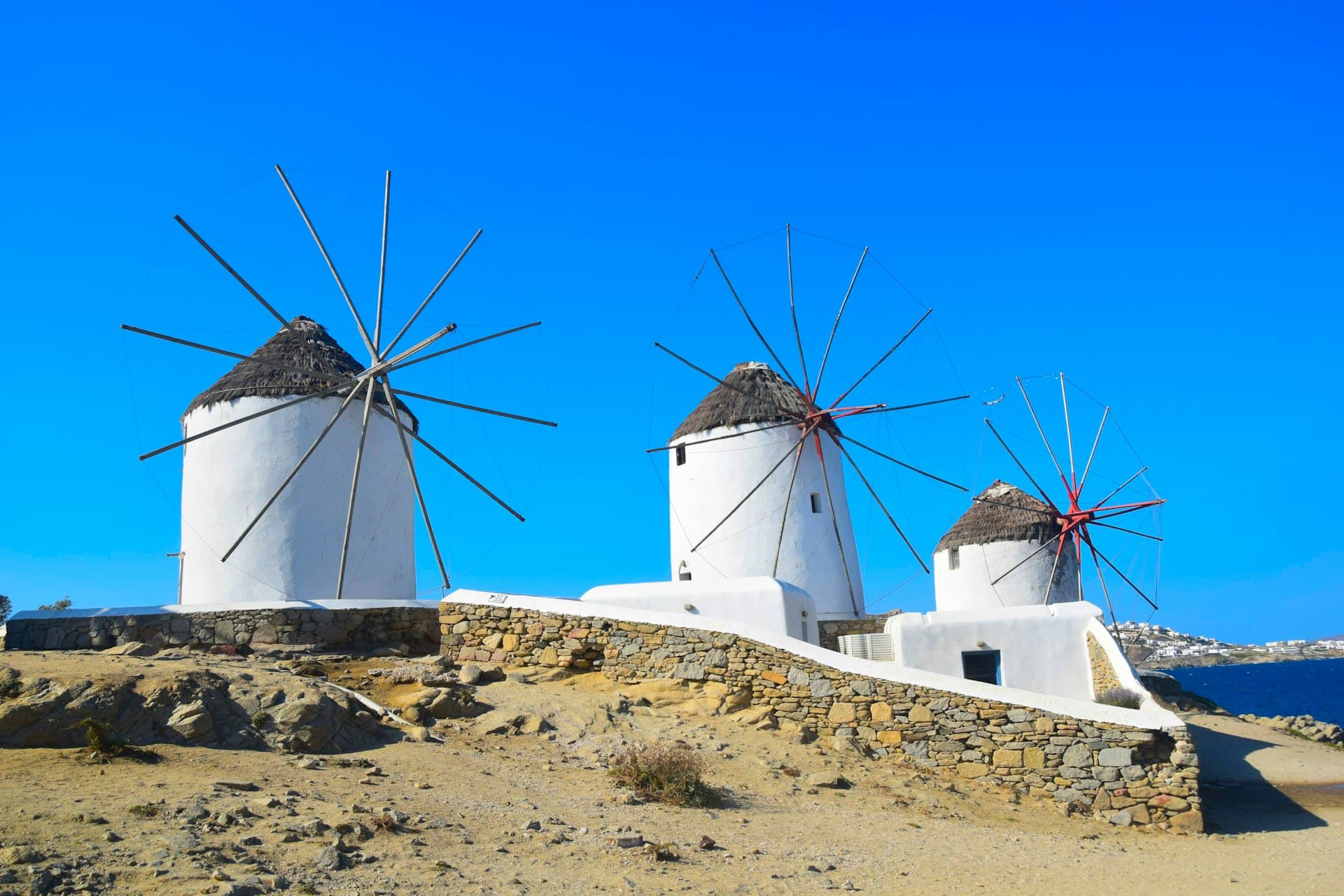
A 48-nm sail northeast brings you to Mykonos, the most cosmopolitan of the Cyclades. Mykonos Town rises amphitheatrically from a natural harbour, its whitewashed buildings and blue-domed churches creating an iconic silhouette. The harbour is lively — ferries, day-trip boats, and yachts mingle in the crowded anchorage. The shorefront is lined with restaurants, bars, and boutiques; the pace is vibrant and upmarket. Above the waterfront, narrow lanes wind through the old town; the windmills overlooking the harbour are among the most photographed structures in Greece. Sunset from the waterfront, with the windmills backlit, is a quintessential Cycladic moment. Mykonos attracts a young, international clientele; July and August are peak season. Consider anchoring in the quieter bays on the island's east or south coast if main harbour berths are full.
Mykonos to Patmos
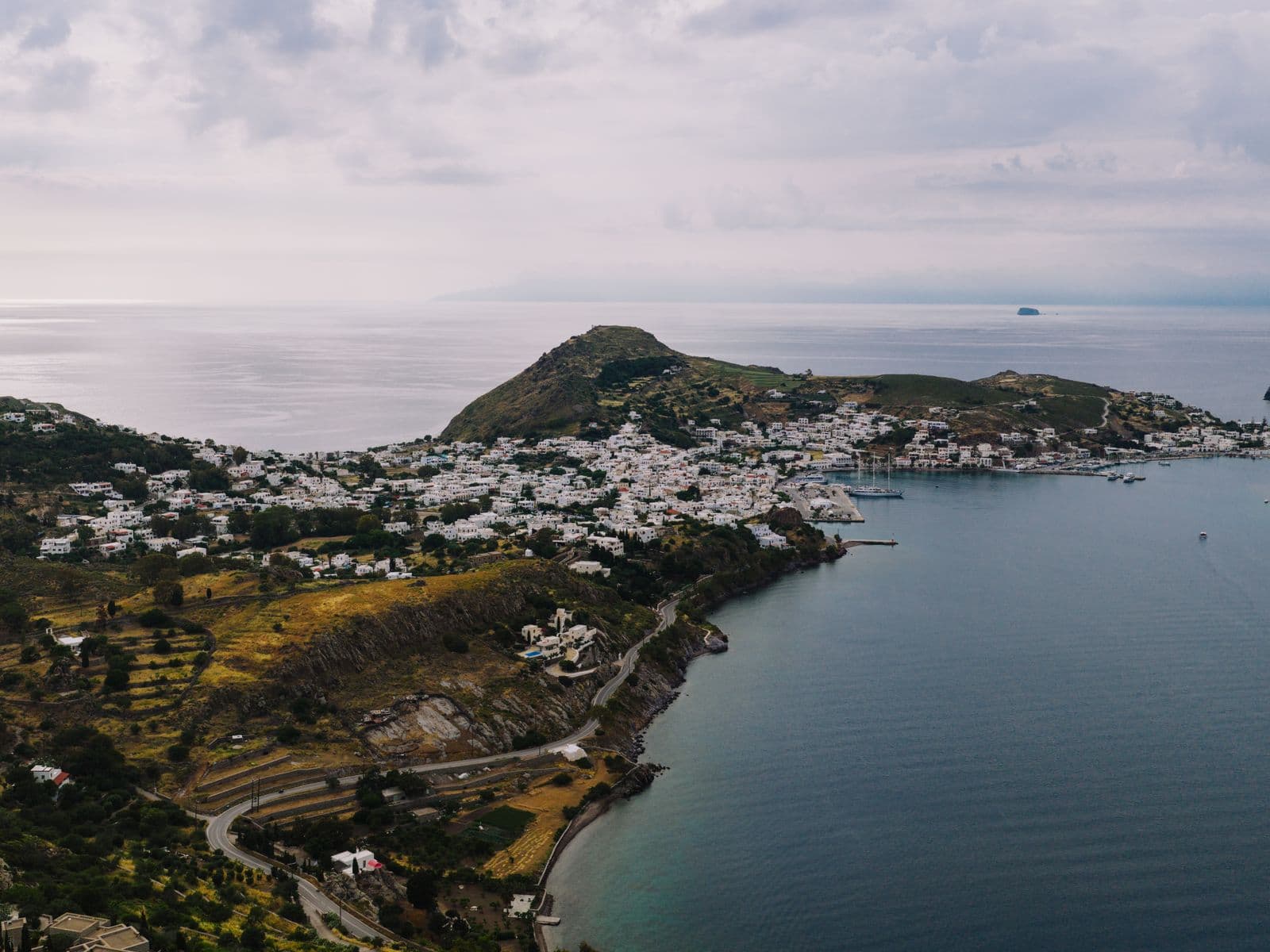
A 62-nm passage southeast carries you to Patmos, a sacred island with profound spiritual significance. Patmos is where St. John the Theologian allegedly wrote the Book of Revelation; the Monastery of St. John the Theologian dominates the island's skyline from an elevated ridge. The monastery is one of the oldest monastic complexes in Christendom and is UNESCO-protected. The main harbour, Skala, is a crescent of whitewashed buildings rising from the waterfront. Beyond the harbour, the island is quiet and contemplative; narrow lanes lead uphill toward the monastery. The island has minimal nightlife but excellent local restaurants specializing in seafood and traditional fare. Patmos attracts pilgrims as well as holidaymakers; the atmosphere is more serene than Mykonos. A morning visit to the monastery is mandatory — the Byzantine mosaics, manuscripts, and treasury are world-class.
Patmos to Leros
A 25-nm passage southeast to Leros, one of the least-visited major islands in the Dodecanese. Leros has an understated charm — no cosmopolitan bars, no nightlife marketing, just quiet harbours and genuinely Greek hospitality. The main port is Lakki, a protected natural anchorage with a small town of neoclassical buildings. The island has numerous smaller bays and inlets, each with good holding and minimal other vessels. A Byzantine castle overlooks the island from an elevated ridge; a hiking path provides panoramic views. Local fish tavernas serve exceptional seafood at reasonable prices. The island's population is small and declining; ashore has the feel of stepping back several decades. Leros is an excellent place to rest between longer passages and experience genuine Aegean island life.
Leros to Kos
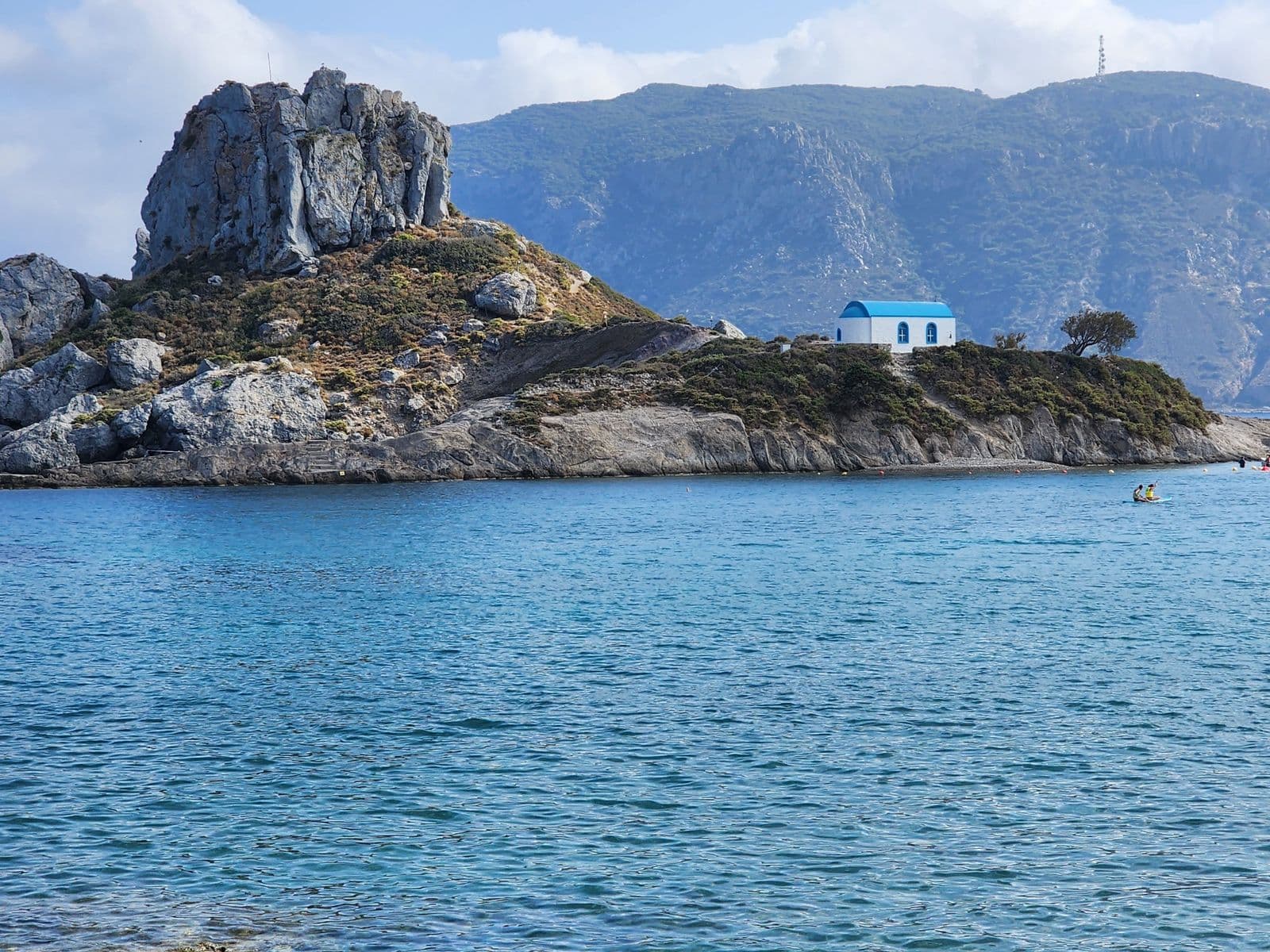
A 50-nm passage south-southeast to Kos, a larger, more developed Dodecanese island with excellent facilities. Kos is famous in antiquity as the birthplace of Hippocrates, the father of Western medicine; the ancient Plane Tree under which he allegedly taught sits in the main harbour, now protected and venerated. The island's archaeological sites (the Asclepieum, Temple of Dionysus) are among Greece's most significant. The harbour town itself is modern and orderly, rebuilt after a 1933 earthquake; the streets are wide, tree-lined, and pedestrian-friendly. The seafront promenade offers waterfront restaurants and evening strolls. Beyond the town, sandy beaches line much of the coast; the island is a popular summer holiday destination. The blend of history, modern amenities, and good anchorages makes Kos an ideal overnight stop before the final push to Rhodes.
Kos to Rhodes
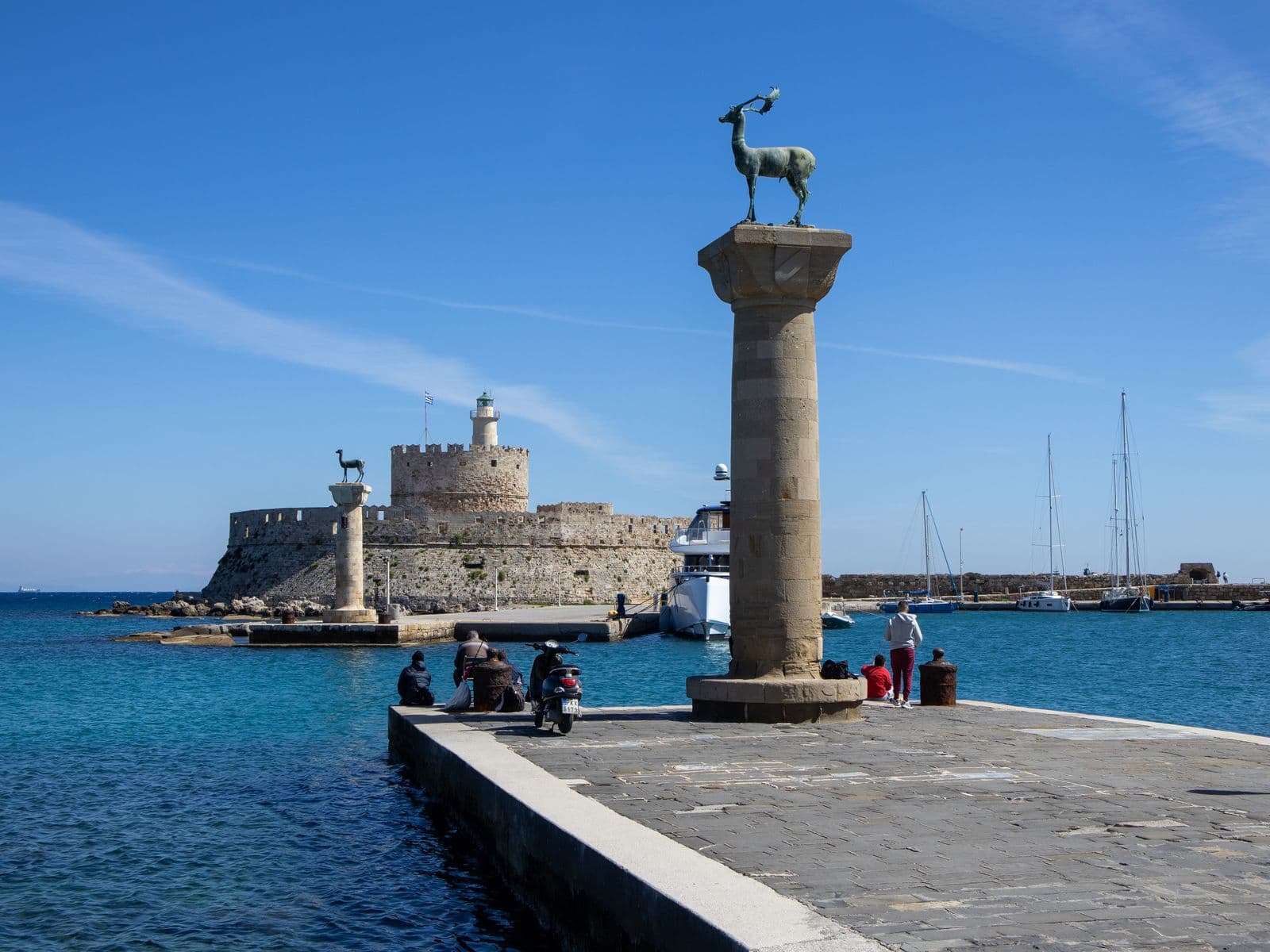
An 85-nm passage south brings you to Rhodes, the legendary island at the gateway between the Aegean and Mediterranean. Rhodes is the largest of the Dodecanese and one of the most historically significant. The harbour approaches reveal the Old Town — a medieval walled city that is one of the Mediterranean's finest urban ensembles. The Palace of the Grand Masters, built by the Knights Hospitaller in the 14th century, dominates the skyline. The Old Town's narrow lanes are flagged in stone, lined with Ottoman buildings, Crusader fortifications, and Byzantine churches. The Street of the Knights, climbing toward the palace, is entirely intact from the medieval period. Modern Rhodes Town spreads south of the Old Town; the marina offers contemporary facilities. Plan to spend the evening exploring the Old Town's endless alleyways, restaurants, and shops.
Rhodes to —
A final full day in Rhodes for exploration and disembarkation. The Old Town can absorb days of wandering — the Medieval City covers over 6 km of lanes; the Palace of the Grand Masters requires 2–3 hours; the harbour-front cafés provide vantage points for watching the sunset over Turkey. The Archaeological Museum, housed in the medieval Hospital of the Knights, has exceptional Hellenistic sculpture and pottery. Outside the Old Town, the Valley of Butterflies (Petaloudes) is a natural reserve; Lindos, further south, has a dramatic acropolis overlooking a crescent bay. Most visitors spend this day in the Old Town, dining waterside and absorbing the atmosphere.
Season
May through October is ideal. June and September offer warm weather, excellent sailing conditions, and fewer crowds than peak July–August. July and August are hot and busy, especially Mykonos and Rhodes Town; advance booking of berths and restaurants is essential. May and October can be windy but offer excellent sailing and far fewer tourists.
One-way logistics
Piraeus and Rhodes both have international airport connections. Athens (Elefthérios Venizélos Airport) and Rhodes (Diagoras Airport) are well-connected to European hubs, making one-way charters convenient. Piraeus is 30 km east of central Athens; Rhodes airport is 15 km south of Rhodes Town.
Provisioning
Piraeus has comprehensive provisioning. Mykonos, Patmos, Leros, Kos, and Rhodes all have supermarkets, fish markets, and local produce. Provisioning gets progressively easier as you move south; Rhodes has the broadest selection. Fresh fish, local cheeses, and Greek wines are excellent value throughout.
Weather & Navigation
The Aegean can be windy, particularly the strait between the Cyclades and Dodecanese. June–September is reliably warm. Meltemia (northeasterly) winds are common in summer but predictable. Navigation is straightforward; detailed charts and GPS are essential. Currents are minimal; tidal streams are negligible.
Customs & Documentation
Rhodes is the gateway to Turkey; note the proximity of Turkish waters. EU nationals require only a passport; non-EU visitors should verify current entry requirements for Greece.
This itinerary is a suggestion.
Your captain will adapt based on weather, wind conditions, and your interests. Alternative stops include Delos (uninhabited ancient sanctuary, day-trip from Mykonos), Symi (small Dodecanese island with excellent harbours and sponge-diving heritage between Leros and Kos), or Syros (Cycladic island with historic shipbuilding heritage). The voyage can be extended to include additional islands or shortened to focus on specific regions.
| Day | From | To | NM | |
|---|---|---|---|---|
| 1 | Athens (Piraeus) | → | Kythnos | 55 |
| 2 | Kythnos | → | Mykonos | 48 |
| 3 | Mykonos | → | Patmos | 62 |
| 4 | Patmos | → | Leros | 25 |
| 5 | Leros | → | Kos | 50 |
| 6 | Kos | → | Rhodes | 85 |
| 7 | Rhodes | → | — | — |
| Total | 350 | |||