The Galapagos archipelago sits 600 miles off the coast of Ecuador, straddling the equator in the eastern Pacific. Its isolation created a living laboratory of evolution — the same one that shaped Darwin's thinking in 1835. Today the islands remain one of the planet's most extraordinary wildlife destinations.
From a yacht, the Galapagos delivers something no land-based visit can match: the ability to move between islands on your own schedule, snorkelling with marine iguanas and sea lions before breakfast and walking among giant tortoises after lunch. The wildlife here has no fear of humans, which creates encounters of startling intimacy.
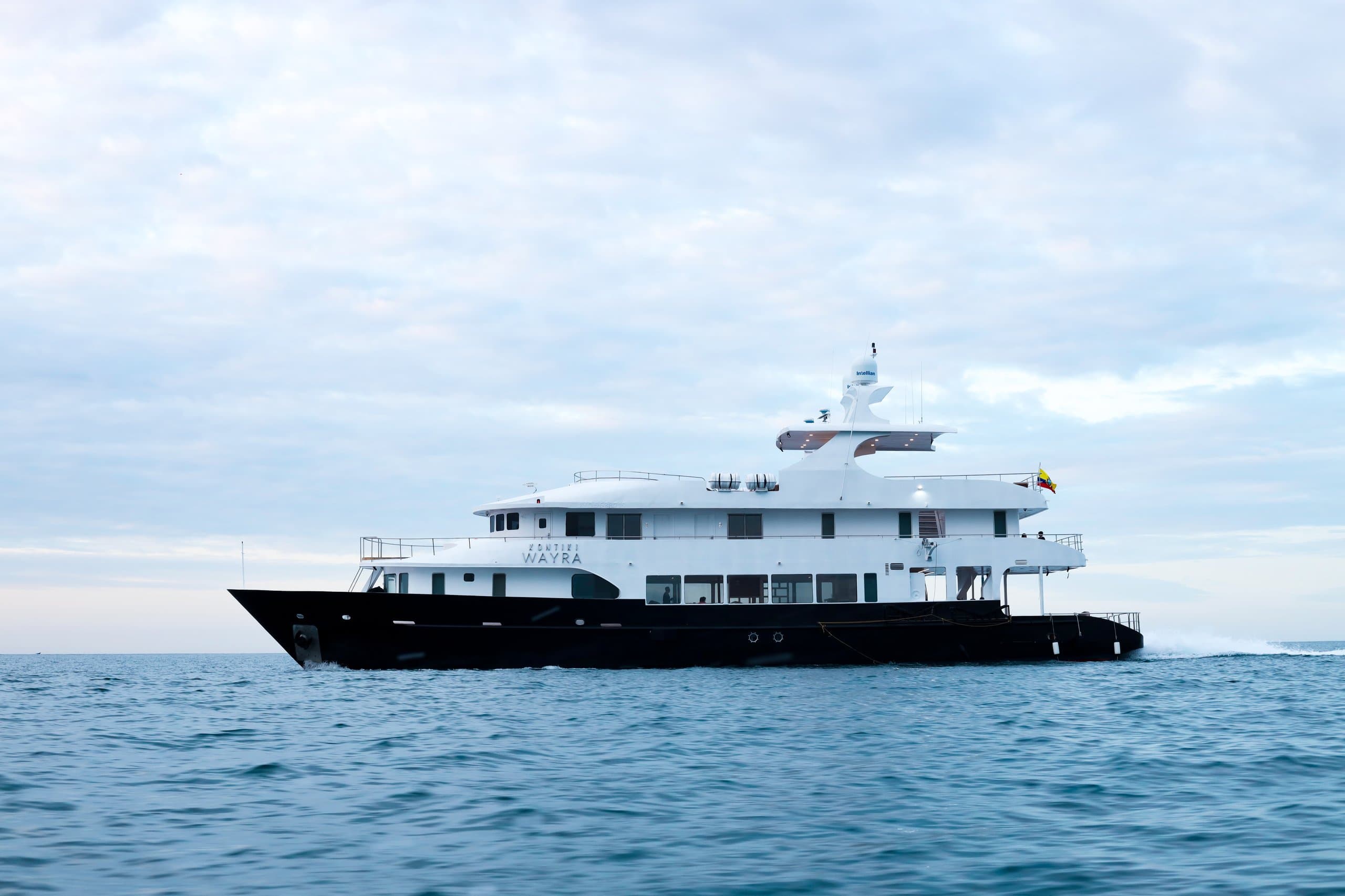
Chartering in the Galapagos requires careful planning. The national park controls all visitor access through a permit system, and itineraries must follow approved routes with certified naturalist guides on board. The fleet consists of specialised expedition vessels rather than the bareboat or luxury motor yachts found in the Mediterranean.
The equatorial climate means the islands are accessible year-round, though the warm season (January to June) and cool season (July to December) each offer different highlights. Water temperature, visibility, and species behaviour all shift with the seasons.
- Swimming with Galápagos sea lions, marine iguanas and sea turtles
- Watching giant tortoises in the misty highlands of Santa Cruz
- Blue-footed booby and waved albatross nesting colonies
- Snorkelling with schooling hammerhead sharks off Darwin's Arch
The Galápagos operates on two seasons with different but equally compelling characteristics. December through May is the warm season: sea surface temperatures reach 26–28°C in the shallows, the Intertropical Convergence Zone brings afternoon showers and calmer seas, the green sea turtle nesting season peaks and the marine iguana populations are highly active. June through November is the cold season driven by the Humboldt Current: temperatures drop to 18–22°C, the nutrient upwelling brings whale sharks, hammerheads and large pelagics to the surface, and the seabird colonies — albatross on Española, boobies on Genovesa — are at their most active. For divers, June through November is the primary season. For families with children, the warmer, calmer December through May window is more comfortable. There is no bad time for a Galápagos superyacht charter; there are only different wildlife calendars.
The Galapagos Islands are the ultimate wildlife charter destination. Nowhere else on Earth can you swim alongside marine iguanas, walk among giant tortoises, and watch blue-footed boobies perform their courtship dance — all in a single day, all from a private yacht.
What makes a Galapagos charter unique is the combination of access and expertise. National park regulations require a certified naturalist guide on every vessel, which means your crew includes a world-class wildlife interpreter. Combined with the mobility of a yacht — moving between islands overnight while guests sleep — the experience is both educational and deeply immersive.
Drivas Yachts works with the small fleet of permitted expedition yachts operating in the Galapagos. We handle the permit logistics, naturalist guide coordination, and itinerary planning so that guests can focus entirely on the experience. Whether your interest is snorkelling with hammerhead sharks off Wolf Island or photographing flightless cormorants on Fernandina, we can design the right voyage.
Swim with marine iguanas and sea lions
Walk among giant tortoises in the wild
Certified naturalist guide on every voyage
Year-round wildlife encounters