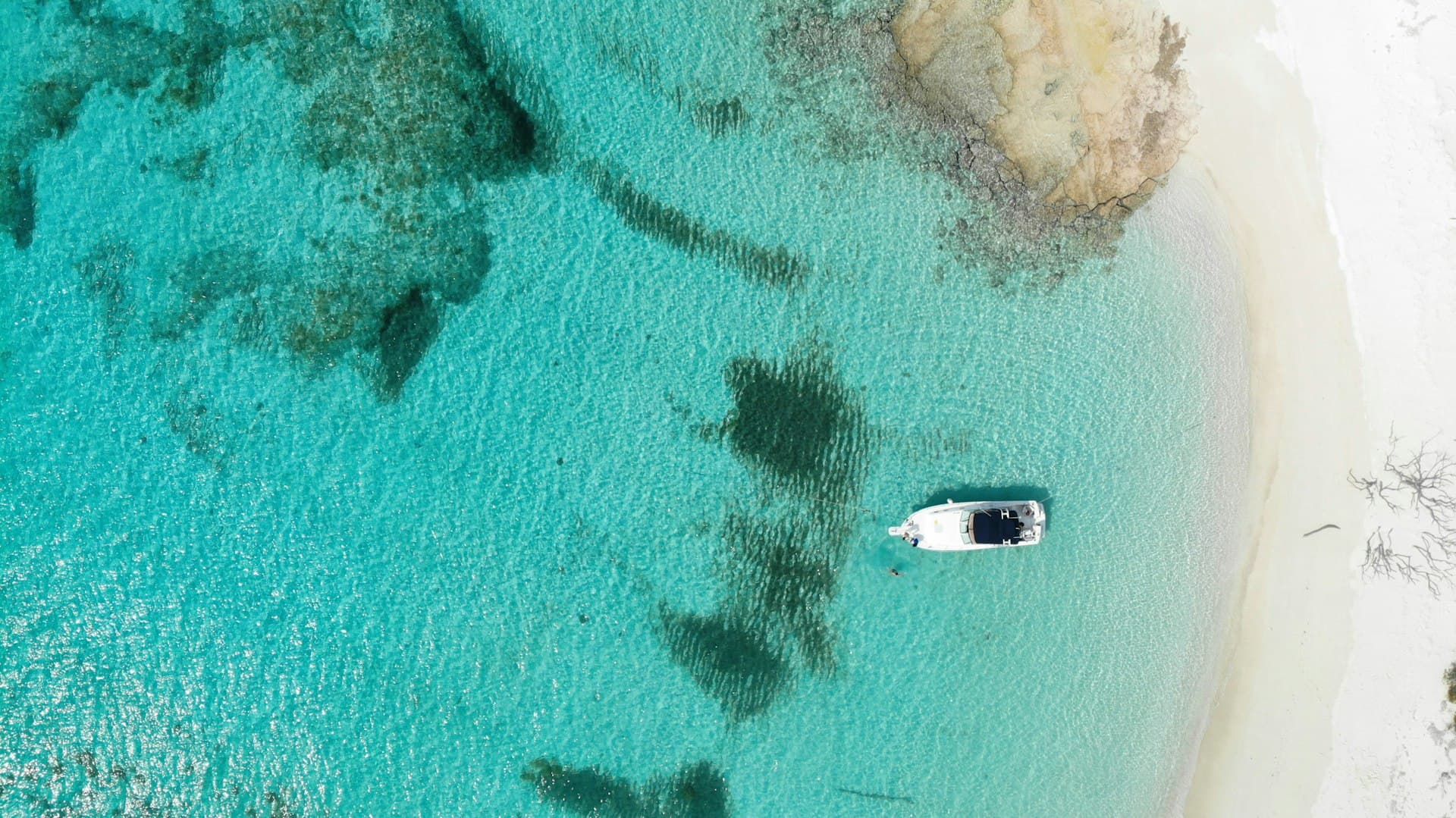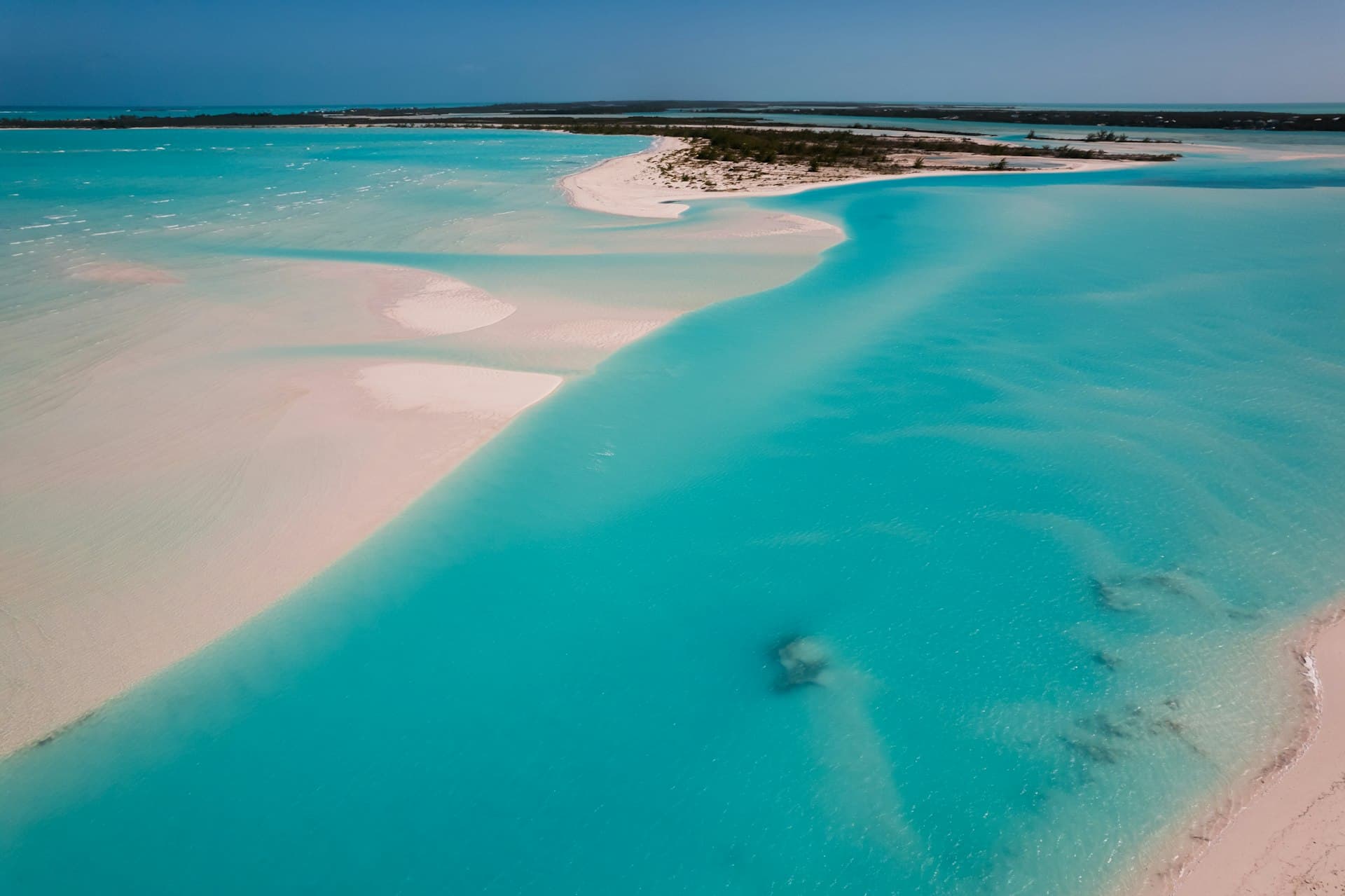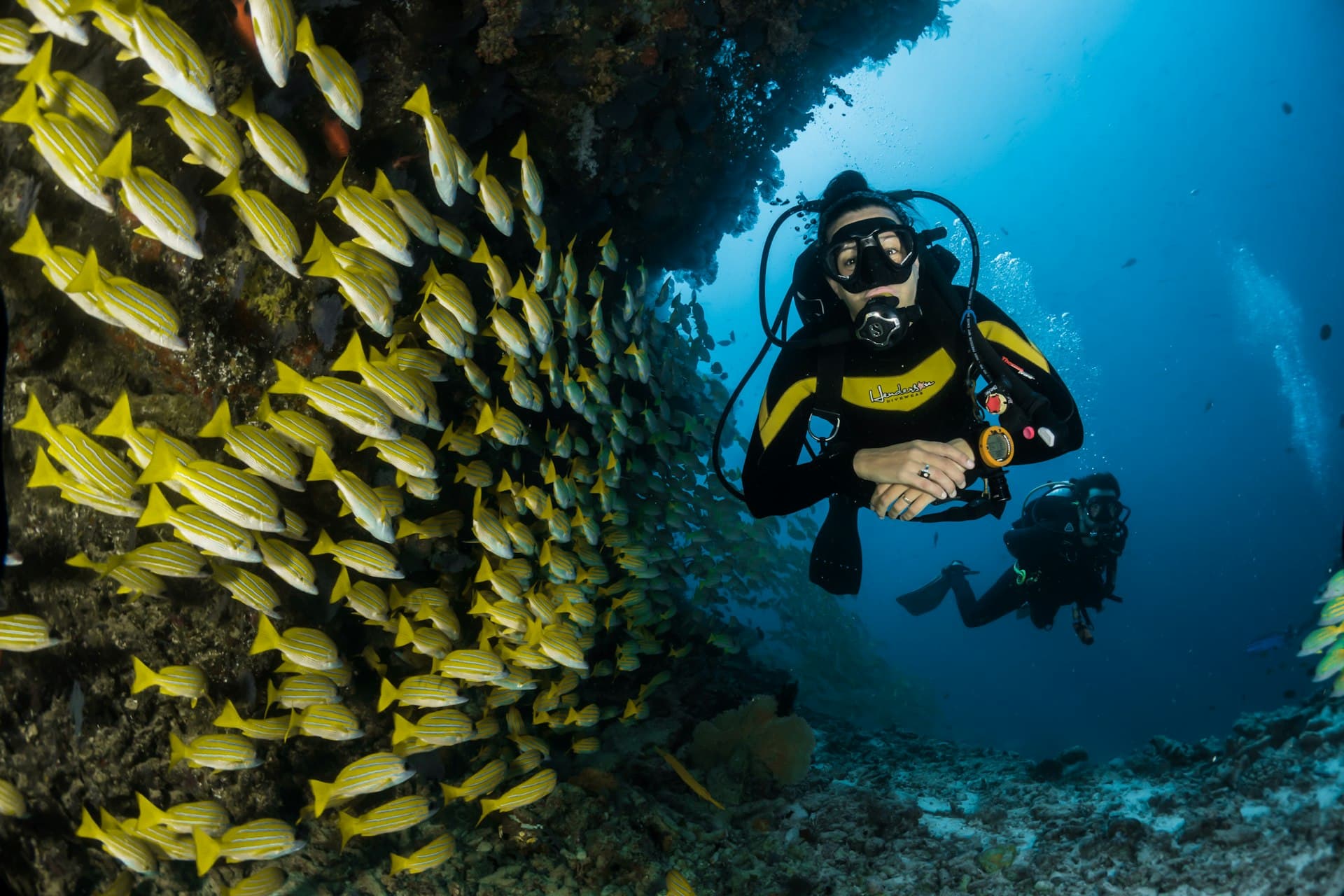
The Tobago Cays are five small uninhabited islands within a horseshoe reef in the southern Grenadines, and the hawksbill turtles that feed on the turtle grass inside the lagoon are entirely indifferent to your presence. You anchor inside the reef — good holding in sand, moderate swell in most conditions — and the turtles surface around the hull, going about their business. This is the Grenadines superyacht experience at its most instructive: nature that has not been organised for viewing.
The Grenadines chain runs south from St Vincent through Bequia, Mustique, Canouan, Mayreau and the Tobago Cays to Carriacou and then Grenada. The sailing direction is conventionally south-to-north — the trade winds make the northbound return a fast, close-reaching run — and a week gives enough time for five or six stops without feeling hurried.
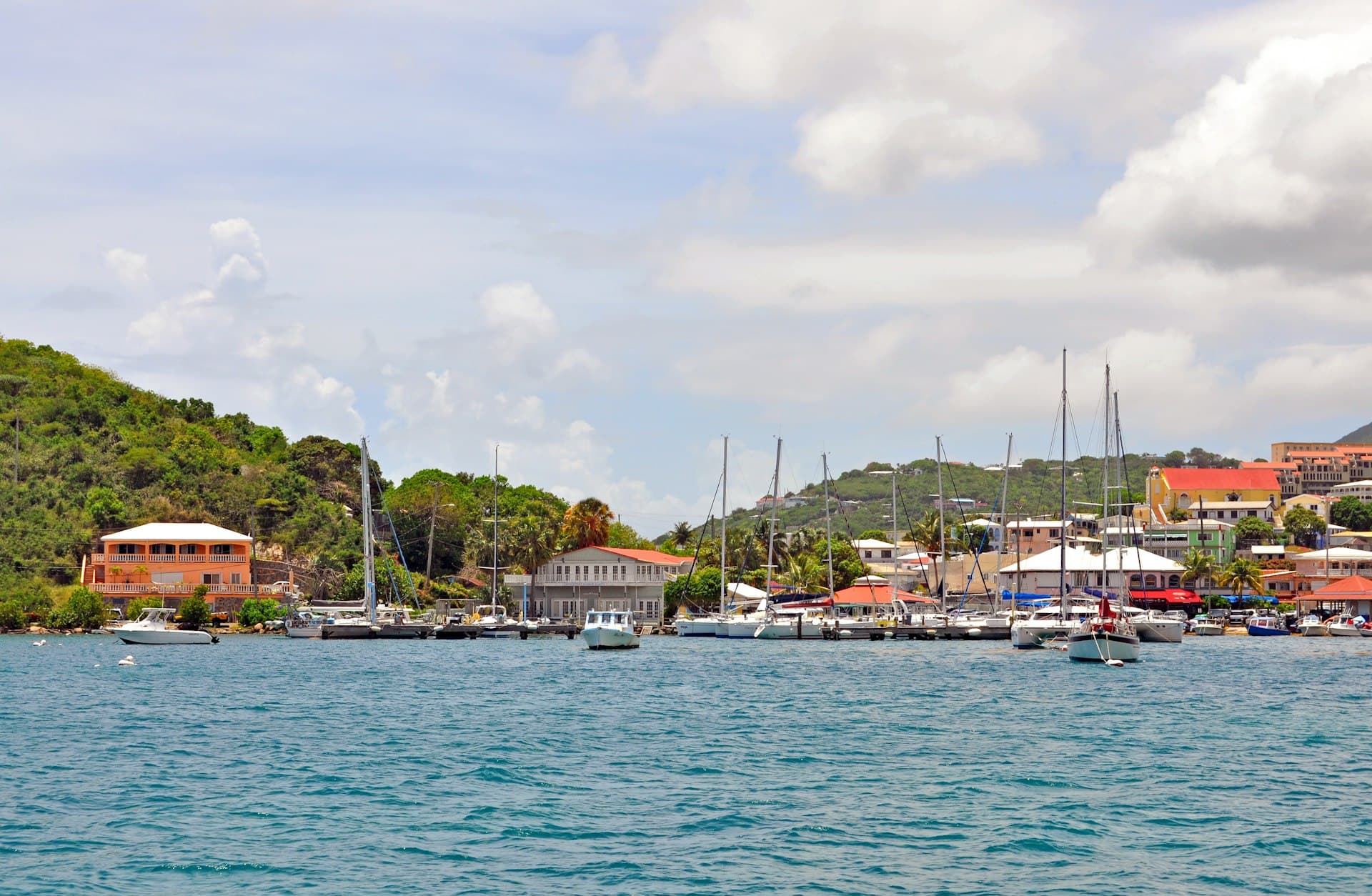
Bequia is the first island south of St Vincent and the most traditional sailing destination in the chain: a working fishing community with a genuine boatbuilding tradition, a secure anchorage in Admiralty Bay with good holding in thirty feet, and a Main Street with a handful of excellent restaurants and rum shops that have been serving sailors since the 1970s. The Whalebones restaurant on the beach is a Bequia institution; the whaling museum, which commemorates Bequia’s tradition as one of the Caribbean’s last permitted artisanal whaling communities, is small but serious.
Mustique is the Grenadines’ most famous island and its most controlled. The island is privately owned, visitor numbers are managed, and the villas — scattered on the hillsides above the beaches — belong to a roster of owners whose privacy is the island’s central operating principle. The Cotton House, the only hotel, is where non-villa guests stay. Basil’s Bar on Britannia Bay is where everyone ends up in the evening, which is the Grenadines’ version of cosmopolitan. The beach at L’Ansecoy Bay, on the island’s north coast, is the finest on Mustique and accessible only by water.
Canouan has changed significantly in recent years: resort development has brought infrastructure that the rest of the Grenadines lacks, and the deep-water anchorage off Charlestown Bay is now accessible to vessels up to 150 metres. For those who want the Grenadines’ natural setting with more amenity, Canouan is the answer. For those who want the Grenadines without the golf club, the passage continues south to Mayreau, whose Salt Whistle Bay is one of the few near-ideal anchorages in the Caribbean: a lagoon enclosed by a narrow bar of land, palms on both sides, and a small bar where the rum punch arrives without being ordered.
- Tobago Cays Marine Park — snorkelling with hawksbill turtles over pristine reefs
- Mustique — one of the world's most exclusive private islands
- Bequia's boatbuilding heritage and laid-back Admiralty Bay anchorage
- Mayreau's Salt Whistle Bay — an enclosed horseshoe lagoon with palms on three sides
January through March is the Grenadines at their sailing best: the northeast trades blow steadily at fifteen to twenty knots, the sky is clear and the passage between islands is genuinely exhilarating under sail. December is busy — Mustique and the Tobago Cays are at capacity around Christmas — but the weather is excellent. April and May are the shoulder season: the trades moderate, the crowds thin, and the Grenadines become something closer to their pre-tourist character. June through November is the official hurricane season: the southern Grenadines (Grenada and Carriacou) sit below the hurricane belt and remain navigable, but the northern islands — Bequia, Mustique — are at risk in an active year. Experienced charterers in the hurricane season do exist, but the risk requires appropriate insurance and a vessel prepared for rapid departure.
The Grenadines are a chain of 32 islands and cays stretching between St Vincent and Grenada — the most unspoiled cruising ground in the Caribbean. Where the BVI draws sailors with convenience and consistency, the Grenadines reward with authenticity and remoteness.
The Tobago Cays are the highlight: five uninhabited islands surrounded by a horseshoe reef that creates a turquoise lagoon of almost unreal clarity. Sea turtles graze on seagrass beds visible from the deck. Mustique, the private island retreat of the British royal family since Princess Margaret's time, allows yacht visitors ashore (Basil's Bar is the legendary watering hole). Bequia, the largest Grenadine, has the charm of a working sailing town.
Between these anchors, a Grenadines charter unfolds through a sequence of tiny islands — Canouan, Mayreau, Union Island, Palm Island, Petit St Vincent — each with its own character. The sailing is straightforward (trade winds, short passages), but the Grenadines feel further from civilisation than their coordinates suggest. This is Caribbean sailing at its most elemental.
Tobago Cays — turquoise lagoon with sea turtles and barrier reef
Mustique — Basil's Bar and royal island retreat
Bequia — charming sailing town in Admiralty Bay
Petit St Vincent — private island perfection
32 islands — the most unspoiled chain in the Caribbean
Authentic Caribbean culture beyond the resort belt