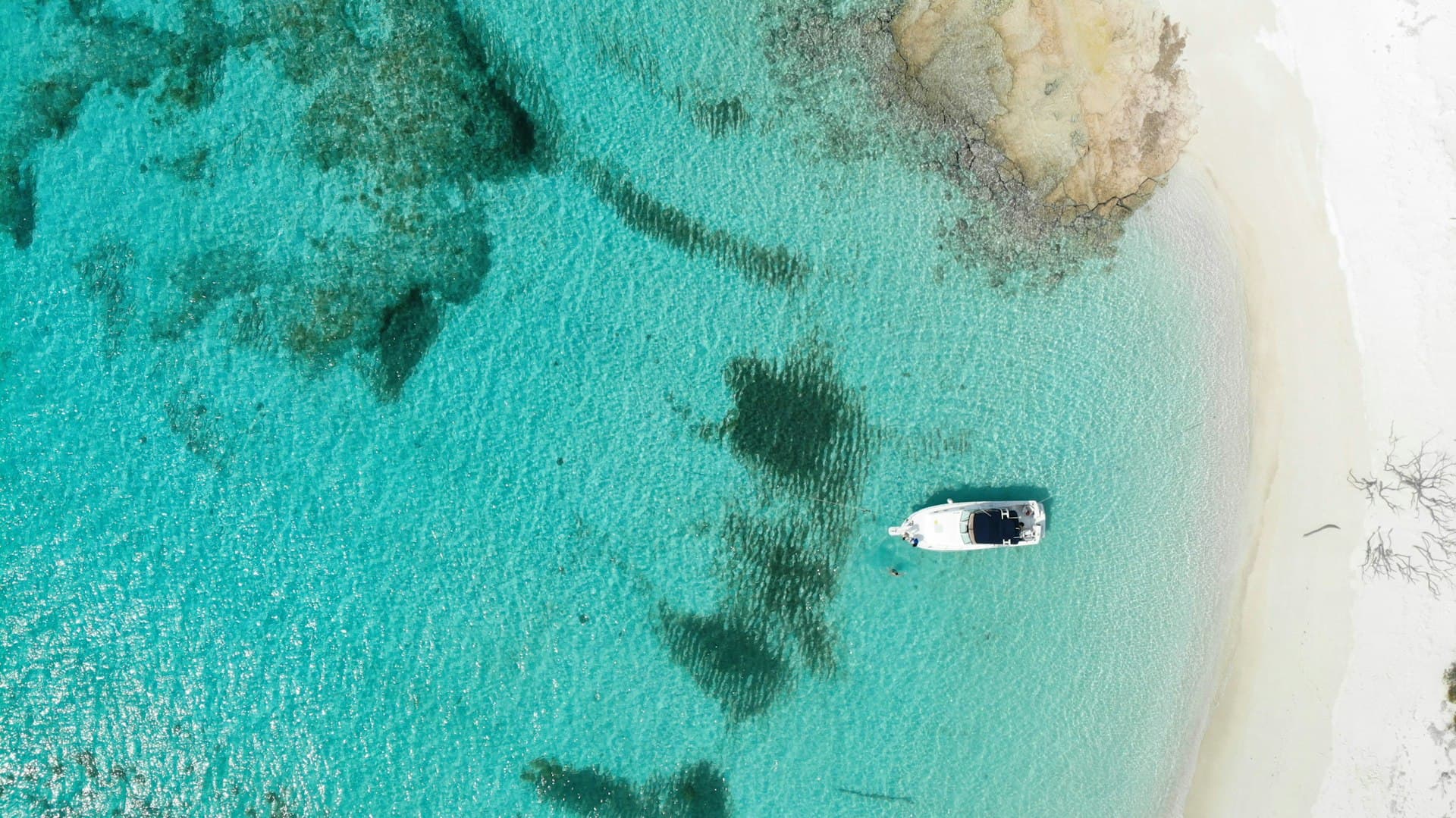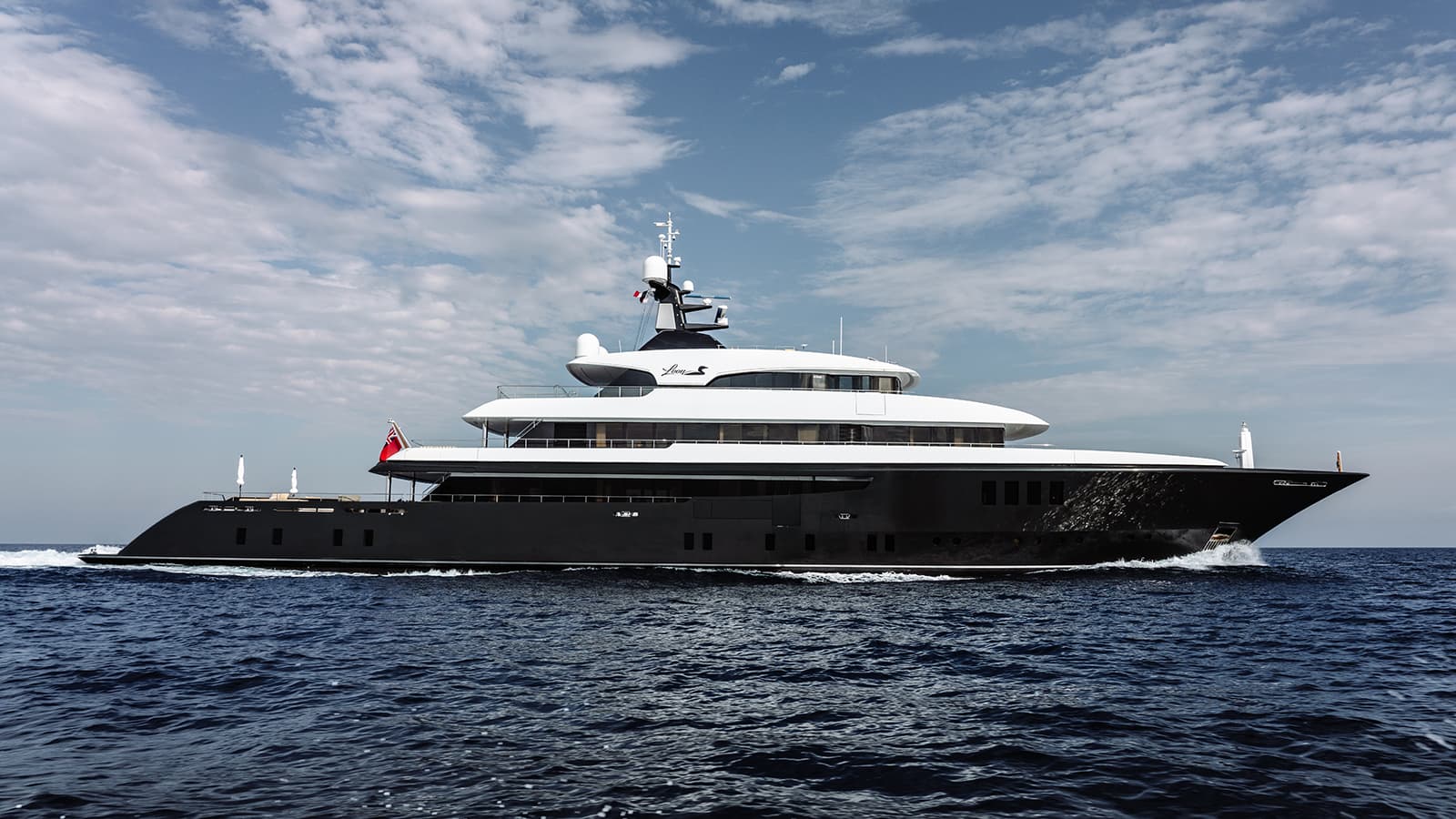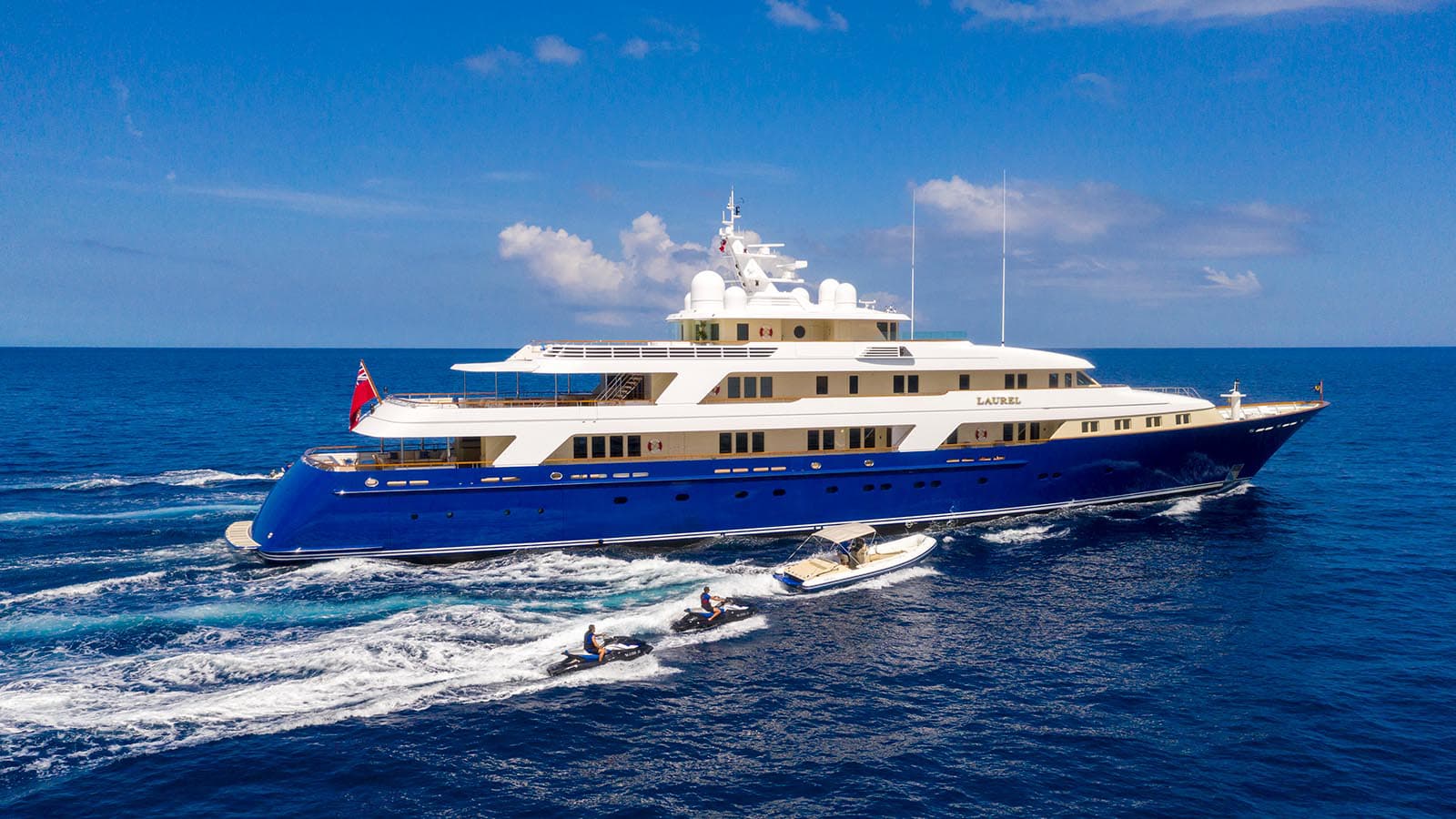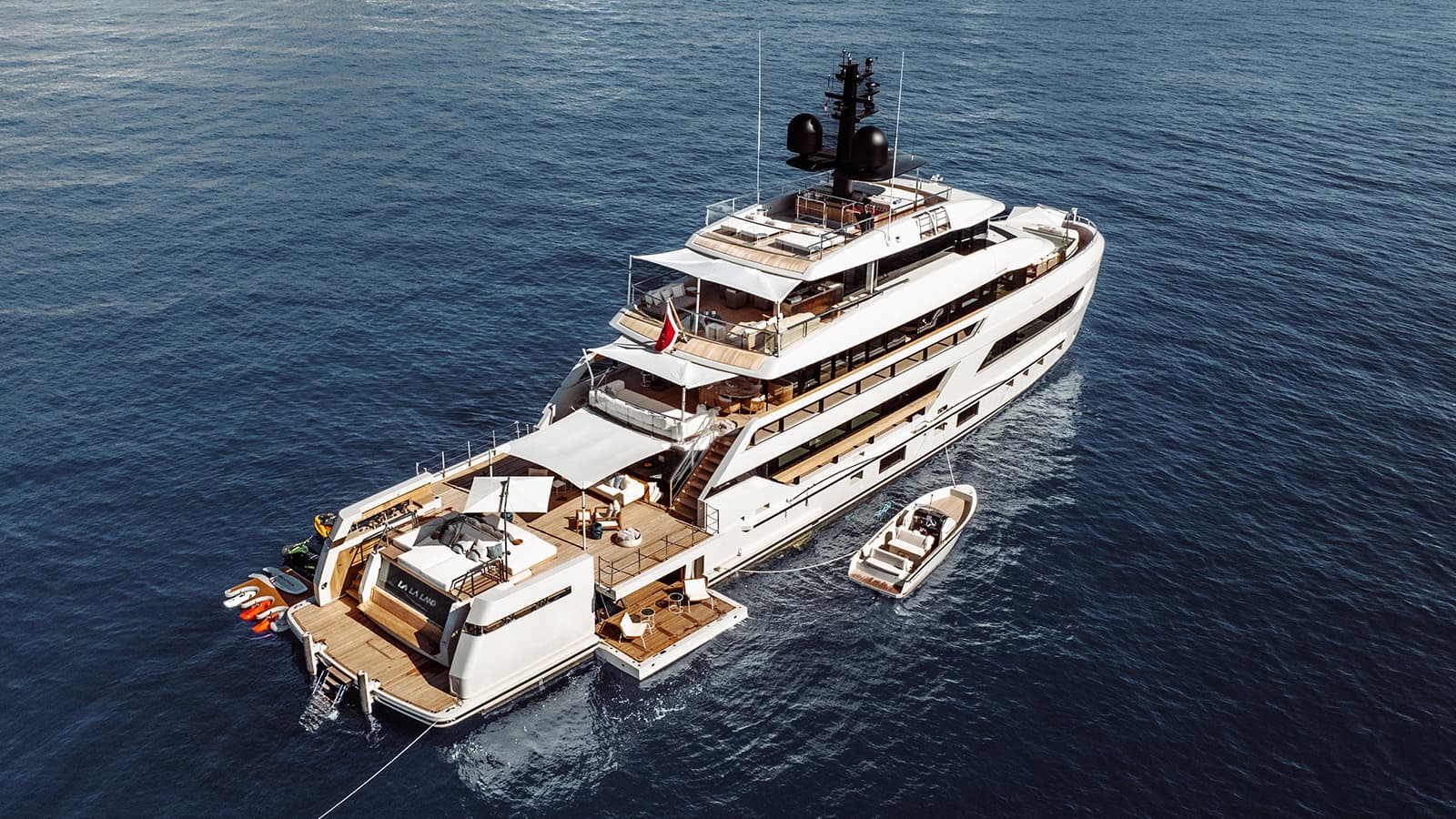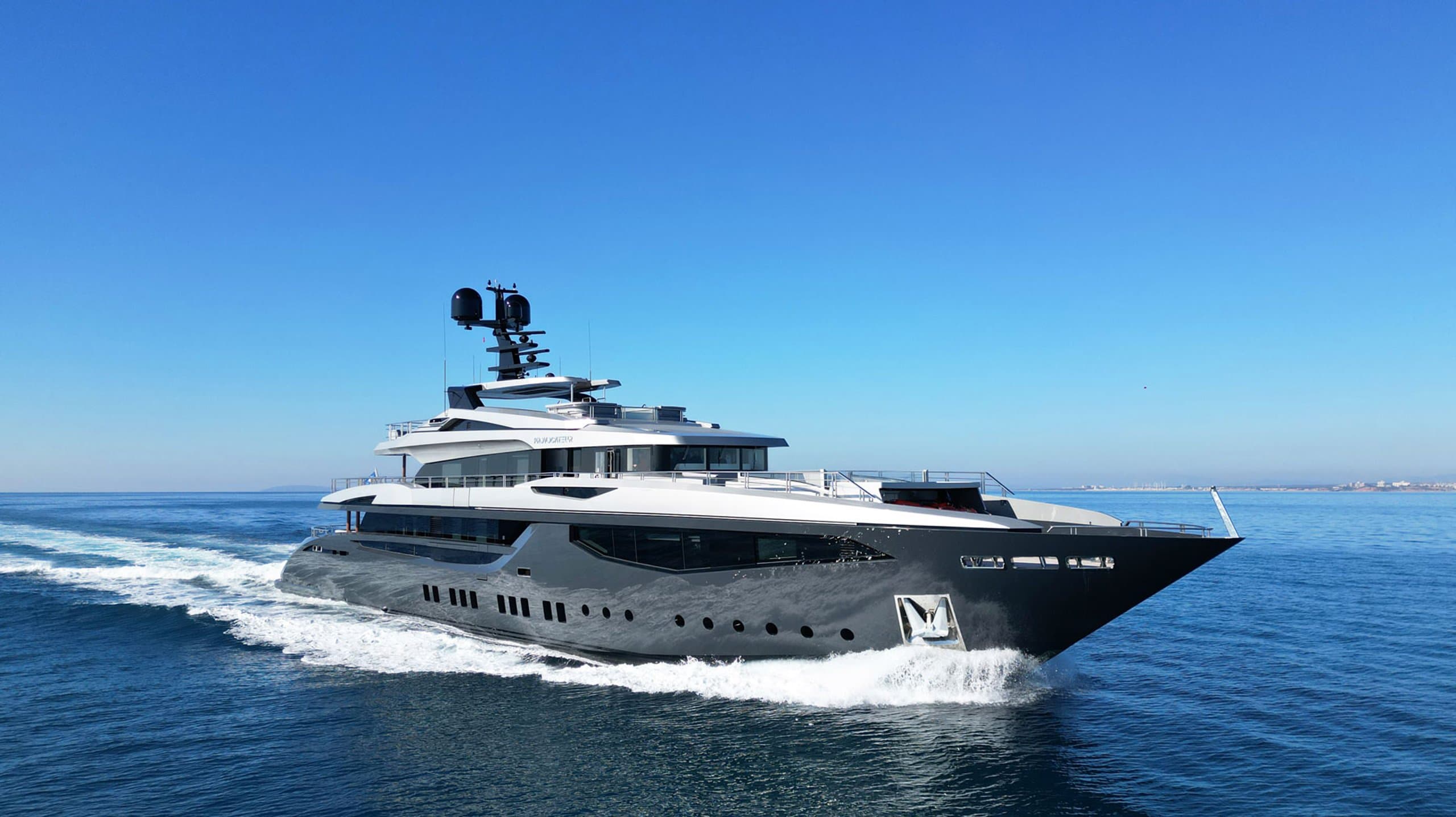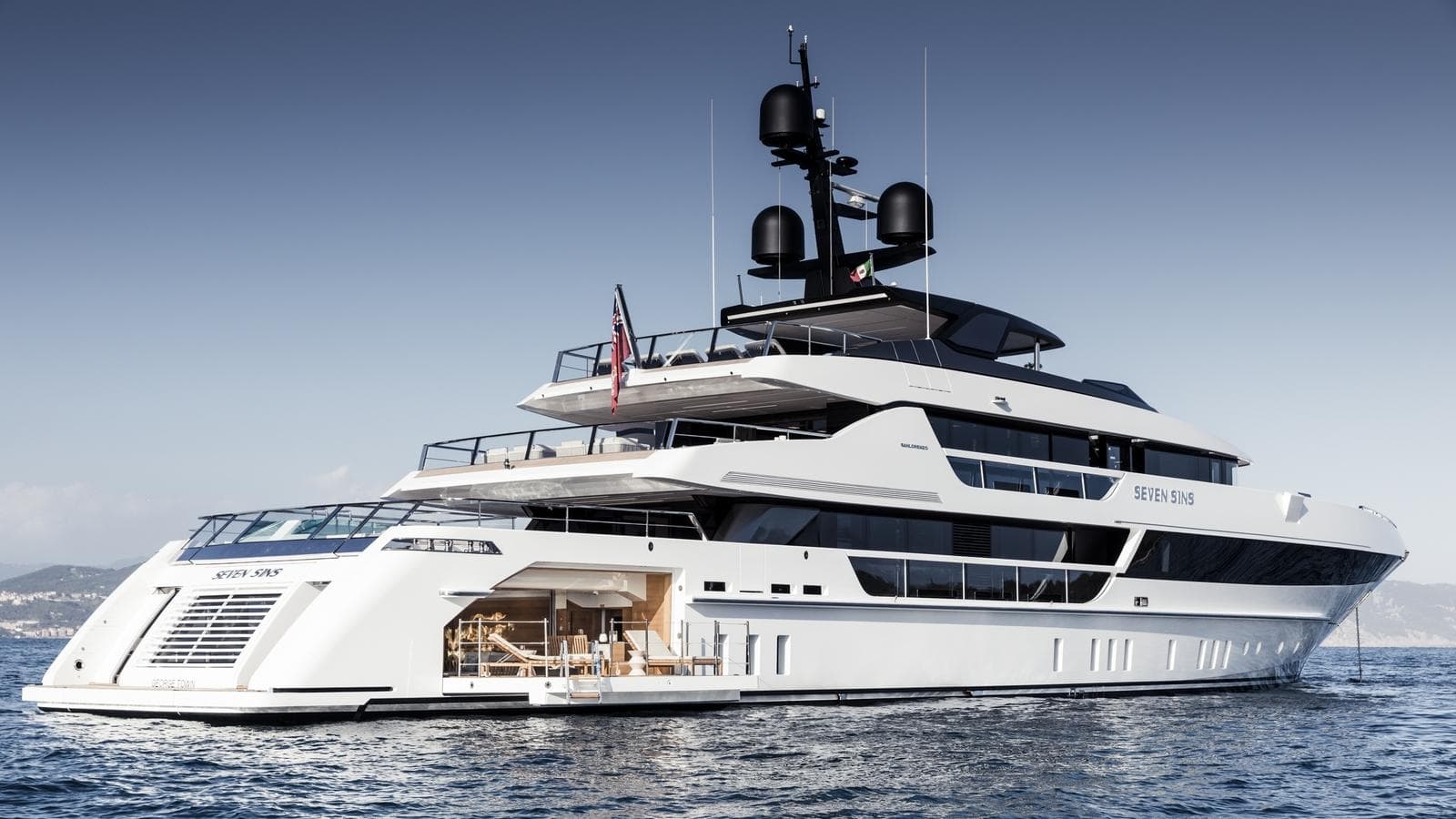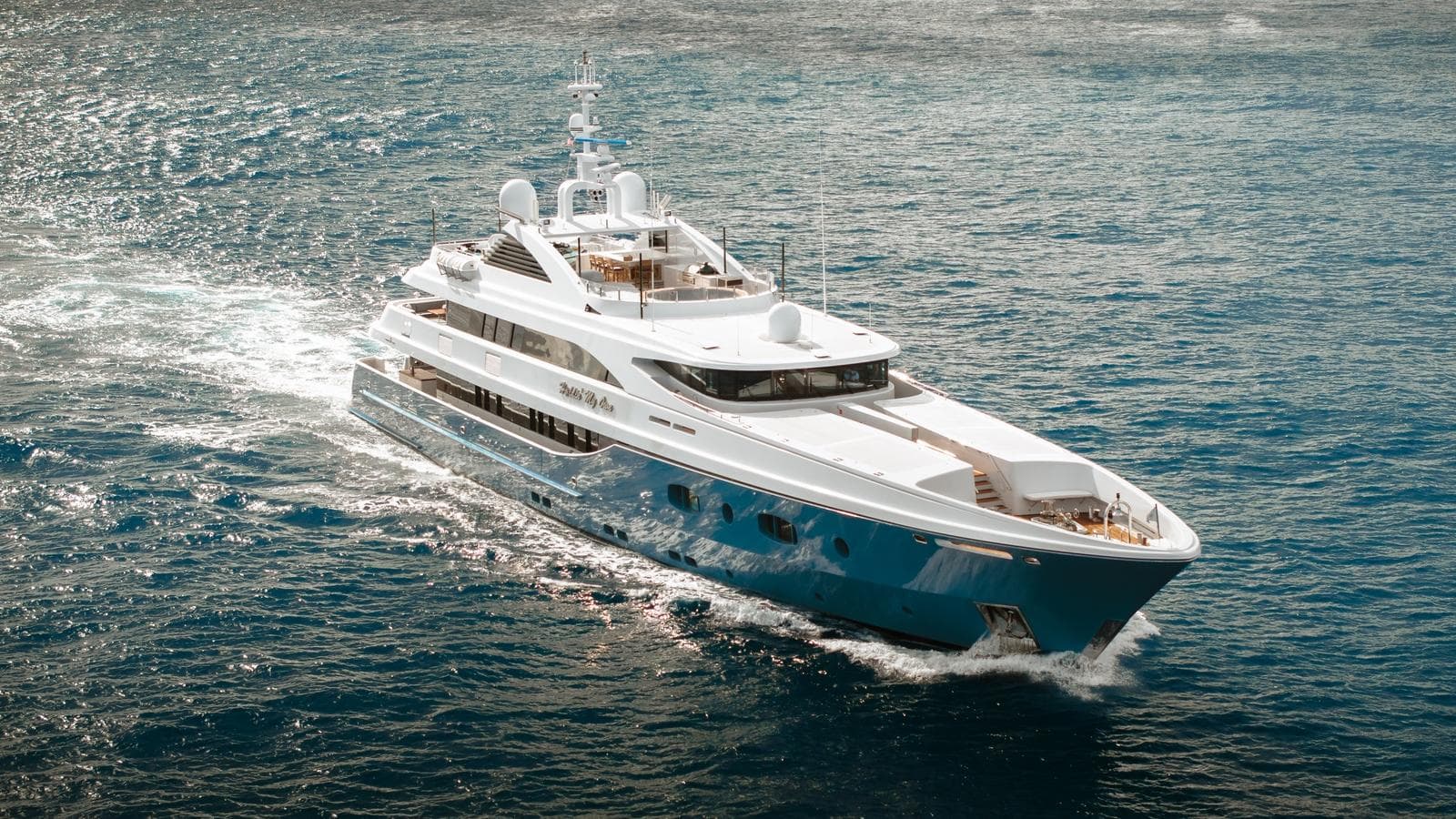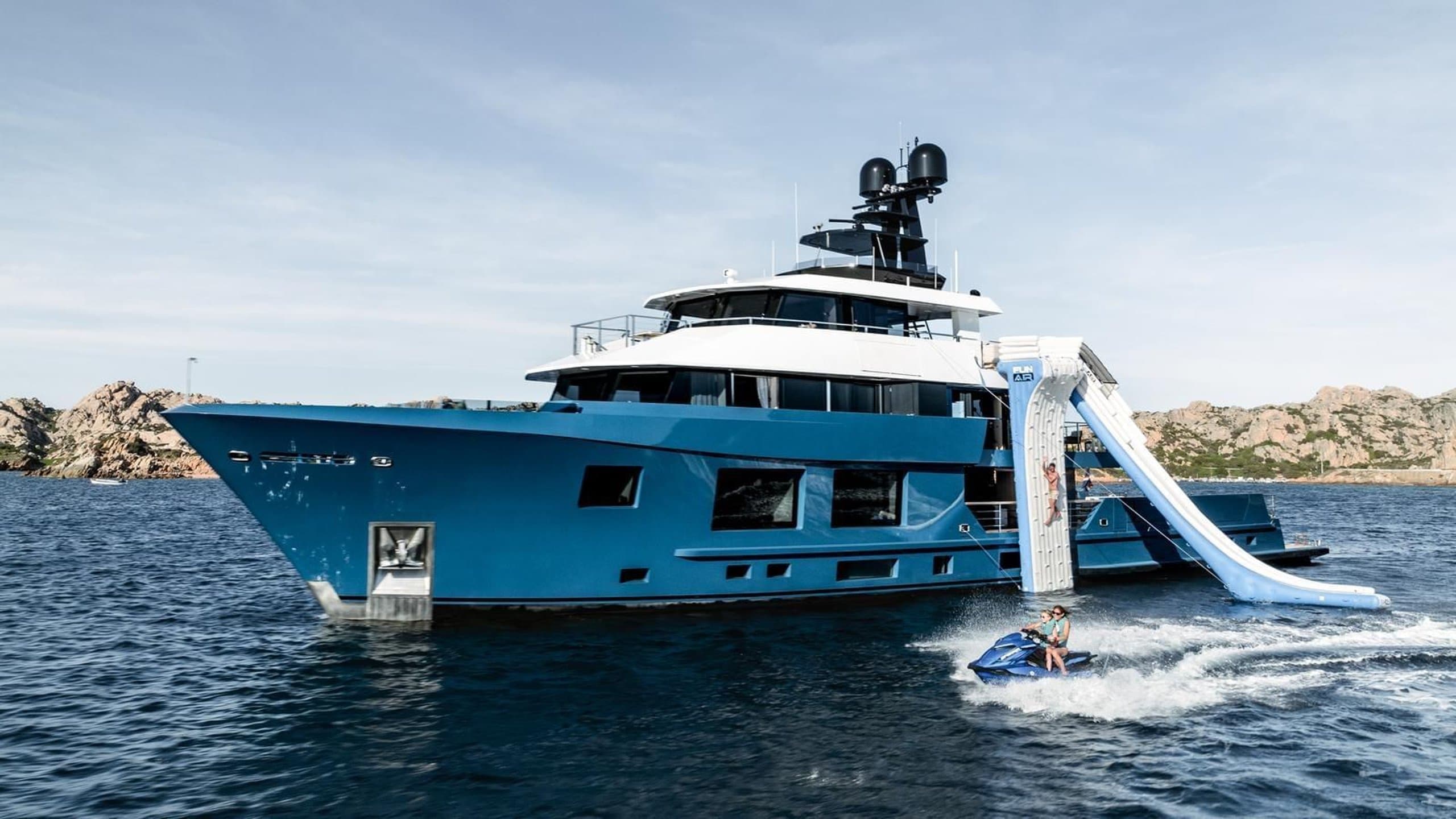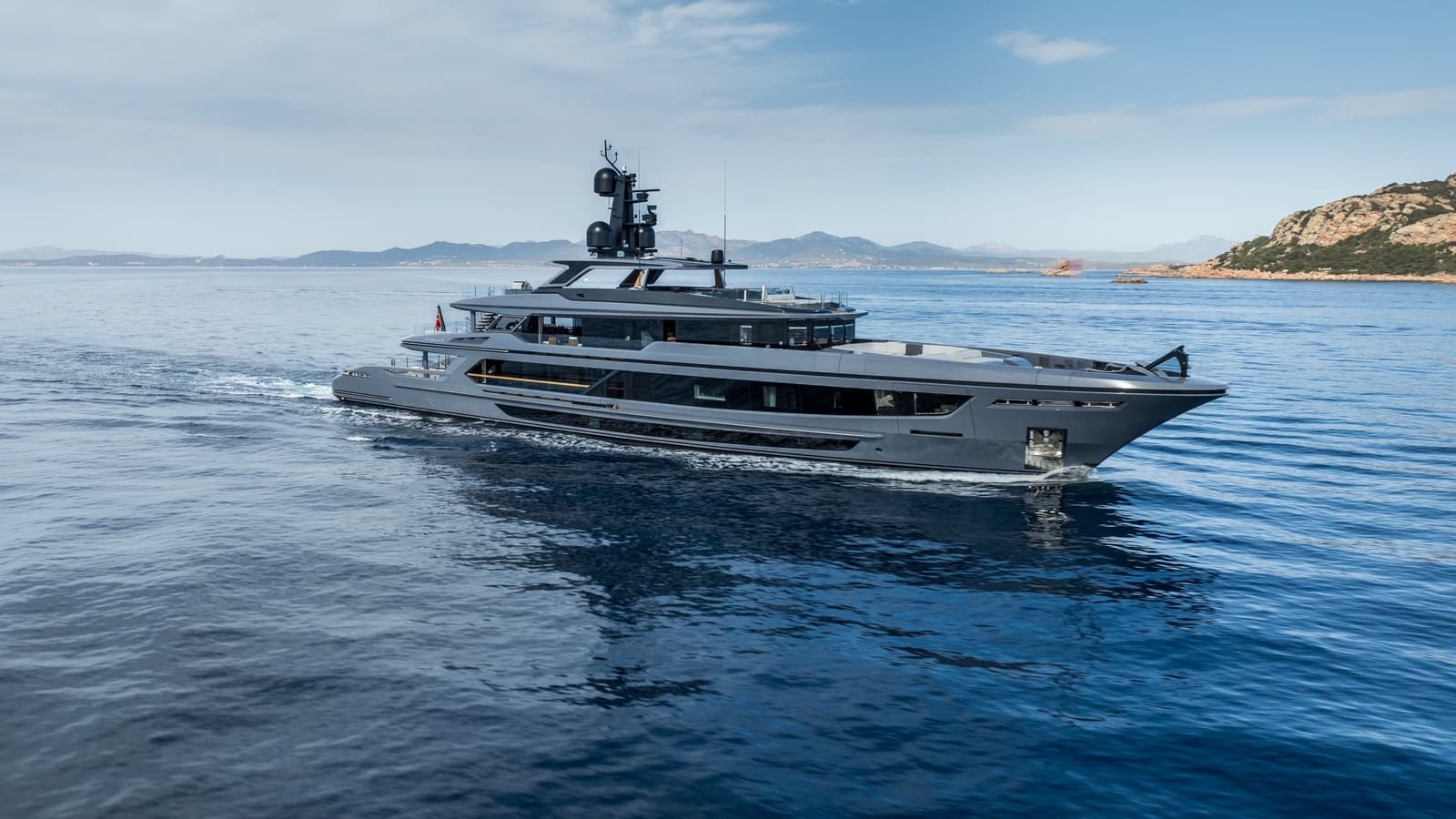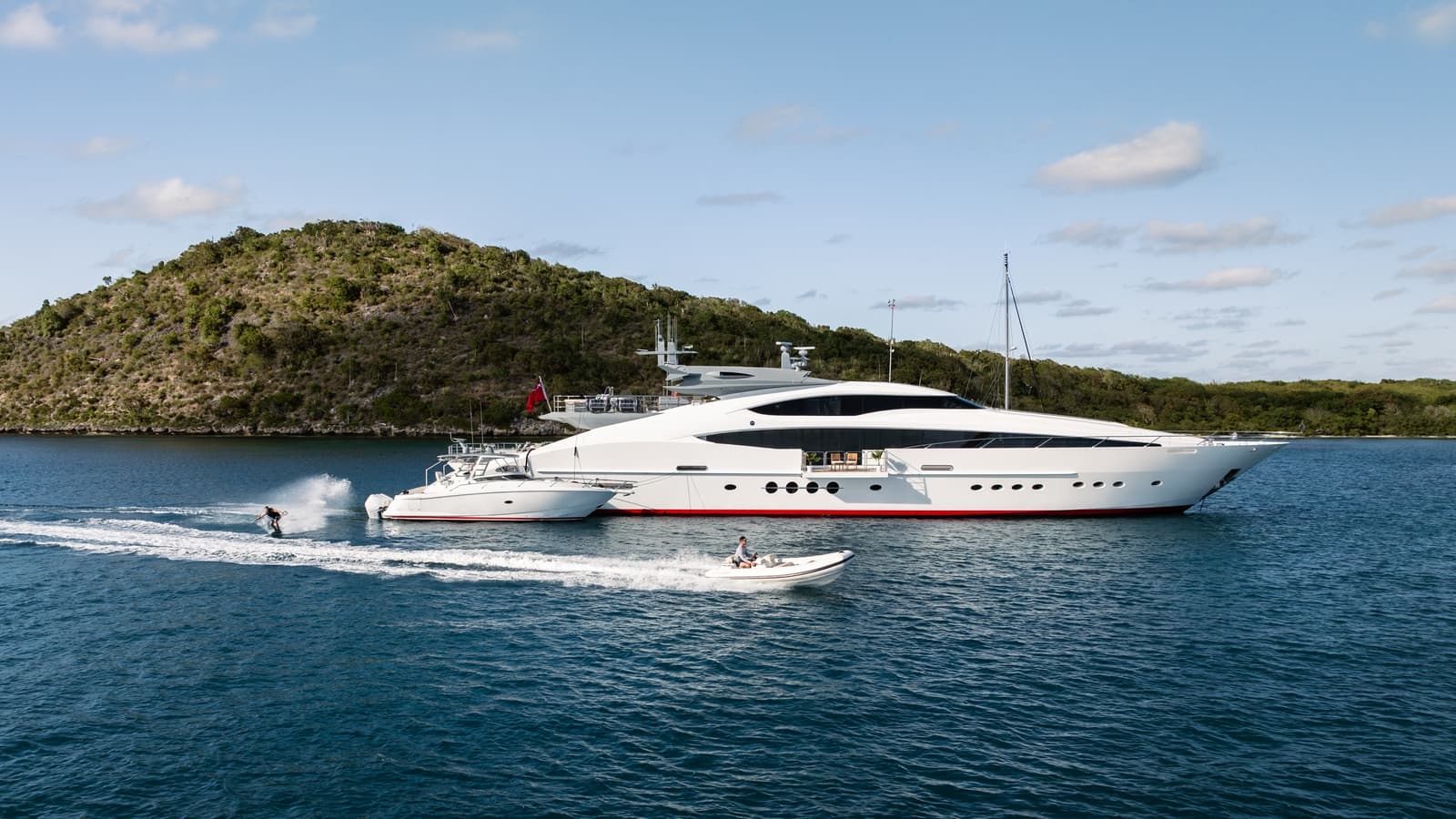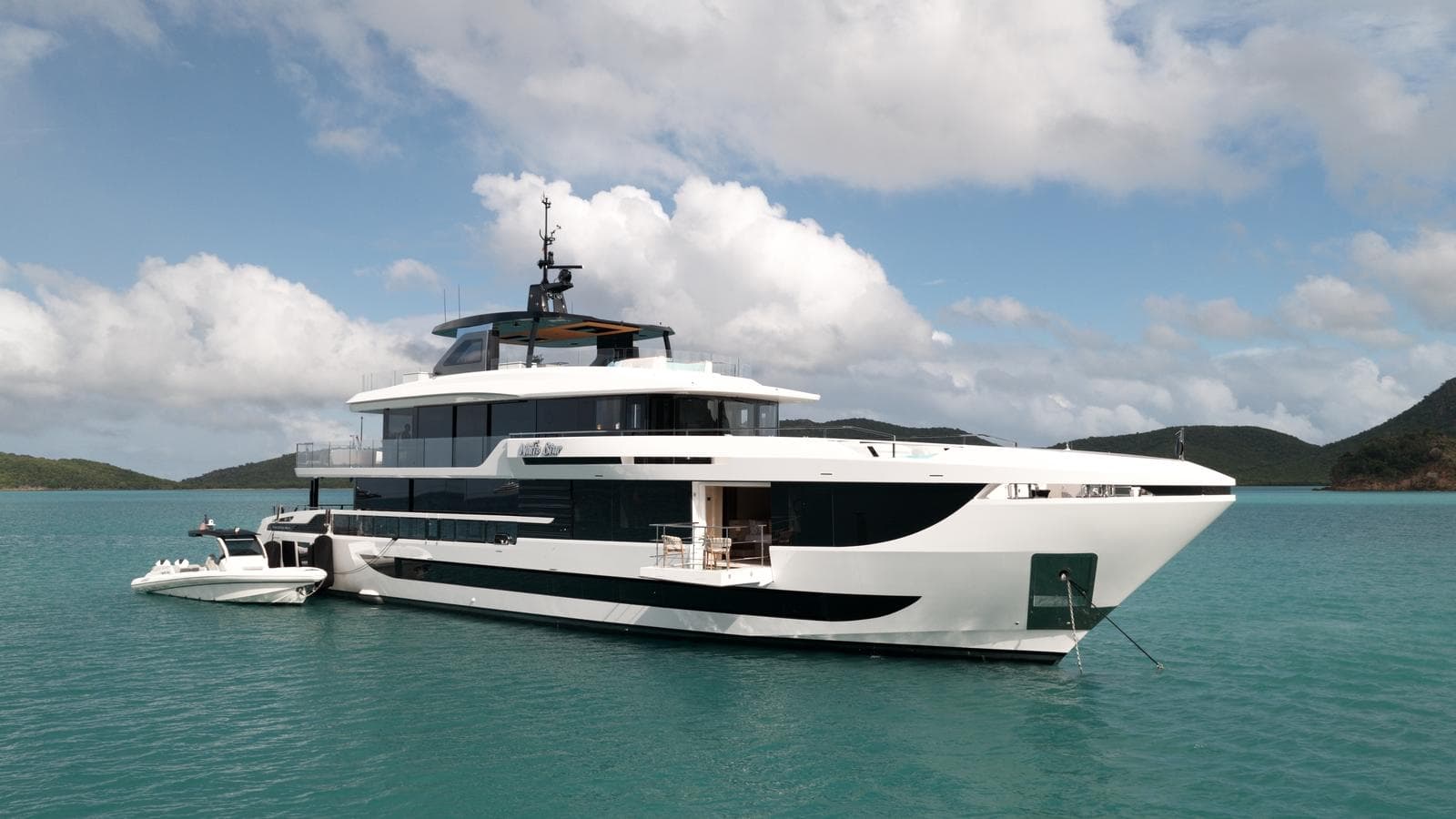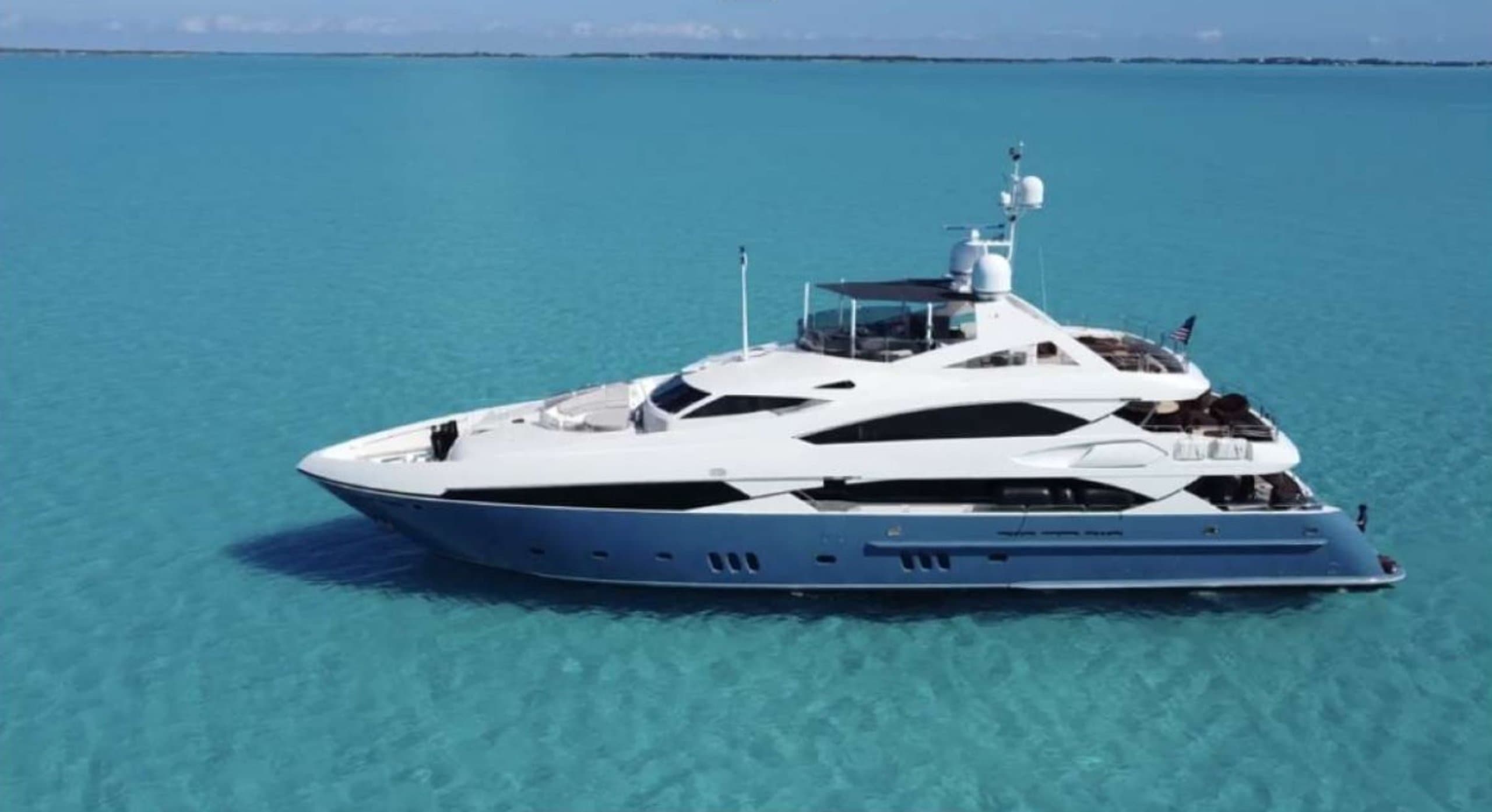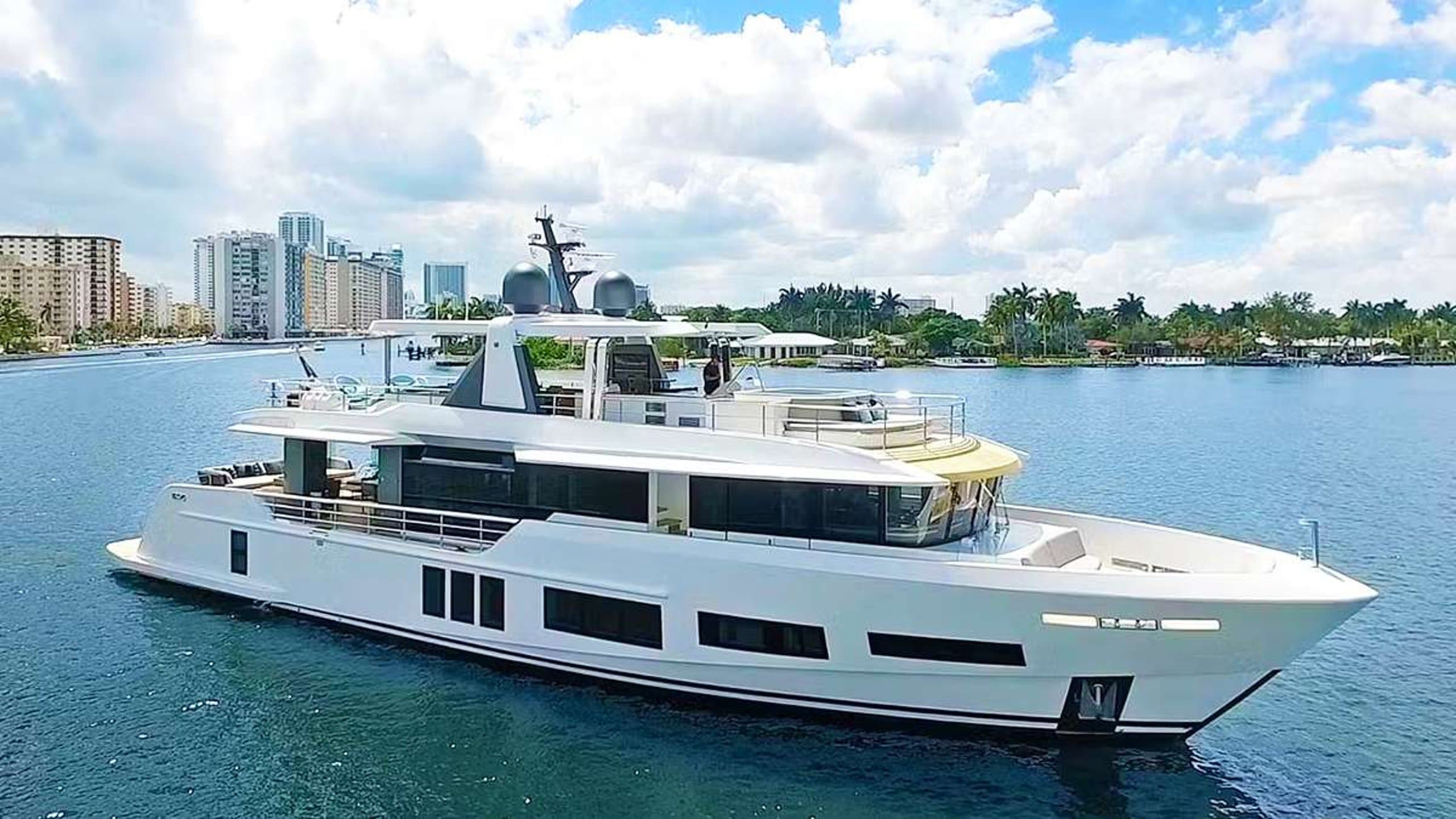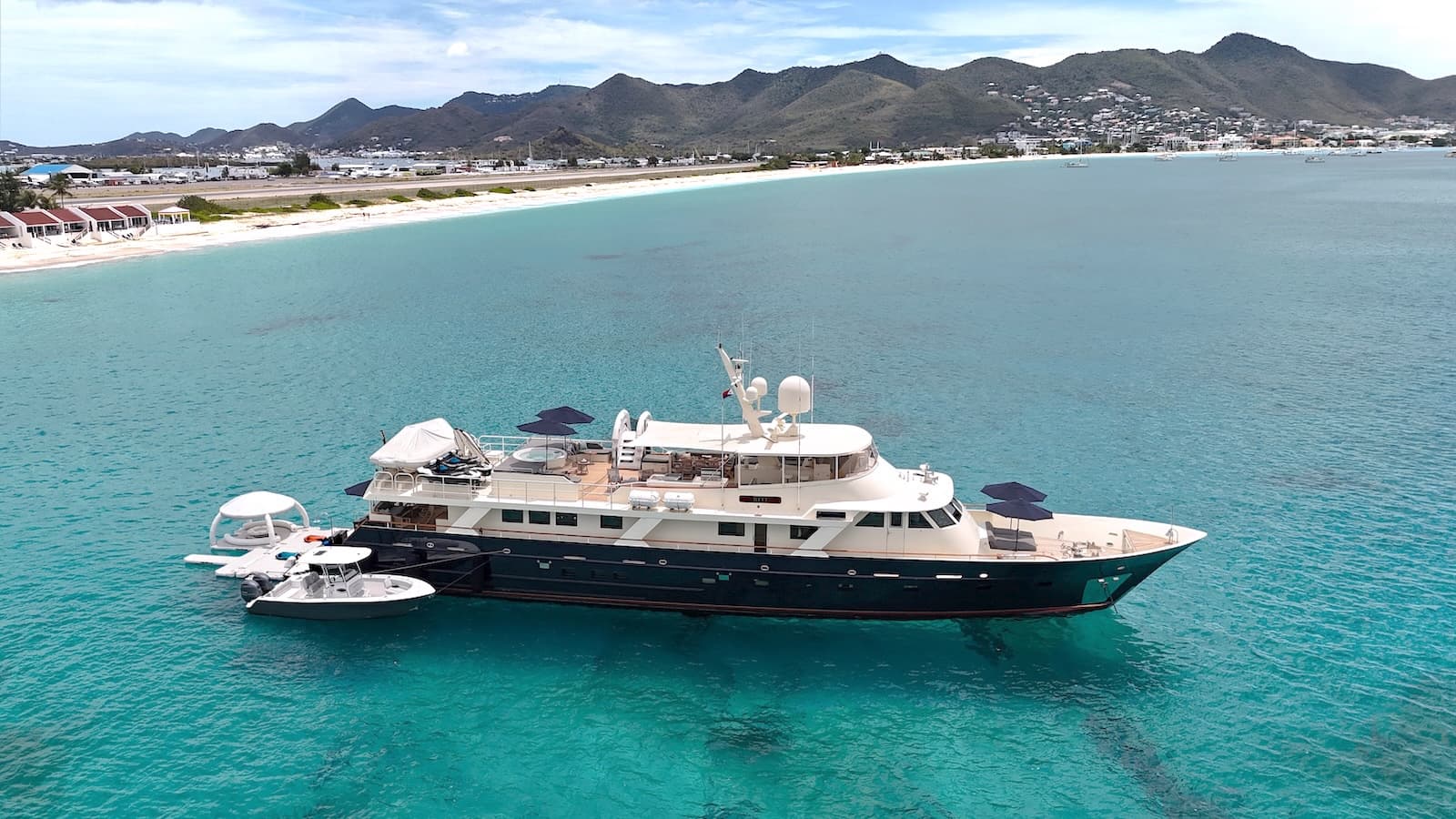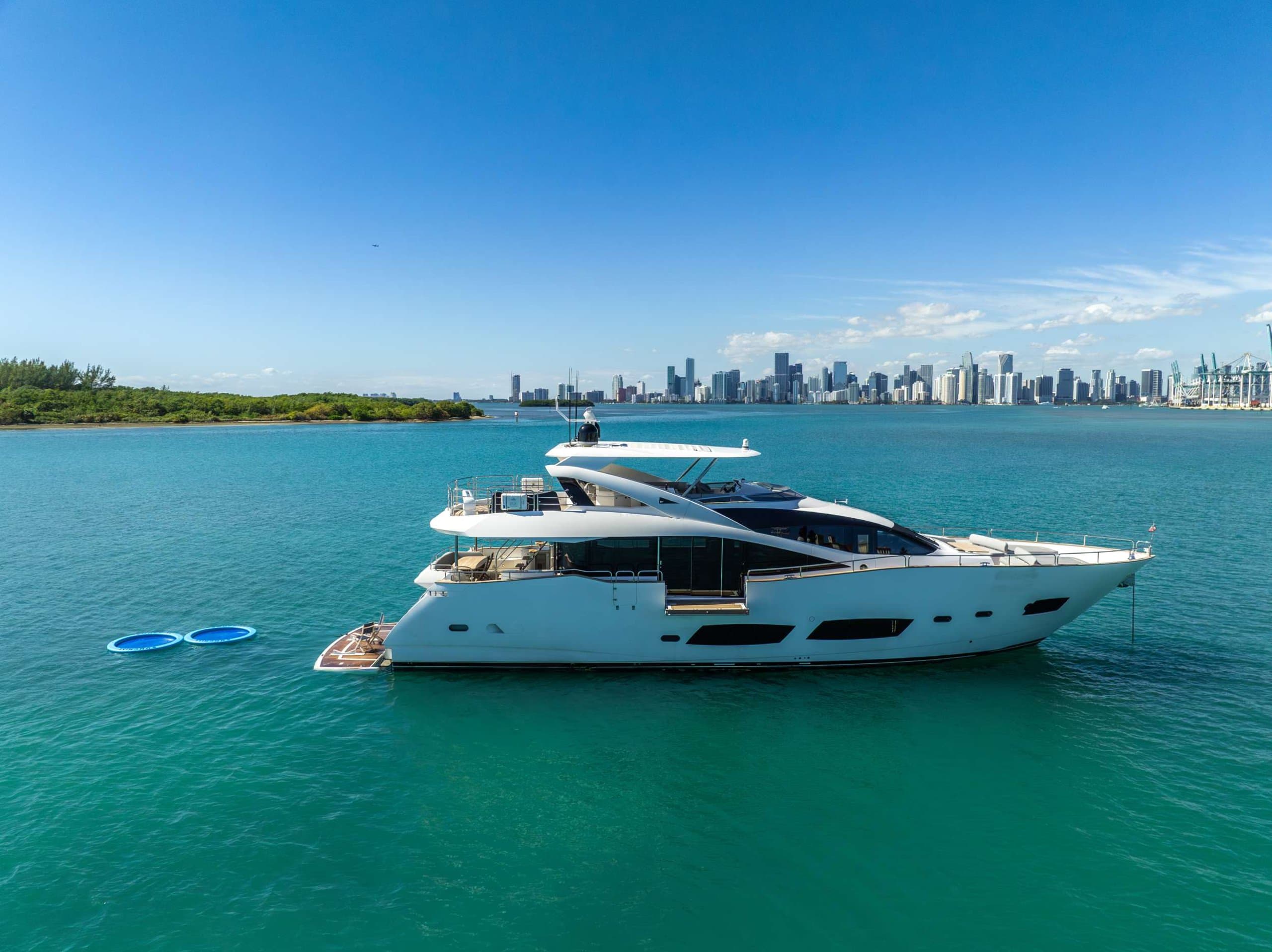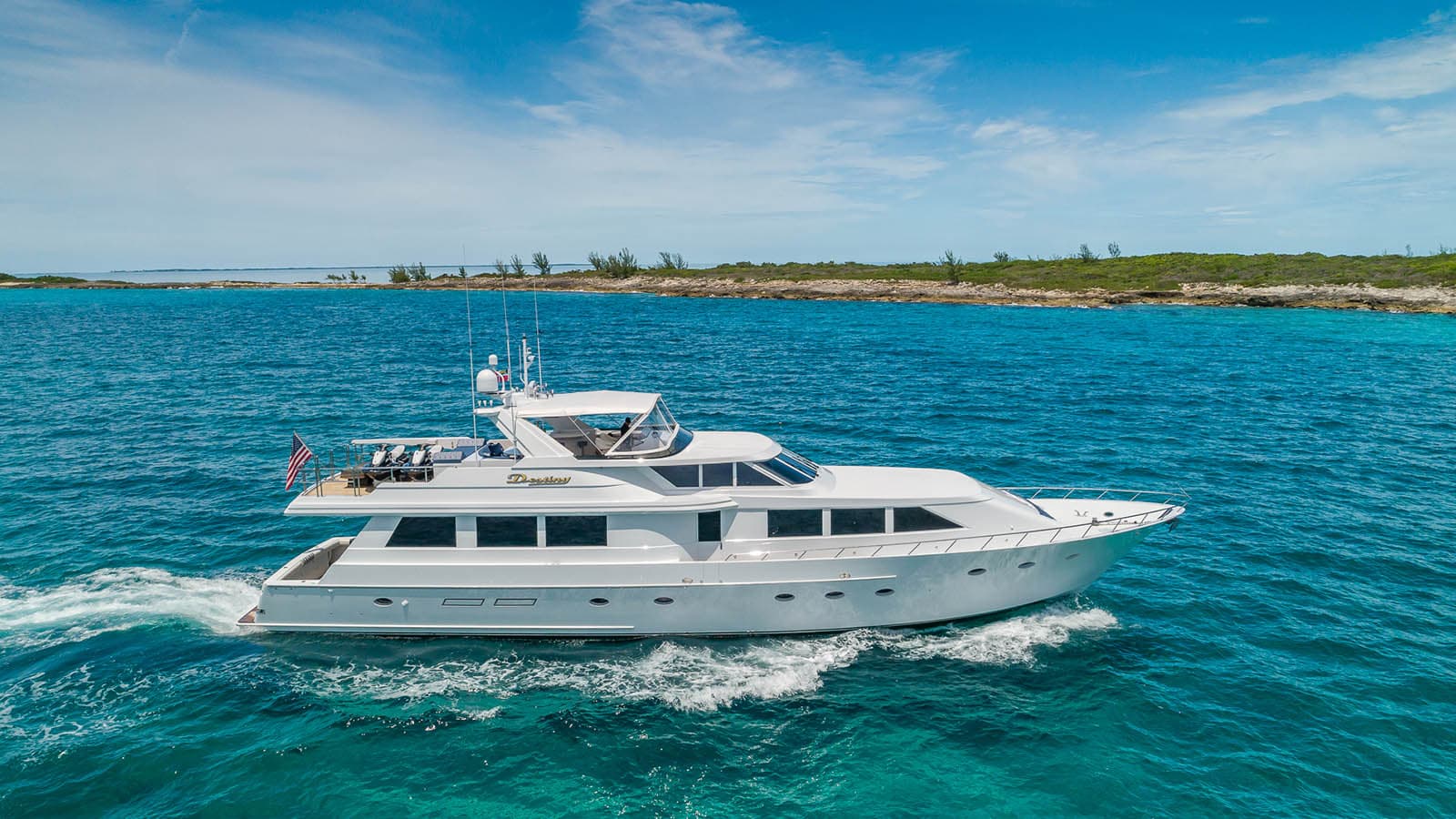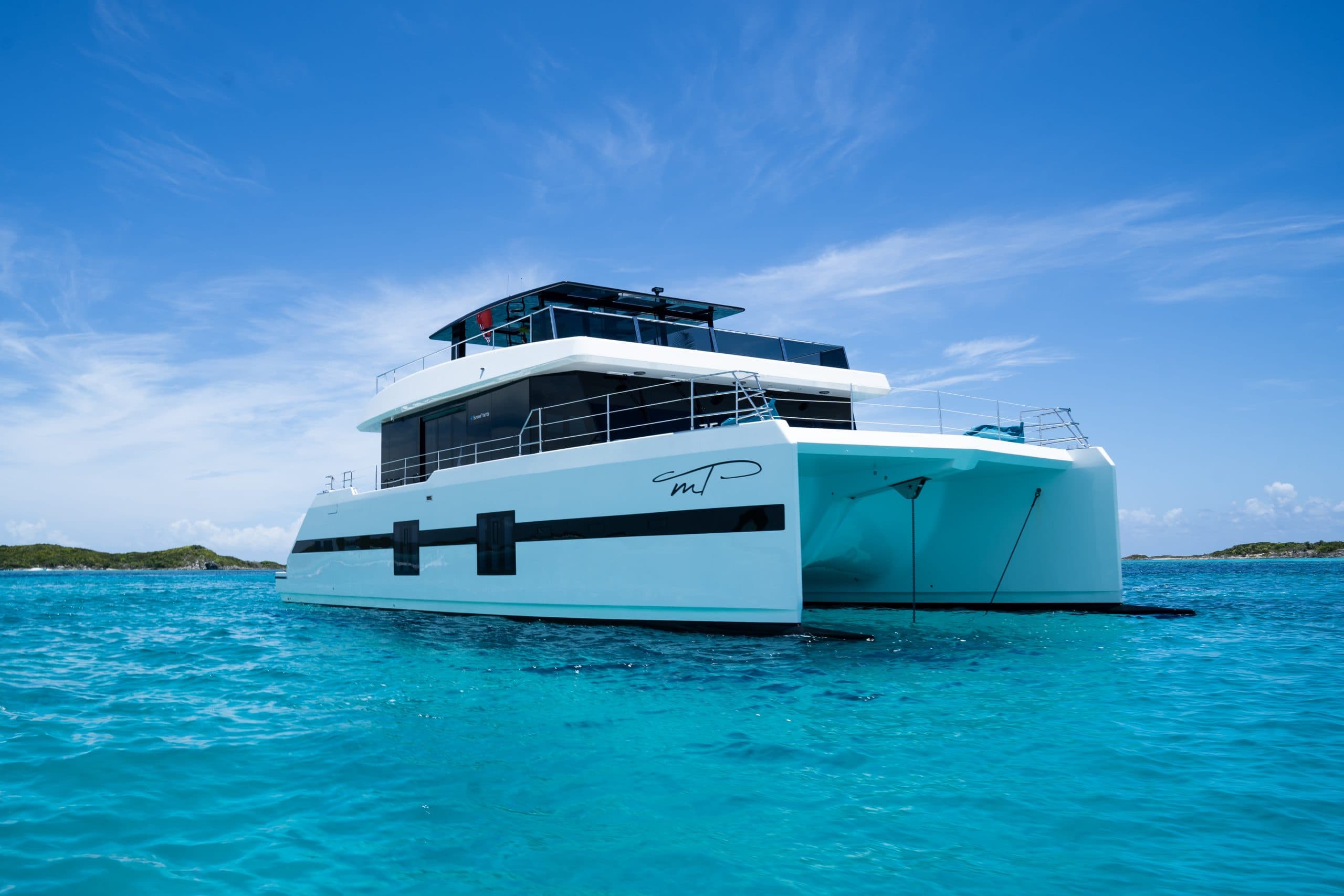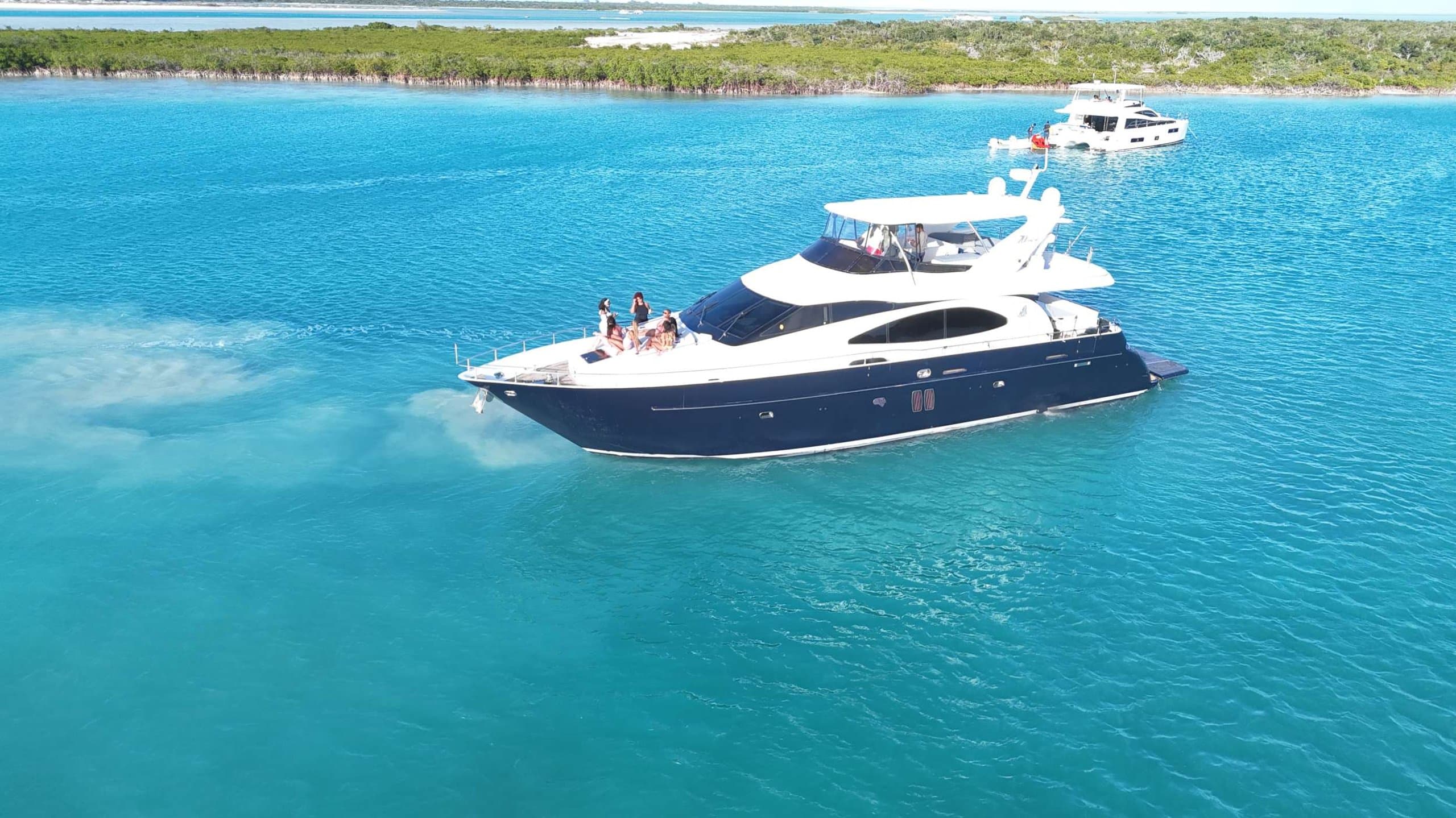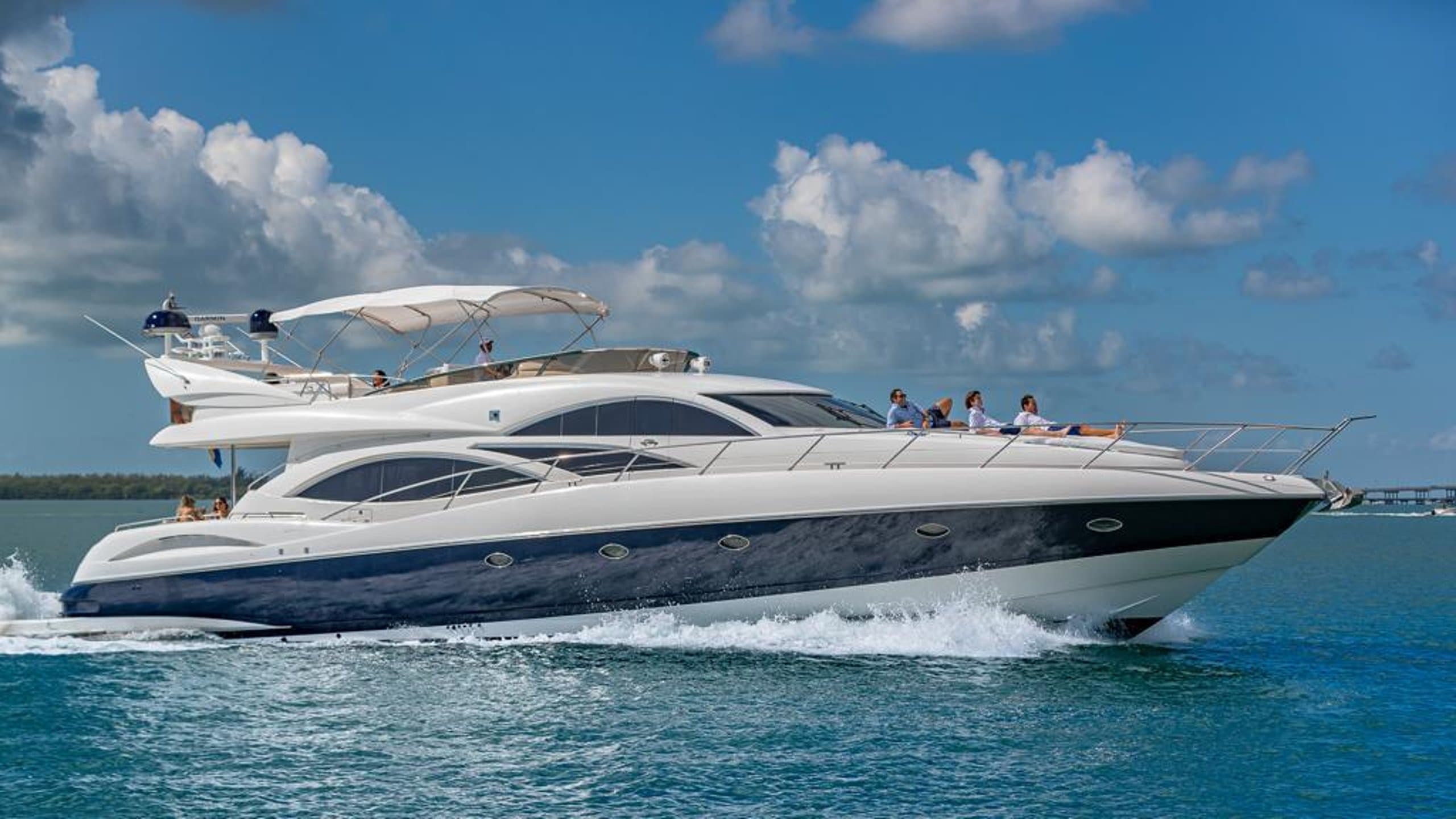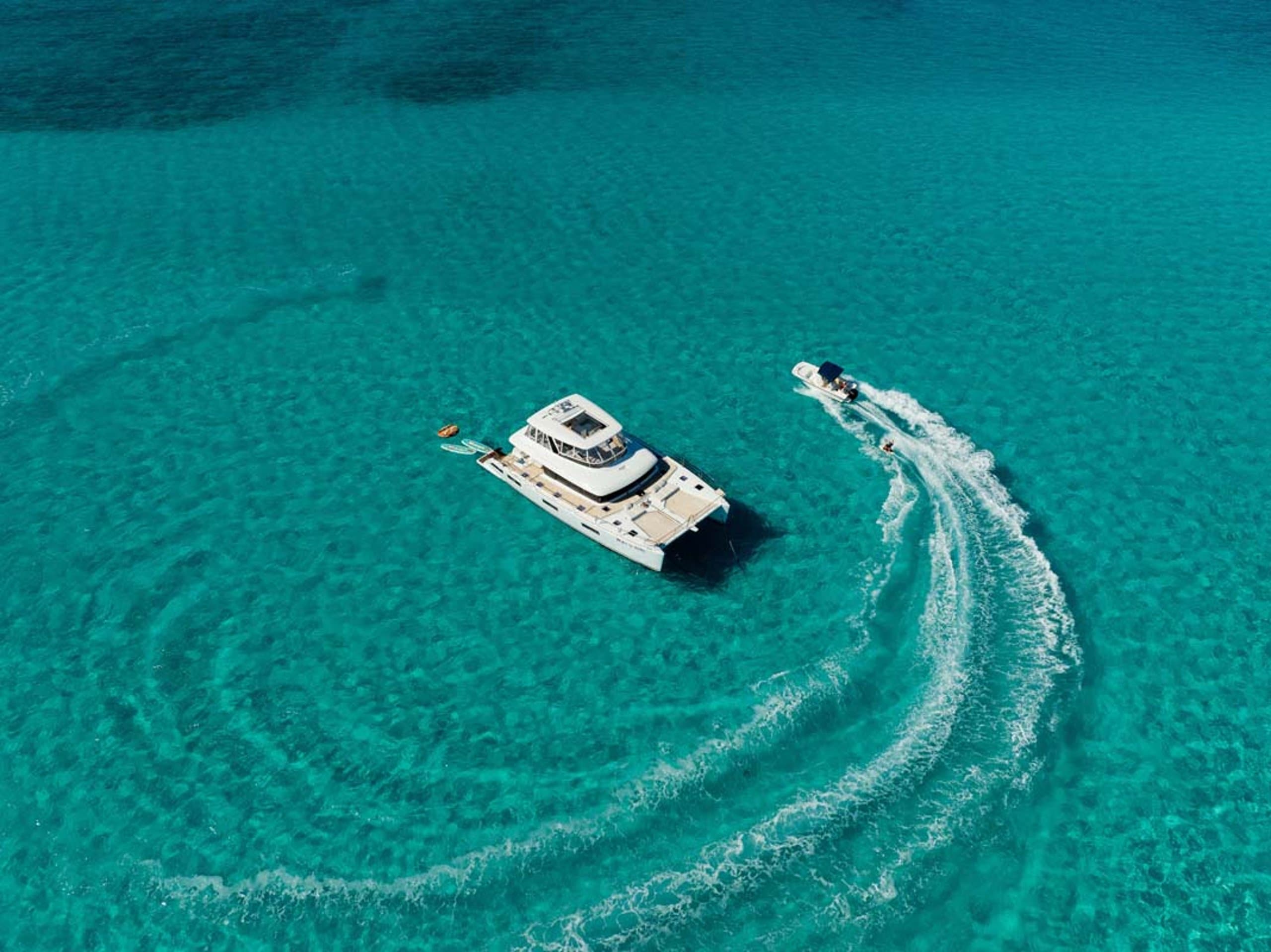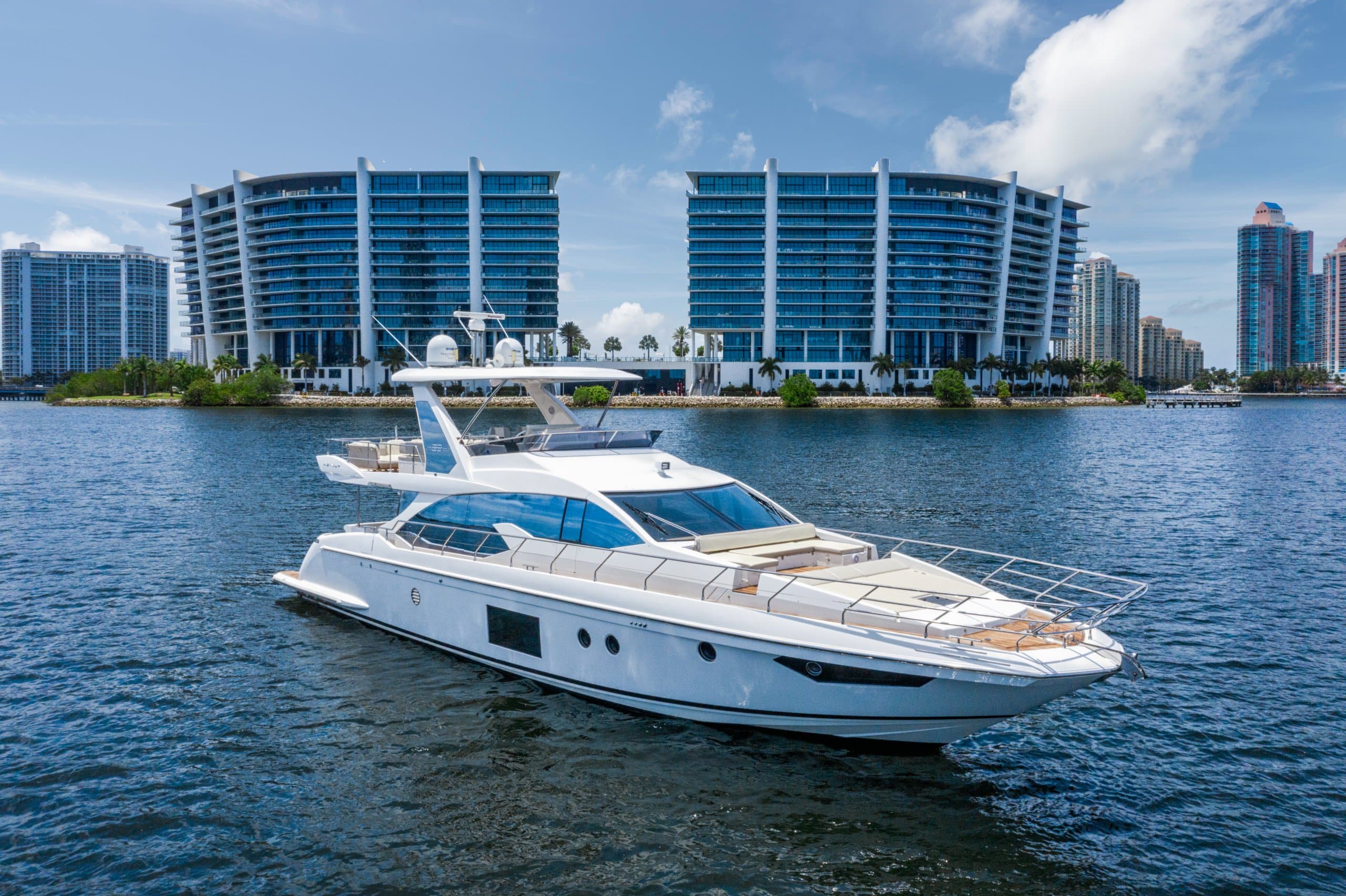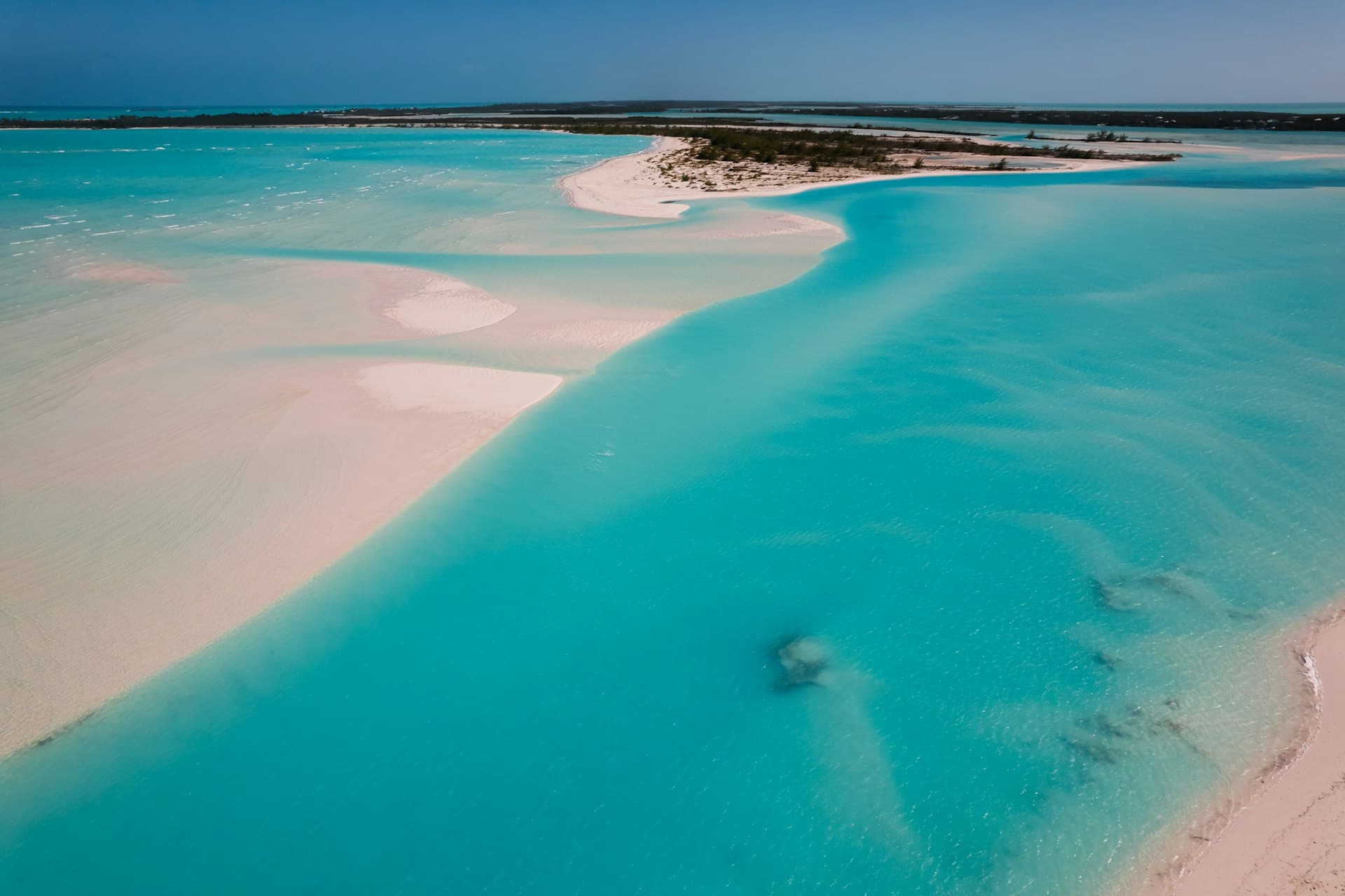
Seven hundred islands, two thousand cays, and some of the shallowest, clearest water on earth. The Bahamas are less a sailing destination than a visual experience — the palette shifts from cobalt to turquoise to pale jade as your yacht crosses the banks, and in the Exumas chain you can anchor over sand so white it glows beneath the hull. This is the Caribbean stripped to essentials: water, light, and space.
In the Exumas, the sea is so clear the anchor chain casts a shadow on the sand twenty feet below.
Geography and Cruising Areas
The Bahamas extend roughly 600 miles from Grand Bahama in the northwest to Great Inagua in the southeast. The islands sit atop vast shallow banks — the Great Bahama Bank and the Little Bahama Bank — where depths of 3-5 metres stretch for dozens of miles between deeper ocean channels. This geography defines the chartering: vessel draft is a genuine operational consideration, and the rewards of shallow-water cruising are extraordinary.
The Exumas
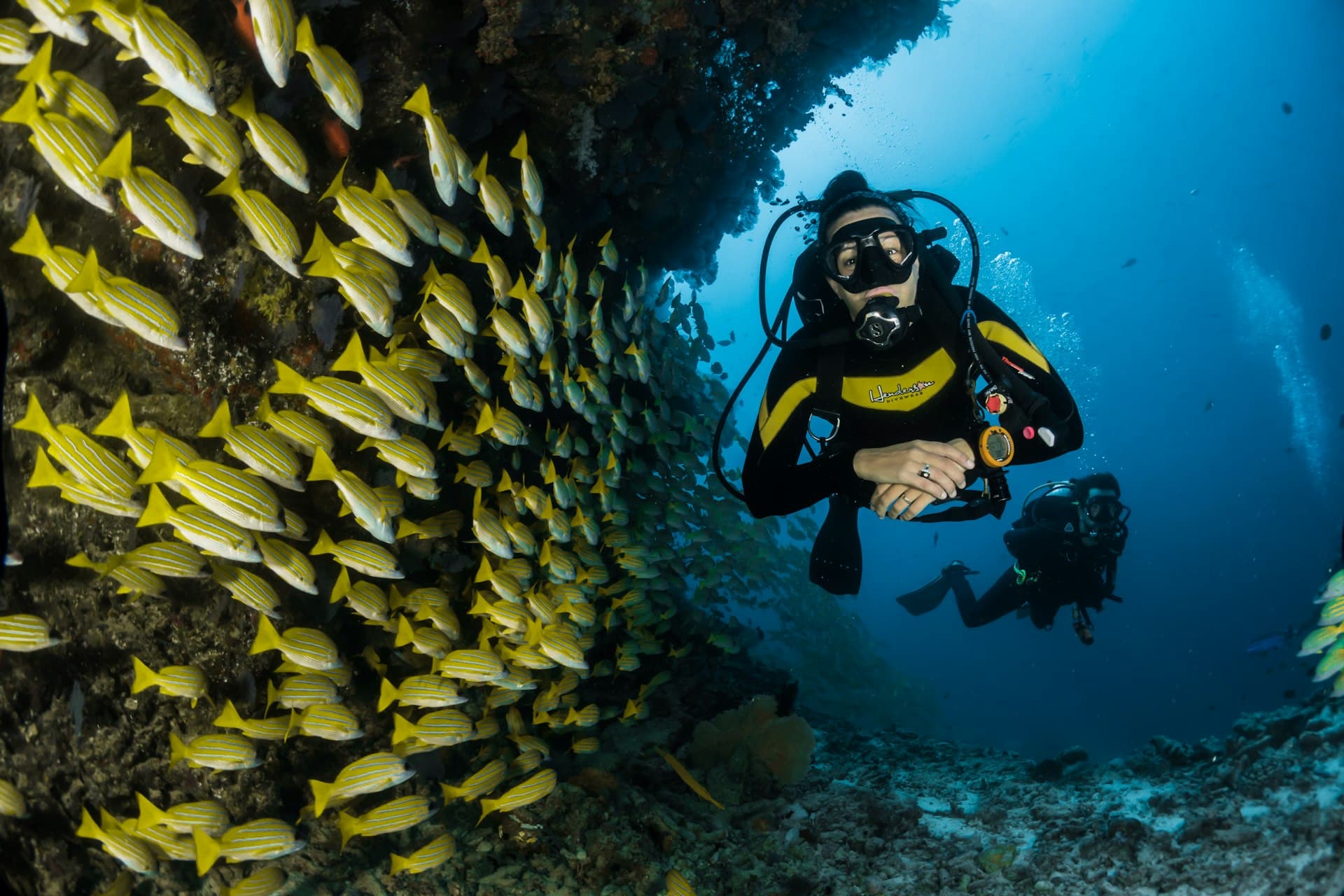
The centrepiece of Bahamian chartering. The Exuma Cays form a 200-kilometre chain running southeast from Nassau, with over 360 cays — most uninhabited. The Exuma Cays Land and Sea Park, a 280-square-kilometre protected area, offers some of the healthiest reef systems in the Caribbean. Key stops include Warderick Wells (the park headquarters, with mooring balls and hiking trails), Staniel Cay (home to Thunderball Grotto, a swim-through cave made famous by the Bond film), and Big Major Cay, where the resident swimming pigs have become an unlikely calling card.
Anchorages in the Exumas are typically behind cays on the bank side, in 2-3 metres over sand. Holding is excellent. Tidal currents run through the cuts between cays and can reach 3-4 knots at springs — timing passages through these cuts is important.
Nassau and New Providence
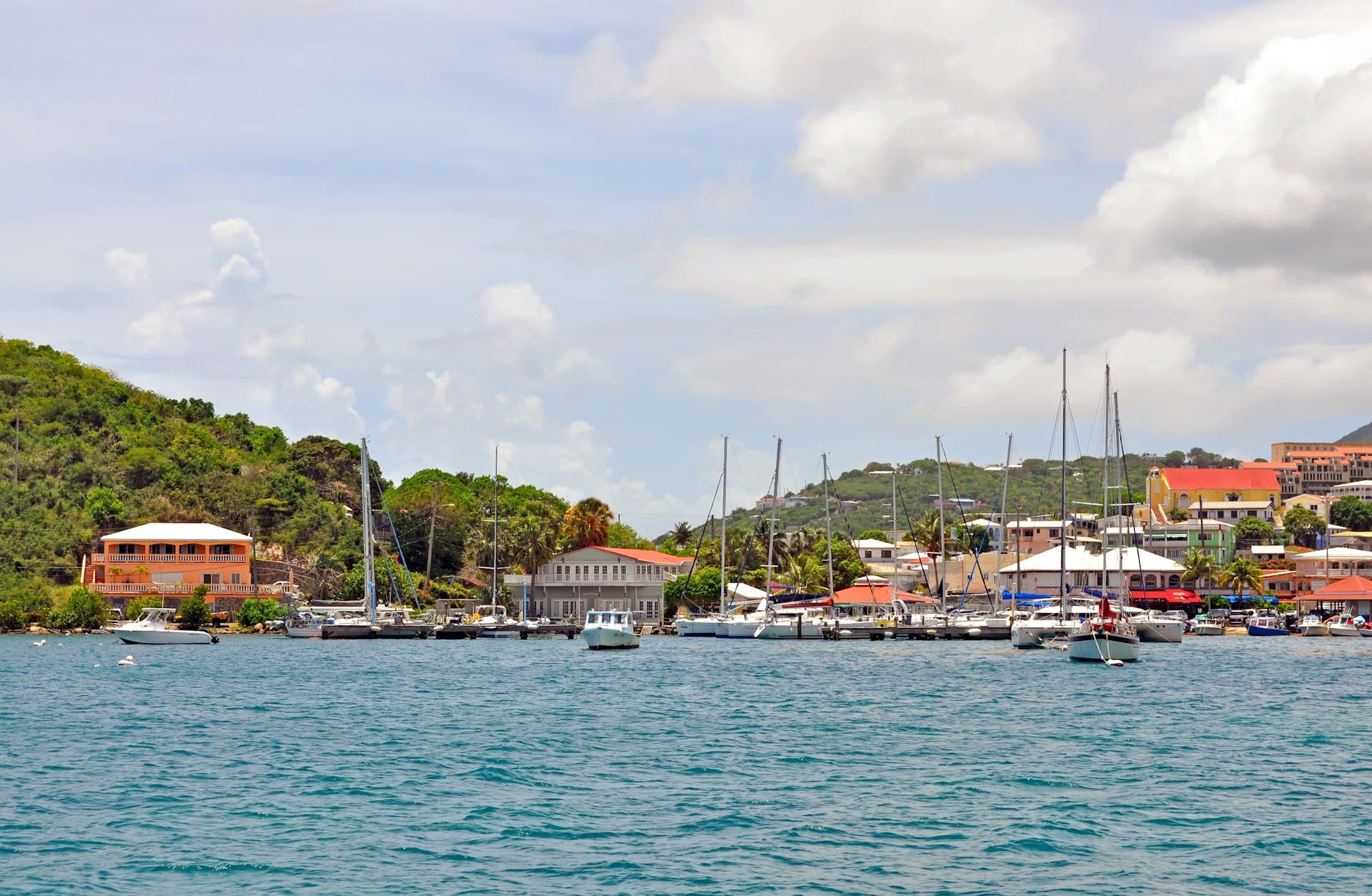
The capital and primary gateway. Nassau offers full provisioning, marina berths at Albany and Nassau Harbour, and easy access to private aviation via Lynden Pindling International Airport. Most Exumas itineraries embark from Nassau, with a first-day run south to the northern Exuma Cays — roughly 35 nautical miles to Highbourne Cay or Norman’s Cay.
Harbour Island and Eleuthera
Harbour Island sits off Eleuthera’s northeastern tip and is one of the most refined small islands in the Bahamas. The Pink Sands Beach — three miles of sand tinted by crushed foraminifera shells — is the visual anchor, but the town of Dunmore is equally compelling: clapboard cottages painted in faded pastels, and a handful of restaurants (The Landing, Sip Sip) that draw a discreet crowd each winter. Eleuthera itself is long and narrow, with good bonefishing flats on the western shore and surf breaks on the Atlantic side.
The Abacos
North of the main Bahamas chain, the Abacos offer a different character: a 120-mile barrier reef encloses the Sea of Abaco, creating a protected cruising area with Loyalist-heritage settlement towns (Hope Town, Green Turtle Cay, Man-O-War Cay). The Abacos were heavily affected by Hurricane Dorian in 2019, and while recovery has been substantial, some infrastructure remains in progress. Charter operations have resumed with strong local support.
Shallow-Draft Considerations
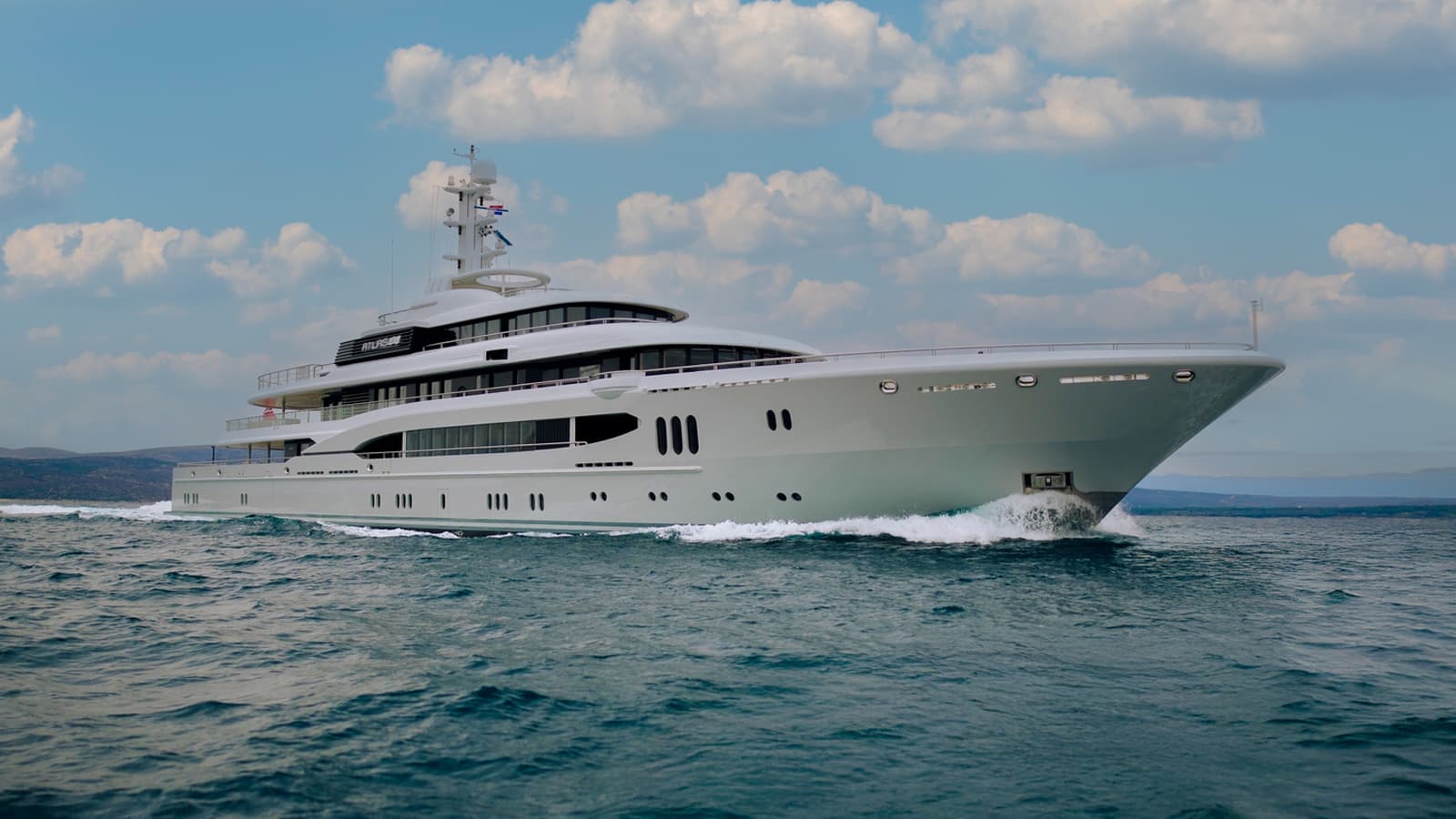
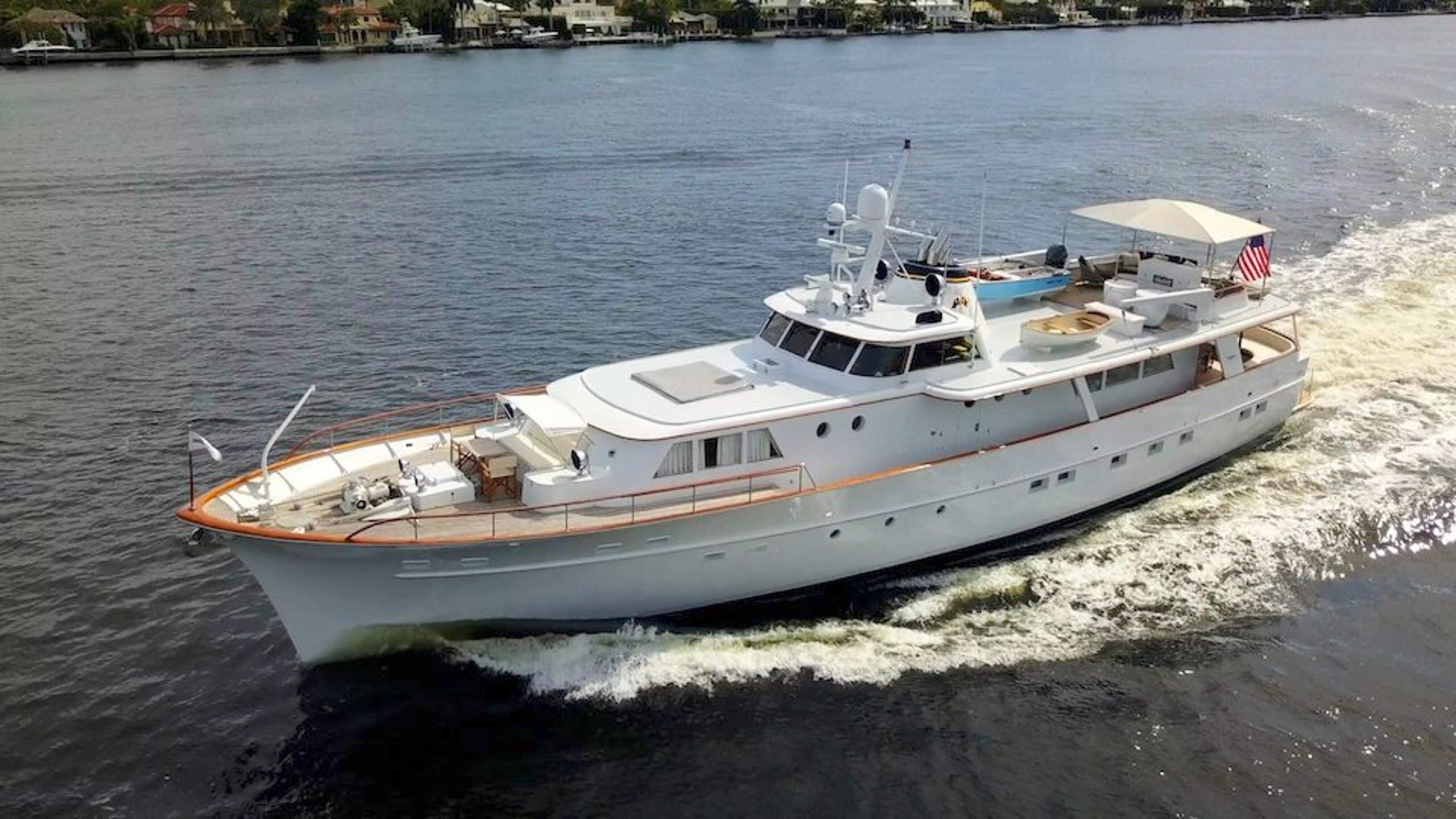
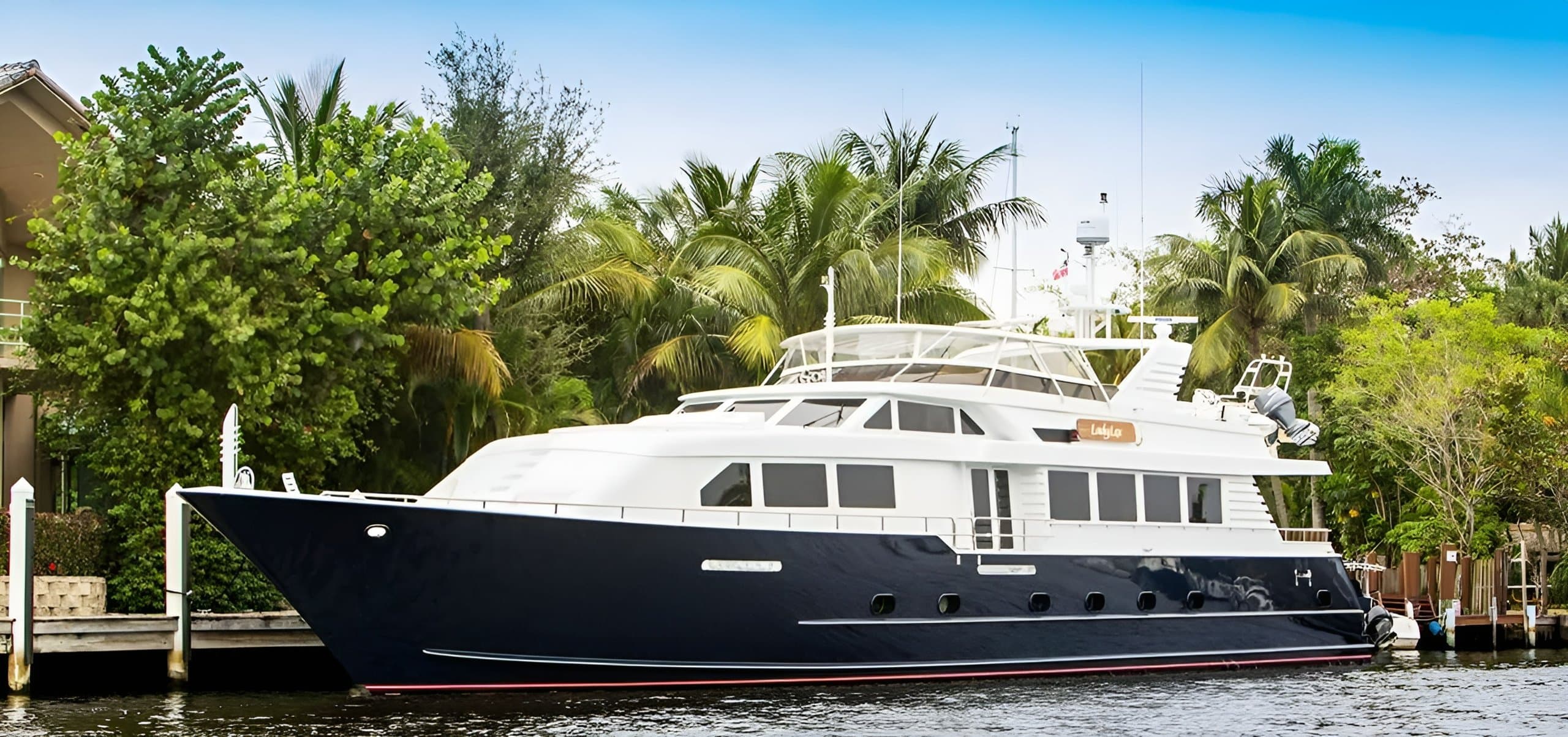
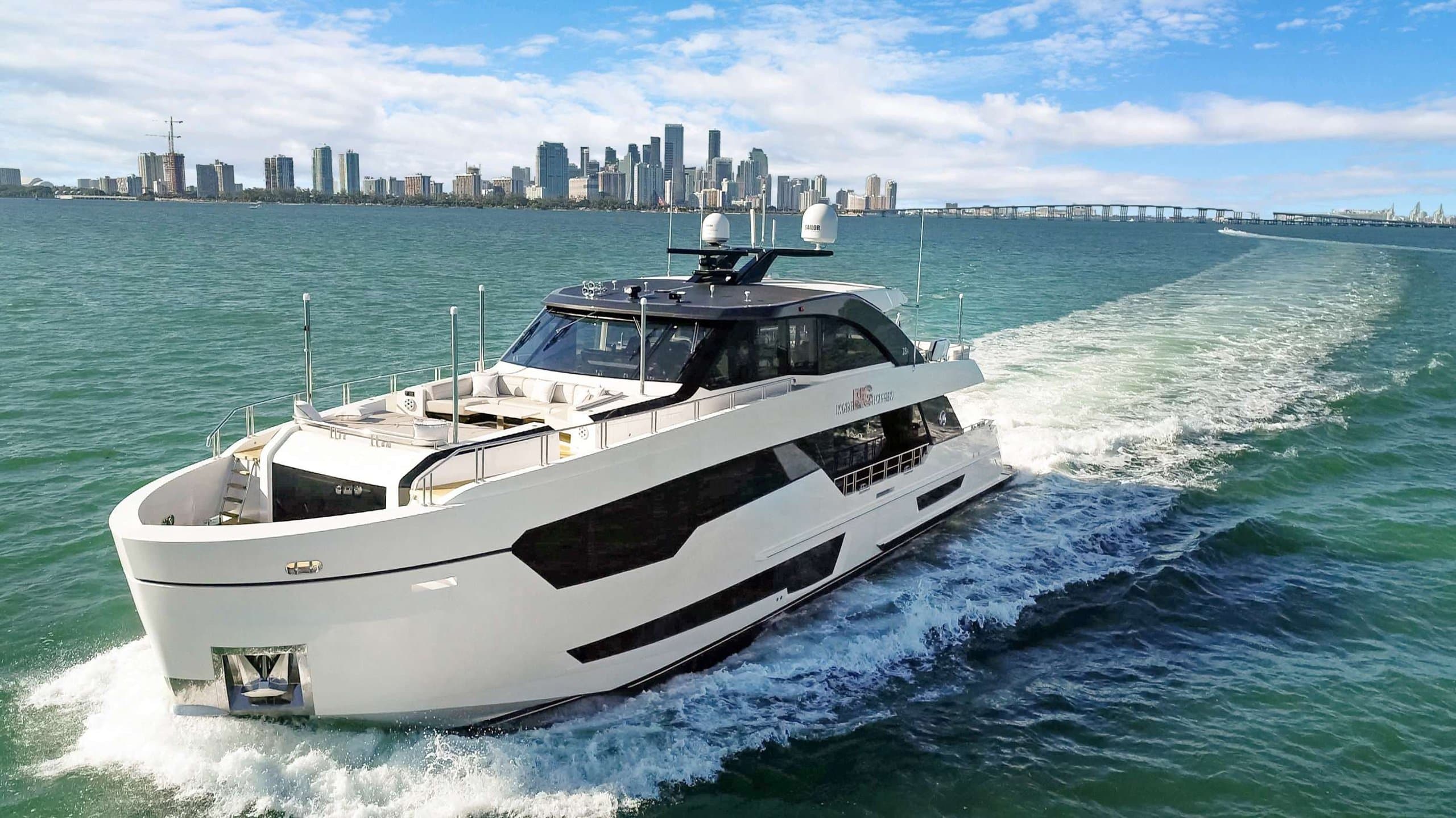
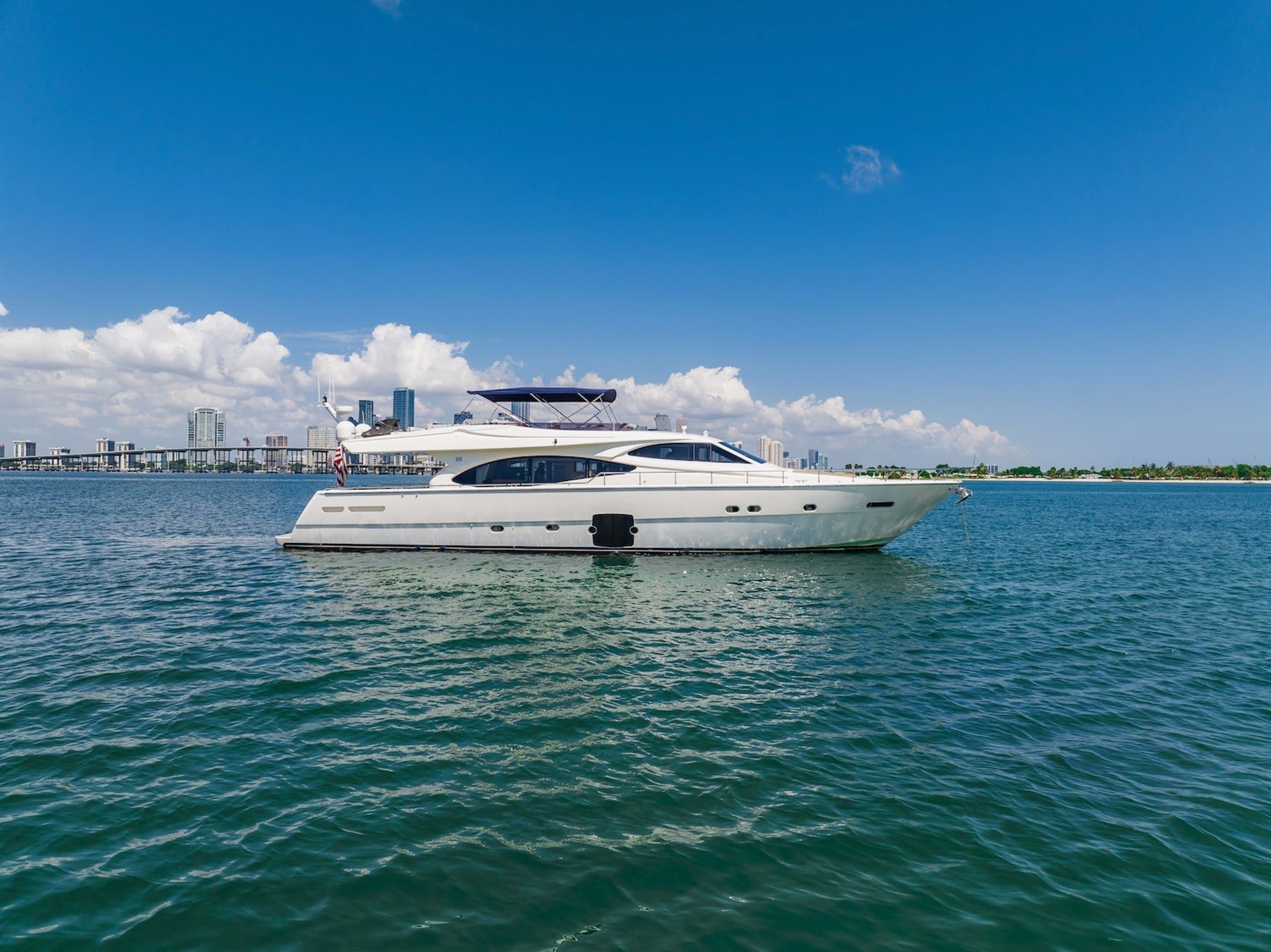
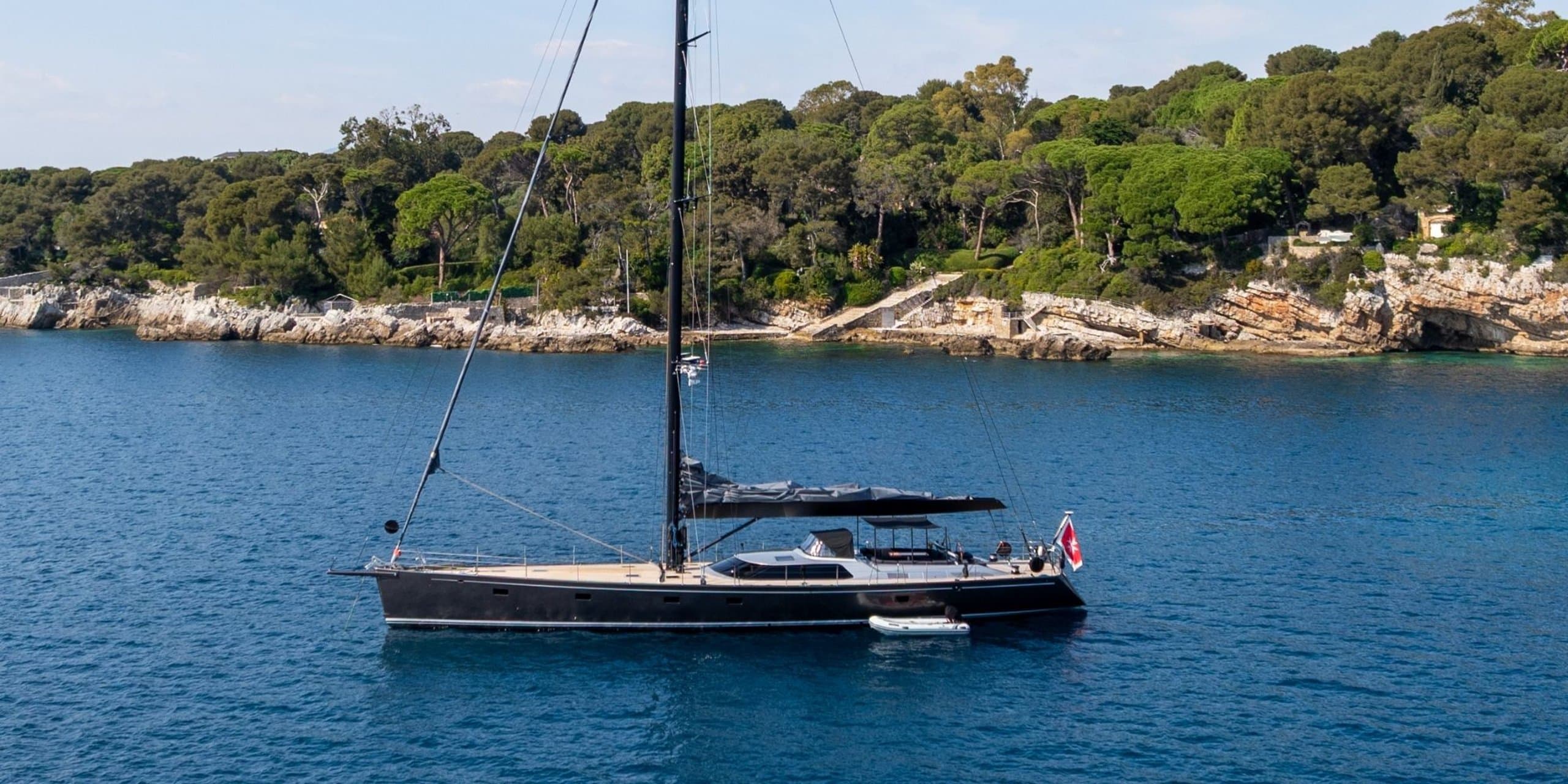
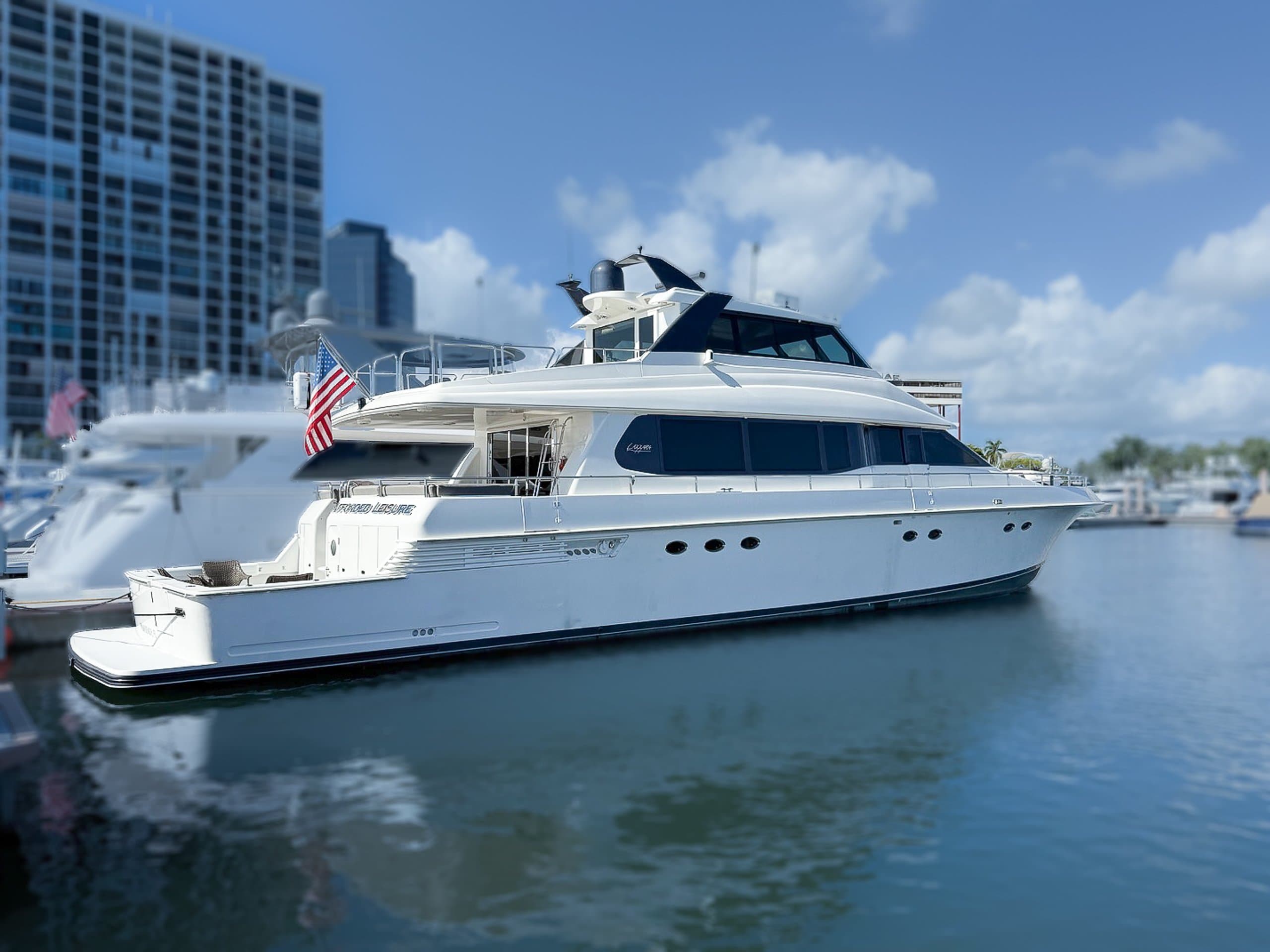
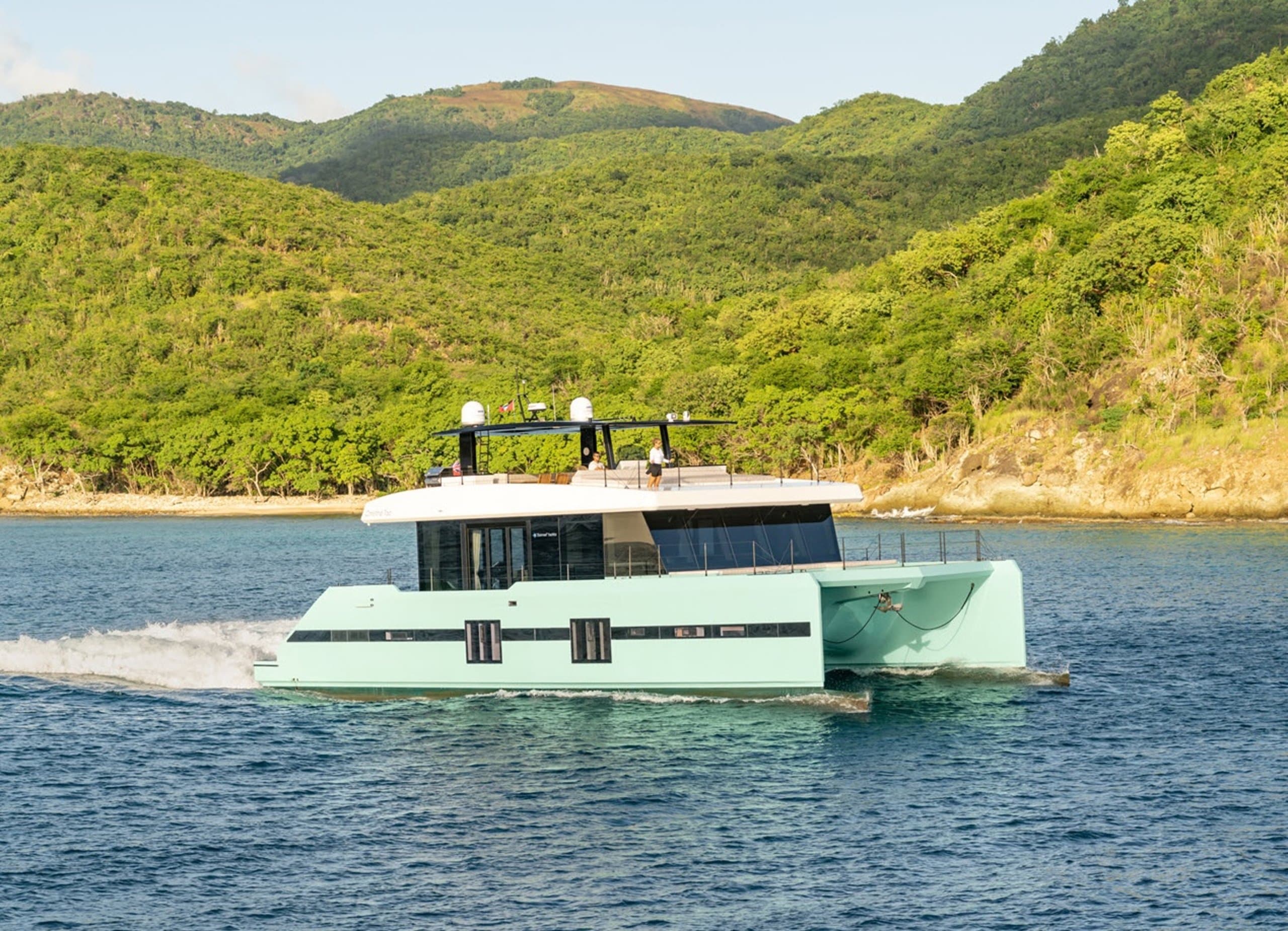
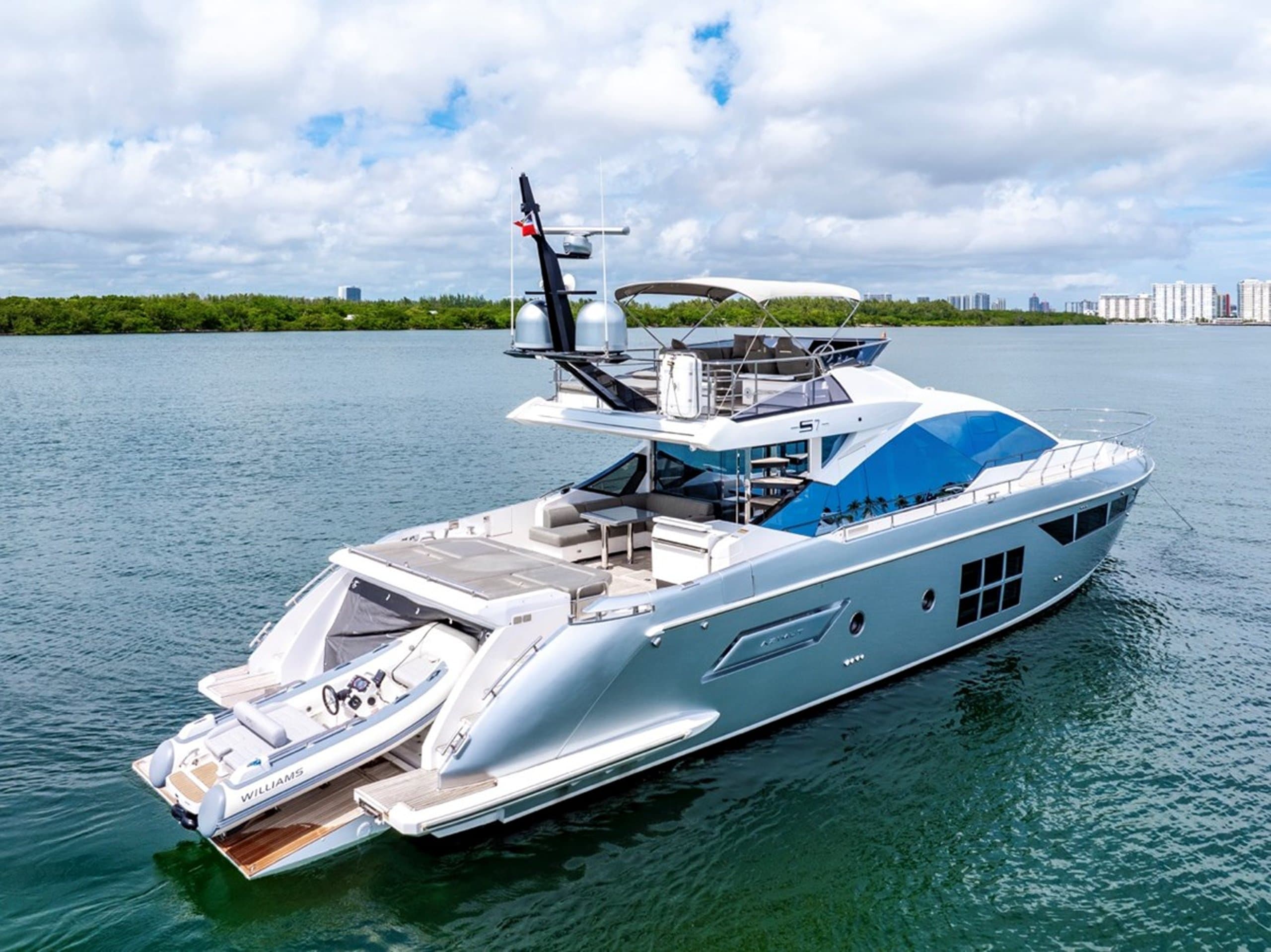
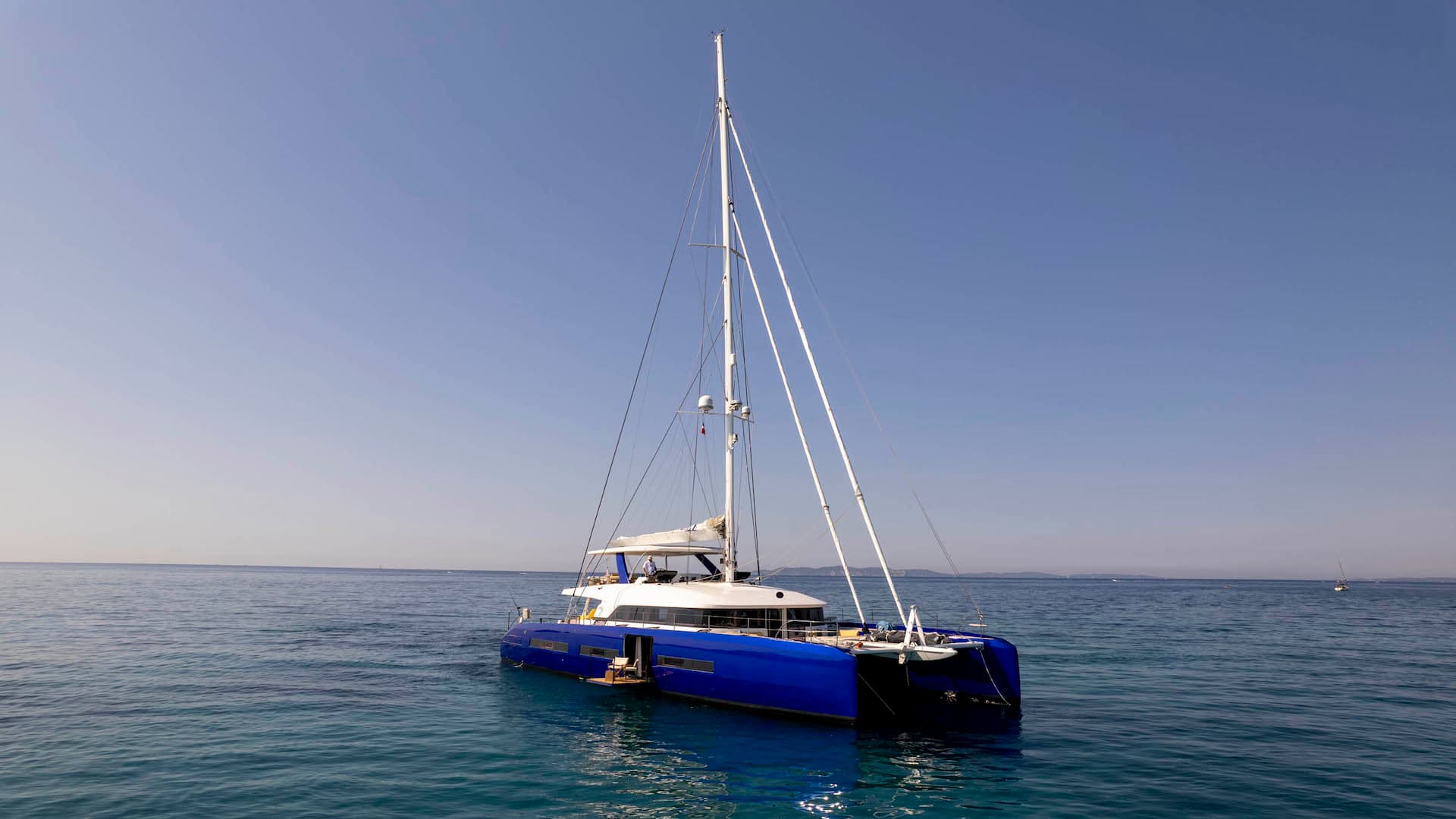
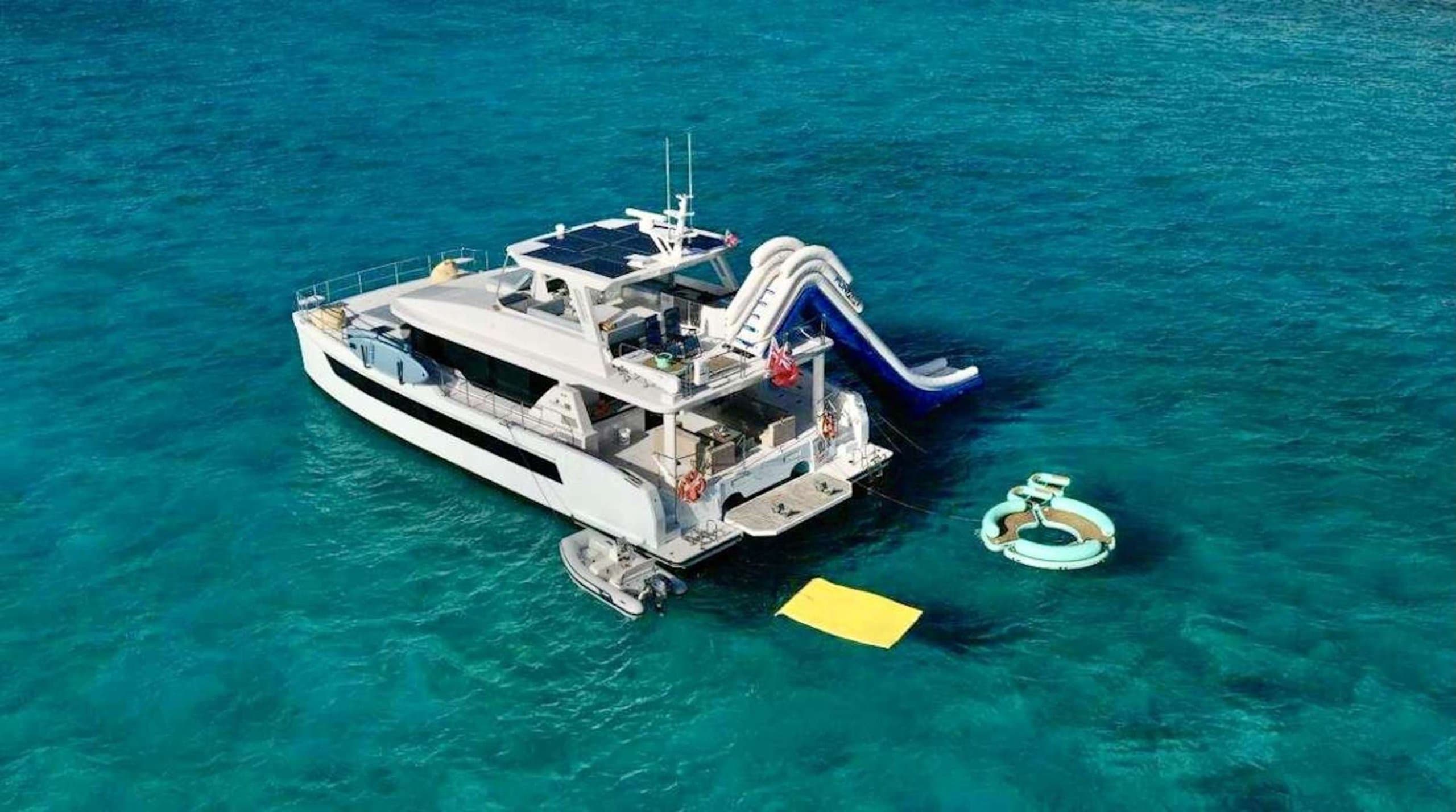
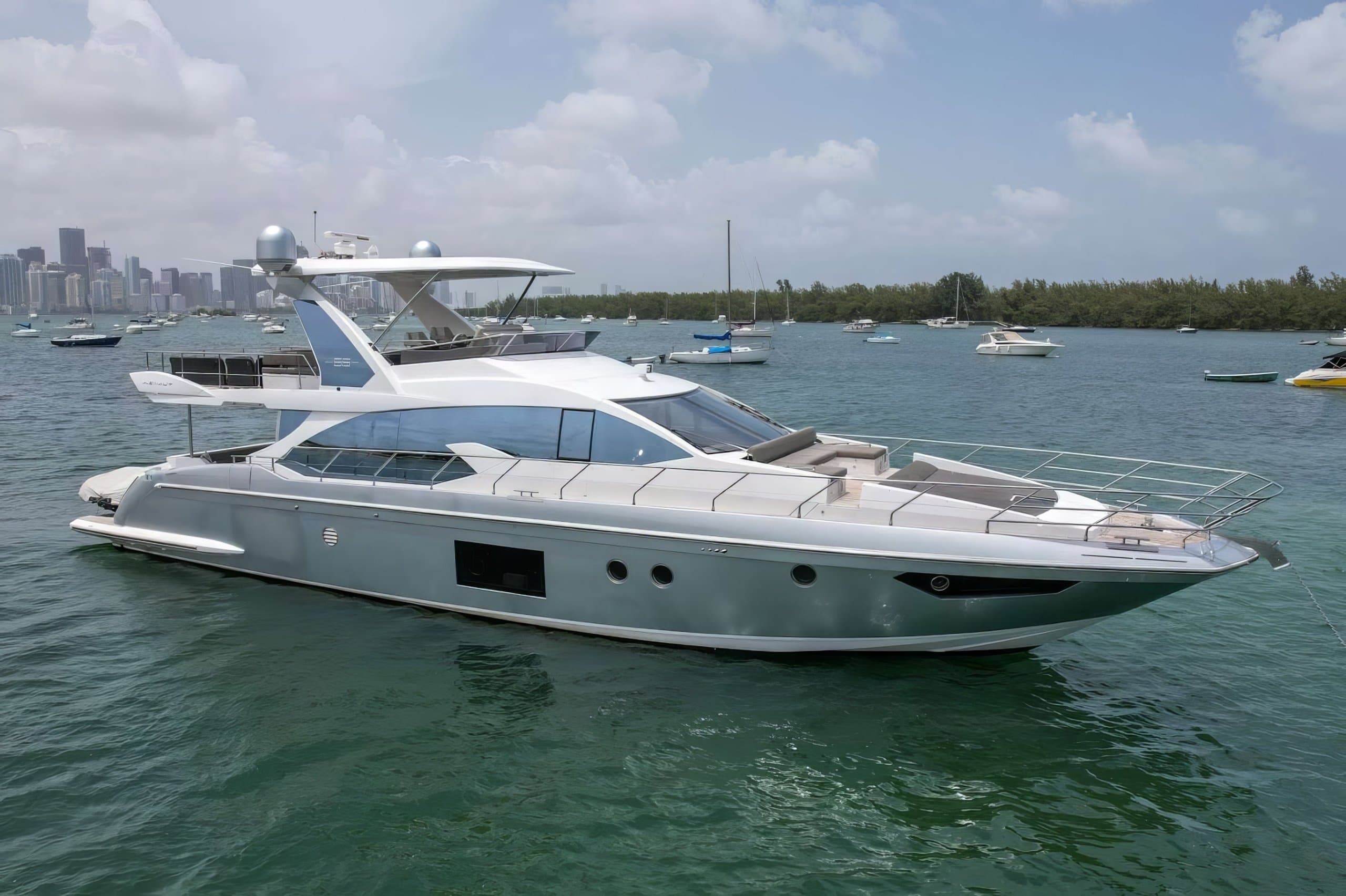
The Bahamas reward vessels that draw under two metres. Catamarans are a natural fit, and motor yachts with variable-draft capabilities open the most itinerary options. Larger yachts drawing 3+ metres can still cruise the deep-water channels and anchor off the bank edges, but they will miss some of the most compelling spots — the tidal creeks behind Warderick Wells, the shallows at Pipe Creek, and the bank anchorages that define an Exumas itinerary.
We routinely advise on yacht selection specifically for Bahamian waters, matching draft, tender capability, and water-sports equipment to the cruising plan.
Season and Conditions
The prime charter window runs from mid-December through April. Winds are northeast at 10-18 knots, seas on the banks are flat, and cold fronts — locally called “northers” — pass through every 7-10 days, bringing a day or two of northwest wind and cooler air before the trades re-establish. Water temperature sits around 24-26°C in winter, rising to 28-30°C by summer.
The Bahamas lie in the hurricane belt, and the official season runs June through November. May and early June can offer excellent conditions with fewer vessels and lower rates, making them a worthwhile shoulder-season option for flexible schedules.
The Bahamas are a yacht destination in the purest sense because so much of their beauty exists between the islands rather than on them. Sandbanks, cuts, cays, and clear shallow water define the week as much as any one harbour. This is why the region works so well by yacht and so imperfectly by ordinary resort logic.
For charterers escaping winter, the Bahamas offer immediate reward: short passages, warm water, and scenery that reads instantly from the deck. But the region still requires local knowledge. Draft, tide, and distance between services matter. The best charters here are carefully paced so that the apparent ease of the water never turns into complacency.
The result is one of the world's most visually immediate yacht holidays. Guests come for the colour and stay for the freedom that only a shallow-water cruising ground can provide.
Winter-sun yacht chartering
Shallow-water cruising grounds
Iconic Exuma-style scenery
Short, easy passages between cays