Skip to content
Seasonal Guides

The Case for October in the Aegean

6 min readBy Aris Drivas Yachting Editorial

October is when the Aegean stops performing and starts being itself: water at 22 to 24°C, anchorages you don’t have to fight for, and charter rates running 30 to 40% below the July-August peak. ADY has been putting clients on the water in October for decades. Here is why it works.
The Case for October in the Aegean

There is a version of the Aegean that most charterers never see. Not because it is hard to access; it is easier, cheaper, and in most practical respects more comfortable than the peak summer experience. The reason most people miss it is simpler than that: they book in January for July, the same week everyone else does, and October never enters the conversation.

ADY has been running charters through these waters since 1972. October keeps coming up, year after year, as the month our most experienced clients return to. This article explains why.

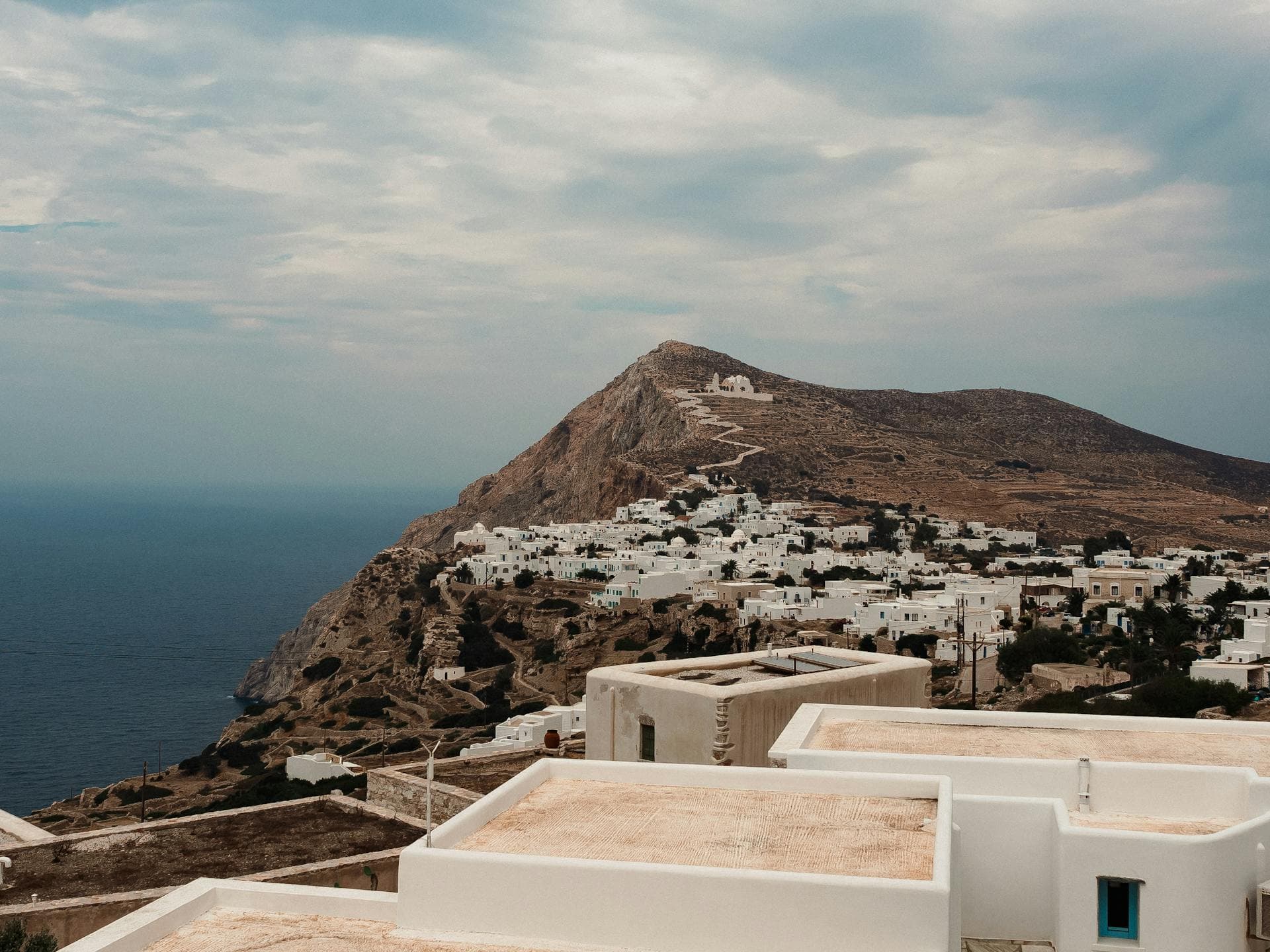
Folegandros Chora perched on cliff edge above the Aegean
Folegandros: uncrowded in October

The Wind Picture

The Meltemi (the persistent northerly that dominates the Aegean from June through mid-September) is the defining meteorological fact of a Greek island summer. At its peak in July and August, it runs 20 to 30 knots through the Cyclades, routinely gusting higher in compressed channels between islands. It makes certain passages uncomfortable, forces schedule changes, and is simply a planning constraint you cannot ignore.

By early October, the Meltemi is gone. The atmospheric pressure gradient that drives it (high pressure over the Balkans meeting low pressure over Turkey) has flattened. Wind in October is lighter, more variable in direction, and significantly more predictable on a day-to-day basis. Average wind speeds across the central Aegean drop to 10 to 15 knots, with calmer periods interspersed. This is a fundamentally different sailing environment: one where you can plan a passage without building in a contingency day, where lunch in an exposed anchorage doesn’t mean holding your hat.

What replaces the Meltemi on some October days is a light southerly or south-westerly, the kind of breeze that makes coastal sailing genuinely pleasant rather than merely manageable. It is not always benign (the Aegean can produce unsettled weather from late October onward as the first autumn lows develop), but the window from roughly 1 October to 25 October is, statistically, the calmest and most consistent sailing period of the year.

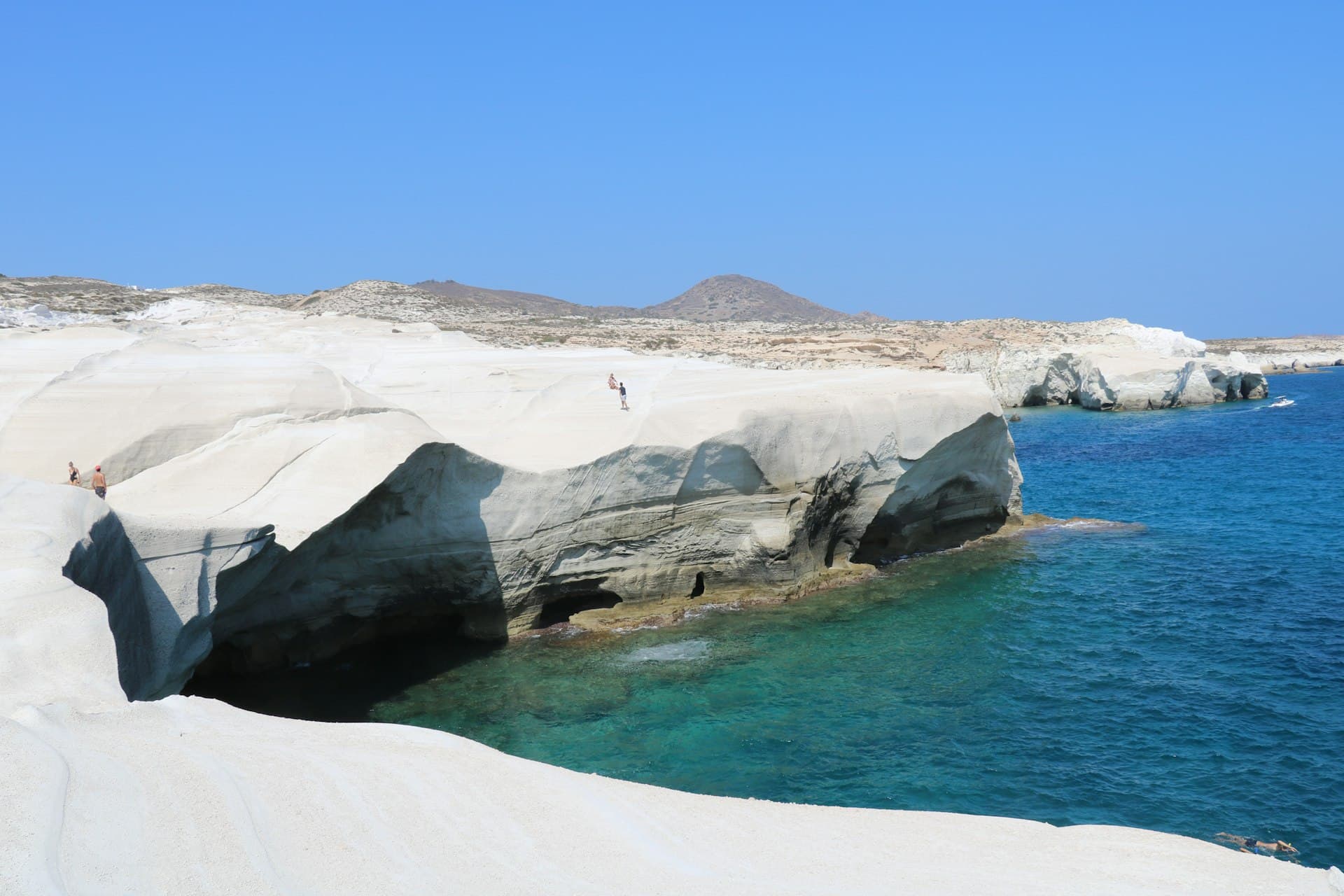
Lunar white rock landscape at Sarakiniko beach, Milos
Sarakiniko, Milos: still warm in October

Water and Air Temperature

The Aegean’s thermal mass means October water temperatures lag meaningfully behind the autumn air. At the start of October, sea surface temperatures across the central and southern Aegean average 23 to 24°C. By late October, the figure sits closer to 20 to 22°C, still warm enough for extended swimming without a wetsuit. This compares with July-August peaks of 25 to 27°C; the gap is real but narrow.

Air temperatures in October run 21 to 25°C through the day across the Cyclades and Dodecanese, dropping to 16 to 18°C at night. That overnight coolness is, for many, a feature rather than a drawback: sleeping on a boat becomes straightforward, and evenings on deck are comfortable rather than oppressive. Sunshine averages 8 hours per day through October, and rainfall, when it comes, is typically brief and concentrated, averaging 4 rain days across the month for the central Aegean.

The practical implication: you can swim every day, you are not retreating below decks at anchor, and you are not eating dinner in 30°C heat.

Anchorages and Marinas

The Aegean holds somewhere in the order of 200 inhabited islands and several hundred more uninhabited ones, together offering thousands of anchorages. In July and August, the most-used ones (Kleftiko on Milos, the bays around Paros and Antiparos, the northern coast of Ios, the anchorages off Amorgos) fill by early afternoon. Finding a stern-to berth in a popular port on a Saturday in August requires either arriving by noon or accepting whatever space remains.

In October, this dynamic simply does not apply. You can arrive at a preferred anchorage at 17:00 and choose your position. Popular marinas (Mykonos, Rhodes, Kos) have straightforward availability. The flotillas and bareboat charters that account for much of the August congestion are off the water. What remains is a mix of privately crewed yachts, a smaller number of charter vessels, and local fishing boats.

This matters operationally. Provisioning, fuel, water, and shore excursions are all easier when you are not competing with several hundred other vessels for the same resources on the same day.

What Is Still Open

The commonly cited concern about October is that the islands close down. The data does not support this for the period through late October. Across the Cyclades and Dodecanese, restaurants, tavernas, and most retail businesses remain open through at least the end of October. The closures that characterise November (the winter shuttering of seasonal operations) have not yet started.

What does change: the after-midnight club culture that defines Mykonos and Ios in August is absent. If that is the draw, October is the wrong month. If the draw is the Aegean itself (the quality of the light, the water, the character of small port towns when they are not overwhelmed), October delivers it cleanly. Patmos, Symi, Kastellorizo, Folegandros, Amorgos: these islands are more themselves in October than they are in the height of summer.

The practical infrastructure holds. Ferry connections continue through October, which matters for crew or guest changes. Fuel docks and chandleries in main ports remain operational. Weather windows for longer passages (Rhodes to Santorini, the Dodecanese to the northern Sporades) can be planned and executed without the same level of Meltemi uncertainty that characterises August.

The Rate Question

Charter rates in the Aegean follow a straightforward seasonal curve. July and August are peak: demand is high, availability is constrained, and owners price accordingly. October sits in the shoulder band, typically running 30 to 40% below the July-August rate for equivalent vessels. On a 30-metre motor yacht priced at €30,000 per week in August, October rates commonly fall in the €18,000 to €21,000 range. The spread widens at the upper end of the market, where July-August premiums are steeper.

This is not distress pricing. Owners are not discounting because the conditions are inferior; they are discounting because demand is lower. The vessel, the crew, and the cruising ground are identical to August. The difference is the calendar.

For multi-week programmes, the arithmetic is material. A three-week itinerary covering the Cyclades and Dodecanese at October rates represents a saving of €30,000 to €40,000 against the same itinerary in peak season on a comparable yacht. That sum covers a significant portion of provisioning and fuel for the charter.

The Itinerary

October is particularly well-suited to itineraries that combine the central Cyclades with the more southerly Dodecanese. The wind pattern in October (lighter, often with a southerly component) makes northbound passages easier than in summer, and the distance from, say, Rhodes to Santorini (approximately 100 nautical miles) can typically be run in a single overnight or two day-passages without the Meltemi complication.

Recommended anchoring grounds that operate well in October: the western coast of Milos, the anchorages around Schinousa and Iraklia (the lesser-visited eastern Cyclades), the harbour at Tilos, and the bays of Symi’s Panormitis. These are places that require patience and timing in August; in October they are simply available.

The light in October changes the photography as well, for those who care about such things. The sharp overhead light of July gives way to a lower sun angle, longer golden hours, and a quality of afternoon light on limestone and whitewash that is markedly different from the summer look.

A Note on Timing

The window we recommend is 1 to 25 October. Before the 1st, the shoulder season pricing advantage is partially diluted by lingering September demand. After the 25th, the probability of the first autumn frontal systems increases, and day length drops noticeably: usable sailing hours shorten, and the weather becomes less predictable. Within that 25-day window, the first two weeks are statistically the most settled.

ADY maintains a detailed log of October charter conditions across the Aegean going back decades. The patterns are consistent. October works. The question is not whether the conditions support it (they do) but whether the people doing the booking are paying attention.

If October suits you, , and we will come back with yachts and their October rates.

Frequently asked questions

What is the wind like in the Aegean in October?+

Wind in the Aegean in October is lighter, more variable in direction, and more predictable day to day than in summer. The Meltemi, which runs 20 to 30 knots through the Cyclades at its July and August peak, is gone by early October. Average wind speeds across the central Aegean drop to 10 to 15 knots, and some days bring a light southerly or south-westerly breeze.

How warm is the sea in the Aegean in October?+

The Aegean stays warm enough for extended swimming without a wetsuit throughout October. Sea surface temperatures across the central and southern Aegean average 23 to 24°C at the start of the month and sit closer to 20 to 22°C by the last week, against July and August peaks of 25 to 27°C. Air temperatures run 21 to 25°C by day, dropping to 16 to 18°C at night.

How much cheaper is a yacht charter in the Aegean in October?+

October charter rates in the Aegean typically run 30 to 40% below the July and August rate for equivalent yachts. On a 30-metre motor yacht priced at €30,000/week in August, October rates commonly fall between €18,000 and €21,000. A three-week Cyclades and Dodecanese itinerary saves €30,000 to €40,000 against peak season on a comparable yacht. The yacht, the crew, and the cruising ground are identical to August.

Do restaurants and services on the Greek islands stay open in October?+

Yes. Restaurants, tavernas, and most retail businesses across the Cyclades and Dodecanese remain open through at least the end of October; the winter closures belong to November. Ferry connections continue, which matters for crew or guest changes, and fuel docks and chandleries in main ports remain operational. What is absent is the after-midnight club culture that defines Mykonos and Ios in August.

Which dates in October are recommended for an Aegean yacht charter?+

The recommended window is 1 to 25 October. Before 1 October, lingering September demand partially dilutes the shoulder season pricing advantage. After 25 October, the probability of the first autumn frontal systems increases and day length drops noticeably, shortening usable sailing hours. Within that window, the first two weeks are statistically the most settled.

Which Aegean anchorages work well for an October yacht charter?+

Recommended October anchoring grounds include the western coast of Milos, the anchorages around Schinousa and Iraklia in the eastern Cyclades, the harbour at Tilos, and the bays of Symi's Panormitis. In October you can arrive at a preferred anchorage at 17:00 and choose your position, and popular marinas such as Mykonos, Rhodes, and Kos have straightforward availability.
By Aris Drivas Yachting Editorial

Begin your journey

Speak with our team to explore charter destinations, yacht sales, or itinerary planning.