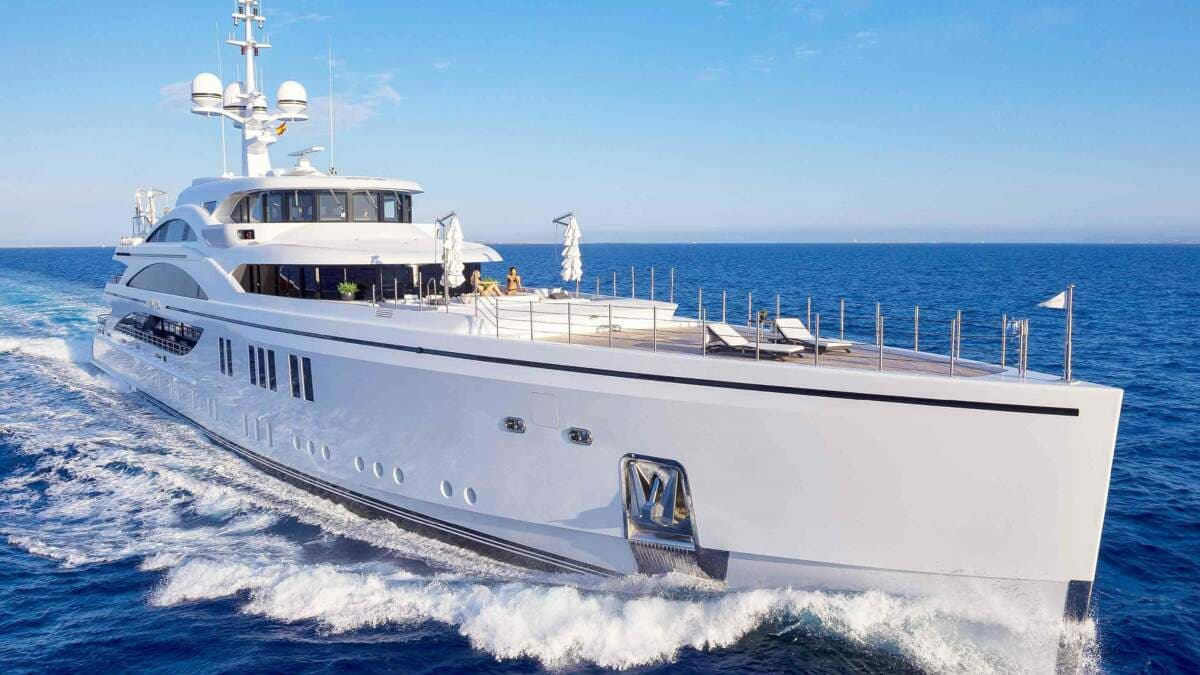
Charter income rarely turns a net profit on a superyacht, but that is the wrong question. The right question is whether it changes the financial logic of ownership in a meaningful way, and for some owners, it does. Here is how the economics actually work.
What the Revenue Actually Looks Like
The APA Structure and What It Means for Owners
The Commercial Registration Question
Wear, Maintenance, and Resale Impact
When the Economics Work
When They Do Not
The Practical Question
Frequently asked questions
How much charter income can a superyacht earn in the Mediterranean?+
A crewed superyacht of 30 to 50 metres with a competitive specification achieves a base weekly charter rate of roughly €50,000 to €150,000 in the Mediterranean. A well-positioned yacht might book 8 to 12 charter weeks in a full season combining Mediterranean summer and Caribbean winter, or six to eight weeks if also reserved for owner use. Gross annual charter revenue therefore runs from €400,000 to €1.5 million before deductions.
Does charter income cover the running costs of a superyacht?+
Charter income rarely covers more than 40 to 60% of total running costs for a 40-metre superyacht, even at the optimistic end. Annual running costs are typically 7 to 12% of the yacht's original new-build price, so a yacht that cost €5 million new costs €350,000 to €600,000 a year in crew, insurance, berthing, fuel, maintenance, and classification. The baseline position is cost offset, not profit generation.
Which owners gain most from chartering out their yacht?+
Three groups: owners of yachts in the €3 to 10 million range that achieve 10 or more charter weeks per season; owners who structured the purchase with commercial registration and took the associated VAT advantages, for whom charter income is incremental offset; and owners with flexible use patterns, who take their personal use in shoulder season and make peak weeks available for charter. The economics of chartering out are directly correlated with the premium weeks the owner is willing to cede.
What are the tax advantages of commercial registration for a charter yacht?+
Commercial registration, required for charter in most Mediterranean jurisdictions, can generate material savings at acquisition. In Greece, a commercially registered yacht purchased through a qualifying Greek company is exempt from VAT on acquisition. In France, specific VAT import structures can defer or reduce import VAT. In Malta, a VAT deferment procedure for commercial yachts typically requires a bank guarantee of 0.75% of yacht value rather than full upfront payment.
How does charter use affect a yacht's resale value?+
Charter use can raise or lower resale value depending on how the yacht is maintained. A well-maintained charter yacht with a documented service history and regular refits can be more marketable than one with patchy private-use records, and some buyers seek charter yachts for this reason. Yachts completing 10 or more charter weeks a season take more wear on soft furnishings, tenders, water toys, and cabinetry, and owners who defer maintenance pay the difference at sale.
When does chartering out a yacht not make financial sense?+
The case against chartering is straightforward for owners who use their yacht heavily in peak season, who bought in a private capacity without structuring for commercial operation, or whose yacht category earns weekly rates too low to justify the compliance and management overhead. A 25-metre yacht earning €25,000 to €35,000 per charter week faces the same brokerage percentages, management fees, and compliance costs as a larger yacht, with a smaller revenue base.