Skip to content
Ownership

Superyacht running costs: what a superyacht costs to own

12 min readBy Panos G. Moraitis

The purchase price is the beginning of the conversation, not the end. Annual running costs for a superyacht typically run between 7% and 12% of her original new-build price, and that figure climbs as a vessel ages. This is a plain account of where the money goes, and what yachts cost to buy and to run by size.

What Does a Superyacht Actually Cost to Own?

Updated 26 October 2026: what superyachts cost to buy and to run by size, what a management fee covers, and winter berthing by the month.

Ten percent of purchase price per year is the figure the market quotes most: buy a €20 million yacht, budget €2 million a year to run it. We have managed yachts for private owners for over five decades, and the honest answer is that 10% is a headline, not a budget. What an owner actually spends turns on four things: how well the yacht is managed, where it is run, whether it operates privately or commercially, and how hard it is used. A new, well-managed yacht used 8 to 10 weeks a year in familiar waters can sit at or below that headline. Push the age up, move into a heavily used charter programme, or cruise remote grounds, and the real figure climbs toward 15 to 20%. The gap between those two is where most ownership surprises live, and it is the gap a good manager closes.

For sailing yachts, and for yachts run without a full professional crew, the share is generally lower.

Over five decades of managing yachts for private owners, we have seen the full range. What follows is a candid account of the cost structure: each category as it actually works, not as it looks in a brochure.

How each running cost is priced

  • Crew: wages by position, plus MLC obligations, travel, and training; 30 to 40% of total running costs.
  • Insurance: Hull and Machinery plus Protection and Indemnity; 0.5 to 1.5% of agreed hull value a year.
  • Berthing: summer berth, winter berth, transit marinas, and utilities; set by location and season, with utilities adding 20 to 30%.
  • Fuel: engine hours and generator load; the most use-dependent line.
  • Maintenance: servicing, haul-out, systems, and surveys; 2 to 5% of hull value a year.
  • Refit reserve: set aside every year; 0.5 to 1% of hull value a year.
  • Management: a fixed monthly or annual fee; €36,000 to €96,000 a year for 30 to 50 metres.

The sections below take each line in turn; the worked 40-metre example and the costs by size follow them.

Crew: The Largest Fixed Cost

For yachts above approximately 24 metres, professional crew are a practical necessity, and their cost is the line that most separates a superyacht budget from a smaller boat's.

Crew wages typically represent 30 to 40% of total annual operating expenditure. They are also the most predictable line item, which makes them the right place to start.

A 40-metre yacht carries 7 to 9 crew. A 60-metre carries 12 to 16. At the senior end, current market rates (2024 to 2025) run as follows:

  • Captain: €8,000 to €16,000 per month, depending on vessel size and experience. On large yachts over 60 metres, €18,000 to €22,000 is not uncommon.
  • Chief Engineer: €8,000 to €18,000 per month. Complex propulsion systems, stabilisers, and integrated bridge technology push this toward the upper range.
  • Head Chef: €5,000 to €12,000 per month. Head chef wages have risen faster than other departments in recent years; demand for experienced yacht chefs is structural.
  • Chief Stewardess / Hotel Manager: €4,500 to €8,000 per month.
  • Bosun / Deck team: €3,500 to €6,000 per month per senior crew member.

Gross wages are not the ceiling. Under MLC 2006 (Maritime Labour Convention), owners are required to provide repatriation, medical coverage, and defined minimum rest periods. Add employer social contributions where applicable, crew travel, training and certificate renewal, and the total crew cost for a 40-metre yacht runs €500,000 to €700,000 annually. For a 60-metre, plan for €900,000 to €1,400,000. Provisions, uniforms, and crew medical insurance come on top of wages, and crew costs scale with size: a yacht with four crew has a fundamentally different payroll from one requiring twelve.

The ISM Code (International Safety Management) requires the vessel to maintain documented safety management systems and regular drills. These are not optional; they are flag state obligations with real cost implications for time and administration.

Insurance: Hull and Liability

Marine insurance for a superyacht is priced as a percentage of agreed hull value, typically 0.5% to 1.5% annually. The range reflects factors including vessel age, cruising area, claims history, and the owner’s experience profile. Size and construction material also count. Comprehensive insurance is a requirement of most flag states, marinas, and lending institutions, and cover extends to crew injury and passenger liability.

On a €15 million hull, that translates to €75,000 to €225,000 per year. On a €40 million vessel, the same rate range produces €200,000 to €600,000.

Policies cover Hull and Machinery (H&M) and Protection and Indemnity (P&I). P&I covers third-party liability: crew injury claims, pollution, collision damage to other vessels. This is not optional in any serious jurisdiction. If the yacht operates commercially under charter, the policy structure changes, and underwriters require confirmation of flag state compliance and classification society certification.

Cruising areas affect premiums directly. Operating in hurricane zones during the Atlantic season (typically June through November) triggers significant surcharges or exclusions. Some underwriters will not quote Atlantic coverage in summer at any price; others require passage south of 12°N by 1 June.

Berthing and Marina Costs

A superyacht needs somewhere to sit for most of the year. Annual berthing is one of the least glamorous and most variable costs in the budget.

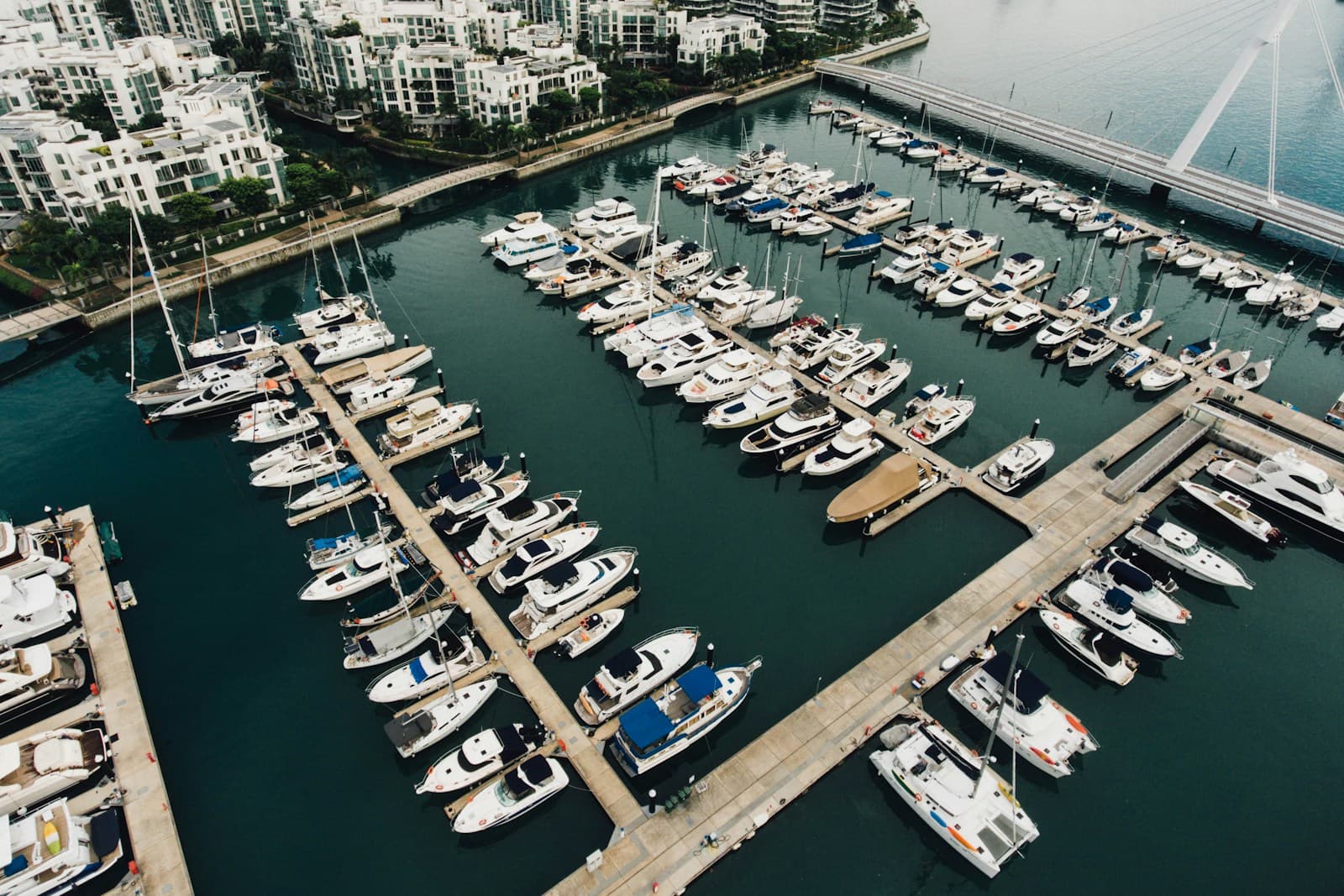
In premium Mediterranean marinas, peak-season daily rates for a 40-metre berth run €500 to €1,200 per day. During events (Monaco Formula 1, Cannes Film Festival, Palermo-Montecarlo), rates at the most sought-after berths reach €5,000 to €10,000 per day. Annual berthing contracts, where they exist, cost €100,000 to €500,000 for larger yachts at first-tier destinations including Monaco and Porto Cervo.

Winter berths in less-pressured locations (Greece, Turkey, Croatia) run significantly lower: €100 to €400 per day or contracted annual rates of €30,000 to €80,000 for a 40-metre. By the month, that is roughly €3,000 to €12,000 at daily rates, or €2,500 to €6,700 under an annual contract. Electricity, water, waste disposal, and security add 20 to 30% to the base berthing fee. Transit marina fees while cruising come on top.

For yachts in active use during summer and laid up in a more cost-effective winter berth, a realistic annual combined berthing budget for a 40-metre yacht in Mediterranean operation is €80,000 to €180,000.

Fuel

Fuel is the most use-dependent variable in the budget. A yacht that crosses oceans four times a year burns an order of magnitude more fuel than one that makes short coastal passages for six weeks in summer. Consumption depends on hull type, size, engine configuration, and cruising speed: a displacement motor yacht at economical speed burns far less per nautical mile than a planing hull at high speed.

A 40-metre displacement motor yacht at cruising speed burns approximately 200 to 350 litres per hour. At €1.00 to €1.20 per litre for marine gasoil in Mediterranean ports, that is €200 to €420 per engine-hour, before generator load. A yacht covering 3,000 nautical miles in a season at 10 to 12 knots (roughly 300 to 350 running hours) will burn 60,000 to 120,000 litres, costing €60,000 to €140,000 in fuel alone. A fast displacement or semi-planing hull at higher speeds will exceed this substantially.

Generator fuel, run 24 hours a day at anchor or in marina, is a separate consideration. A hotel load generator on a 40-metre yacht running 12 to 16 hours per day burns 20 to 40 litres per hour. Over a 200-day active season, that adds €50,000 to €100,000.

Owners who charter their yacht offset fuel through charterer contributions, but this requires careful budgeting: charter agreements specify fuel-included or fuel-additional terms, and mismatched expectations produce disputes.

Maintenance, Classification, and Refit Reserve

Routine maintenance on a well-run yacht (engine servicing, antifouling, paint, mechanical systems, electronics) costs 2 to 5% of hull value annually. On an older vessel, this figure rises; systems deteriorate, spares become harder to source, and each season’s haul-out reveals more.

The recurring items are:

  • An annual haul-out for hull inspection, antifouling, and underwater gear servicing
  • Engine and generator servicing at manufacturer-specified intervals
  • Electrical and electronic systems checks
  • Teak deck maintenance and structural sealant renewal
  • Safety equipment servicing: life rafts, fire suppression, and EPIRBs
  • Class and flag state survey compliance

Deferred maintenance is a false economy: small issues become expensive problems if neglected, and a poorly maintained yacht loses value rapidly.

Classification societies (Lloyd’s Register, Bureau Veritas, RINA, DNV among others) require periodic surveys: an out-of-water survey every 2.5 years and a 5-year special survey that is substantially more comprehensive. A 5-year special survey on a 40-metre commercial yacht typically costs €150,000 to €400,000 including drydock time, structural inspections, sea trials, and any required remediation. Flag state annual safety inspections add €5,000 to €15,000 in fees and administrative overhead.

Major refits (those that address interior refresh, propulsion upgrades, or structural work) are a different category. These occur every 7 to 12 years and cost 5 to 15% of the yacht’s current market value. A €15 million, 40-metre yacht requiring a comprehensive refit may incur €750,000 to €2,500,000 over 4 to 8 months in a specialist yard.

The standard industry practice is to set aside 0.5 to 1% of hull value annually as a dedicated refit reserve. Owners who do not do this find the cost arrives as a shock rather than a managed expenditure.

Management Fees and Professional Administration

Most owners engage a professional yacht management company to handle technical management, crew payroll, compliance, and flag state liaison. This is not a luxury; it is the structure that keeps the vessel seaworthy, legally compliant, and insured.

Management fees typically run €3,000 to €8,000 per month for a 30 to 50 metre yacht, or €36,000 to €96,000 annually, depending on the scope of services included. Full technical management, with the manager acting as Designated Person Ashore under ISM, sits toward the upper end. Charter management carries additional fees, typically structured as a percentage of gross charter revenue. Whether charter income offsets enough of the running cost to matter is its own question: the charter yield question works through the numbers.

What the fee covers should be written into the management agreement: crew administration and payroll, planned maintenance, insurance placement, flag state and classification compliance, an annual budget tracked monthly, written monthly reporting, and 24-hour operational support. If a service is not written down, it is not included.

Flag state registration fees vary by registry. The Cayman Islands, Marshall Islands, and Malta are common flags for private yachts, with annual registration fees of €5,000 to €20,000 depending on vessel size. Flag choice affects manning requirements, port state reception, and the regulatory framework governing crew employment conditions under MLC.

What the Total Looks Like

For a reference point: a €15 million, 40-metre motor yacht (an older or smaller 40-metre than the 2018-or-later band in the size table below) in full-time private use, Mediterranean operation, with a professional crew of 8 and an active charter programme to offset some costs:

  • Crew (wages, MLC, travel): €550,000 to €700,000
  • Insurance (H&M + P&I): €75,000 to €225,000
  • Berthing: €80,000 to €180,000
  • Fuel: €80,000 to €160,000
  • Routine maintenance: €150,000 to €300,000
  • Refit reserve (1% hull): €150,000
  • Management fees: €50,000 to €90,000
  • Flag state, classification, admin: €25,000 to €50,000
  • Provisions, communications, misc: €40,000 to €80,000
  • Total: €1,200,000 to €1,935,000

That is 8 to 13% of her €15 million price, around the usual 7 to 12% of new-build price and consistent with the 10% rule for a yacht in good condition and active use. Push the age of the vessel up, expand the cruising grounds, or move from private use to commercial operation, and the upper bound rises accordingly. For a pre-owned yacht the costs follow her size and original build, not the price paid, so as a share of a lower purchase price they are higher. Spread across the year, the example comes to about €3,300 to €5,300 a day, whether or not she leaves her berth.

What a superyacht costs to buy, and to run, by size

Length, age, and builder set the price. These are asking prices for motor yachts on our published sale list on 26 October 2026, the middle half of each size band:

  • 24 to 30 metres (79 to 98 feet): €1.8 million to €5.3 million
  • 30 to 40 metres (98 to 131 feet): €2.2 million to €7.3 million
  • 40 to 50 metres (131 to 164 feet): €7.5 million to €14.6 million
  • 50 to 70 metres (164 to 230 feet): €12.9 million to €35.1 million

Running costs do not follow the asking price. They are typically 7 to 12% of the yacht’s original new-build price a year. For a pre-owned yacht the costs follow her size and original build, not the price paid, so as a share of a lower purchase price they are higher. The nearest public guide to a new-build price is what recent builds ask. For motor yachts built in 2021 or later on the same list, the median asking price, and the annual running cost it implies:

  • 70 to 78 feet (21 to 24 metres): about €3.7 million, so €260,000 to €440,000 a year
  • 24 to 30 metres (79 to 98 feet): about €7.7 million, so €540,000 to €920,000 a year
  • 30 to 40 metres (98 to 131 feet): about €12.7 million, so €890,000 to €1,520,000 a year
  • 40 to 50 metres (131 to 164 feet), built 2018 or later: about €25 million, so €1,750,000 to €3,000,000 a year

Above 50 metres too few recent builds are listed to give a fair median. Every yacht on our sale list shows her asking price.

Charter income as an offset

Many owners make their yacht available for charter when they are not using her. Charter income can meaningfully offset annual running costs, often covering 30 to 60% or more of them depending on the yacht, the season, and the destination.

Chartering brings its own requirements: commercial flag state regulations, appropriate insurance, MCA or equivalent safety standards, and commercial-standard crew and provisioning. Commercial operation also changes the insurance structure and the survey regime described above, and charter agreements set out whether fuel is included or charged on top.

Charter revenue should be viewed as a welcome contribution to running costs rather than a profit centre. Our charter management team will advise on realistic income for her size, age, and cruising area.

VAT and ownership structure

Value Added Tax is a significant consideration for yachts in European Union waters. A yacht's VAT status affects where she can cruise freely and her resale value. Yachts with EU VAT-paid status can move freely within EU waters; yachts without it face restrictions and potential tax liability. Drivas Yachts advises on VAT status, flag state implications, and ownership structures before purchase, when they are cheapest to get right.

Depreciation

Yachts depreciate over time, most steeply in the first few years after delivery. Well-maintained yachts from reputable builders hold their value better. Value retention rests on consistent professional maintenance, up-to-date systems, thorough documentation, and build pedigree. That is the same discipline that keeps running costs predictable, which is why the maintenance and refit-reserve lines above are also the owner's best protection at resale.

An owner's annual budget checklist

Before purchase, and then once a year, work through each line with your broker and management company:

  • Crew: wages by position, MLC obligations, social contributions, flights, training, certificates, uniforms, and medical cover.
  • Insurance: H&M and P&I at the agreed hull value, the cruising area written into the policy, and any charter endorsement.
  • Berthing: the summer berth, the winter berth, transit marinas, and utilities on top of the base fee.
  • Fuel: planned miles and engine hours, generator hours at anchor, and the fuel terms in any charter agreement.
  • Maintenance: the haul-out, engine and generator service intervals, systems checks, teak and sealant, and safety equipment.
  • Classification and flag: the next out-of-water survey, the next 5-year special survey, and annual flag inspections.
  • Refit reserve: 0.5 to 1% of hull value set aside every year.
  • Management: the fee, and exactly which services the agreement lists.
  • VAT and structure: the yacht's VAT status for where she will cruise.
  • Contingency: a reserve for unplanned repairs or capital expenditure, reviewed against actual usage and market conditions.

The Decision Behind the Numbers

Understanding costs at this level of specificity is not about discouraging ownership. It is about structuring it correctly. Owners who enter with a clear picture of the total financial commitment, and who build a management structure that keeps costs controlled and compliance watertight, get the experience the yacht was bought for. Those who underestimate the annual budget discover it in the worst places: a deferred survey, an underinsured incident, a crew dispute. Build a detailed operating budget before purchase, review it every year against actual use, and keep a contingency reserve for the unplanned.

The 10% rule is a starting signal. The real work is in the detail behind it.

If you are weighing a purchase, our guides to buying a yacht and new build against pre-owned cover the other side of the decision.

If you want that detail for a specific yacht, , and we will build her annual budget line by line.

Frequently asked questions

How much does a superyacht cost to run per year?+

Annual running costs for a superyacht typically run between 7% and 12% of her original new-build price, and that figure climbs as a yacht ages. For a pre-owned yacht the costs follow her size and original build, not the price paid, so as a share of a lower purchase price they are higher. The market most often quotes the 10% rule: budget roughly 10% of purchase price per year, so a €20 million yacht implies about €2 million a year to run. That is a headline, not a budget, and actual spend turns on the yacht's age, cruising grounds, and whether it is used privately or chartered.

What is the 10% rule for superyacht ownership?+

The 10% rule is the industry shorthand that a yacht in good condition and active use costs about 10% of its purchase price per year to operate. A worked example of a €15 million, 40-metre motor yacht in full-time private Mediterranean use lands at 8 to 13% of her price, around the usual 7 to 12% of new-build price. Push the age of the yacht up, expand the cruising grounds, or move from private to commercial operation, and the upper bound rises.

What are the biggest running costs of a superyacht?+

Crew wages are the largest and most predictable line, typically 30 to 40% of total annual operating expenditure. Other major categories are marine insurance (0.5 to 1.5% of agreed hull value annually), berthing, fuel (the most use-dependent variable), routine maintenance and a refit reserve (2 to 5% of hull value for maintenance, plus 0.5 to 1% set aside for refit), and professional yacht management fees of roughly €36,000 to €96,000 a year for a 30 to 50-metre yacht.

How much does superyacht insurance cost?+

Marine insurance for a superyacht is priced as a percentage of agreed hull value, typically 0.5 to 1.5% annually, reflecting vessel age, cruising area, claims history, and the owner's experience. On a €15 million hull that is €75,000 to €225,000 per year; on a €40 million vessel the same rate range produces €200,000 to €600,000. Policies cover Hull and Machinery and Protection and Indemnity, and the structure changes if the yacht operates commercially under charter.

How much does superyacht crew cost per year?+

Total crew cost for a 40-metre superyacht runs €500,000 to €700,000 a year, and for a 60-metre yacht €900,000 to €1,400,000. A 40-metre yacht carries 7 to 9 crew and a 60-metre yacht 12 to 16. Gross wages are not the ceiling: under MLC 2006, owners must provide repatriation, medical coverage, and minimum rest periods, plus employer social contributions where applicable, crew travel, training, and certificate renewal.

How much does it cost to berth a superyacht in the Mediterranean?+

A realistic combined annual berthing budget for a 40-metre yacht in Mediterranean operation is €80,000 to €180,000. Peak-season daily rates in premium Mediterranean marinas run €500 to €1,200 for a 40-metre berth, rising to €5,000 to €10,000 a day at sought-after berths during events such as Monaco Formula 1 and the Cannes Film Festival. Winter berths in Greece, Turkey, or Croatia run €100 to €400 a day.

How much fuel does a 40-metre superyacht burn?+

A 40-metre displacement motor yacht at cruising speed burns approximately 200 to 350 litres per hour, or €200 to €420 per engine-hour at €1.00 to €1.20 per litre for marine gasoil. Covering 3,000 nautical miles in a season at 10 to 12 knots burns 60,000 to 120,000 litres, costing €60,000 to €140,000. Generators running 12 to 16 hours a day over a 200-day active season add €50,000 to €100,000.

How much does a superyacht refit cost?+

Major superyacht refits occur every 7 to 12 years and cost 5 to 15% of the yacht's current market value. A €15 million, 40-metre yacht needing a comprehensive refit may incur €750,000 to €2,500,000 over 4 to 8 months in a specialist yard. Separately, classification societies require a 5-year special survey, which on a 40-metre commercial yacht typically costs €150,000 to €400,000 including drydock time.

How much does yacht management cost?+

Professional management of a 30 to 50-metre yacht typically costs €3,000 to €8,000 a month, or €36,000 to €96,000 a year, depending on the scope. Full technical management, with the manager acting as Designated Person Ashore under the ISM Code, sits toward the upper end, and charter management is charged separately. Management is one line within total running costs of typically 7 to 12% of the yacht's original new-build price a year. For a pre-owned yacht the costs follow her size and original build, not the price paid, so as a share of a lower purchase price they are higher.

How much does it cost to maintain a superyacht each year?+

Routine maintenance on a well-run superyacht (engine servicing, antifouling, paint, mechanical systems, and electronics) costs 2 to 5% of hull value a year, and more as she ages. Set aside a further 0.5 to 1% a year as a refit reserve, and budget for class surveys: a 5-year special survey on a 40-metre commercial yacht typically costs €150,000 to €400,000 including drydock time. Maintenance sits within total running costs of typically 7 to 12% of the yacht's original new-build price a year. For a pre-owned yacht the costs follow her size and original build, not the price paid, so as a share of a lower purchase price they are higher.

How much does a superyacht cost to buy?+

On our published sale list on 26 October 2026, the middle half of asking prices for motor yachts ran from €1.8 million to €5.3 million at 24 to 30 metres, €2.2 million to €7.3 million at 30 to 40 metres, €7.5 million to €14.6 million at 40 to 50 metres, and €12.9 million to €35.1 million at 50 to 70 metres. Length, age, and builder set the price. Running costs are a separate budget: typically 7 to 12% of the yacht's original new-build price a year, whatever was paid for her.

How much does it cost to own a 70-foot yacht?+

A motor yacht of 70 to 78 feet (21 to 24 metres) built since 2021 asks about €3.7 million on our sale list (26 October 2026), the nearest public guide to her new-build price. At 7 to 12% of that a year, she costs about €260,000 to €440,000 to run. For a pre-owned yacht the costs follow her size and original build, not the price paid, so as a share of a lower purchase price they are higher.

Can chartering my yacht offset ownership costs?+

Yes. Placing your yacht on the charter market when you are not using her can generate significant income, often covering 30 to 60% or more of annual running costs depending on the yacht, season, and destination. Chartering brings commercial requirements of its own (flag state rules, insurance, safety standards, and crew), so treat the income as a contribution to running costs rather than a profit centre. Your broker manages the charter marketing and bookings.

Do sailing yachts and smaller yachts cost less to run?+

Generally, yes. The 7 to 12% of original new-build price guideline is for fully crewed motor yachts; for sailing yachts, and for yachts run without a full professional crew, the share is generally lower. Below approximately 24 metres a full professional crew is not always a necessity, which removes the largest single line from the budget. A motor yacht of 70 to 78 feet (21 to 24 metres) built since 2021 implies about €260,000 to €440,000 a year to run, on our sale list of 26 October 2026.
Begin your journey

Speak with our team to explore charter destinations, yacht sales, or itinerary planning.