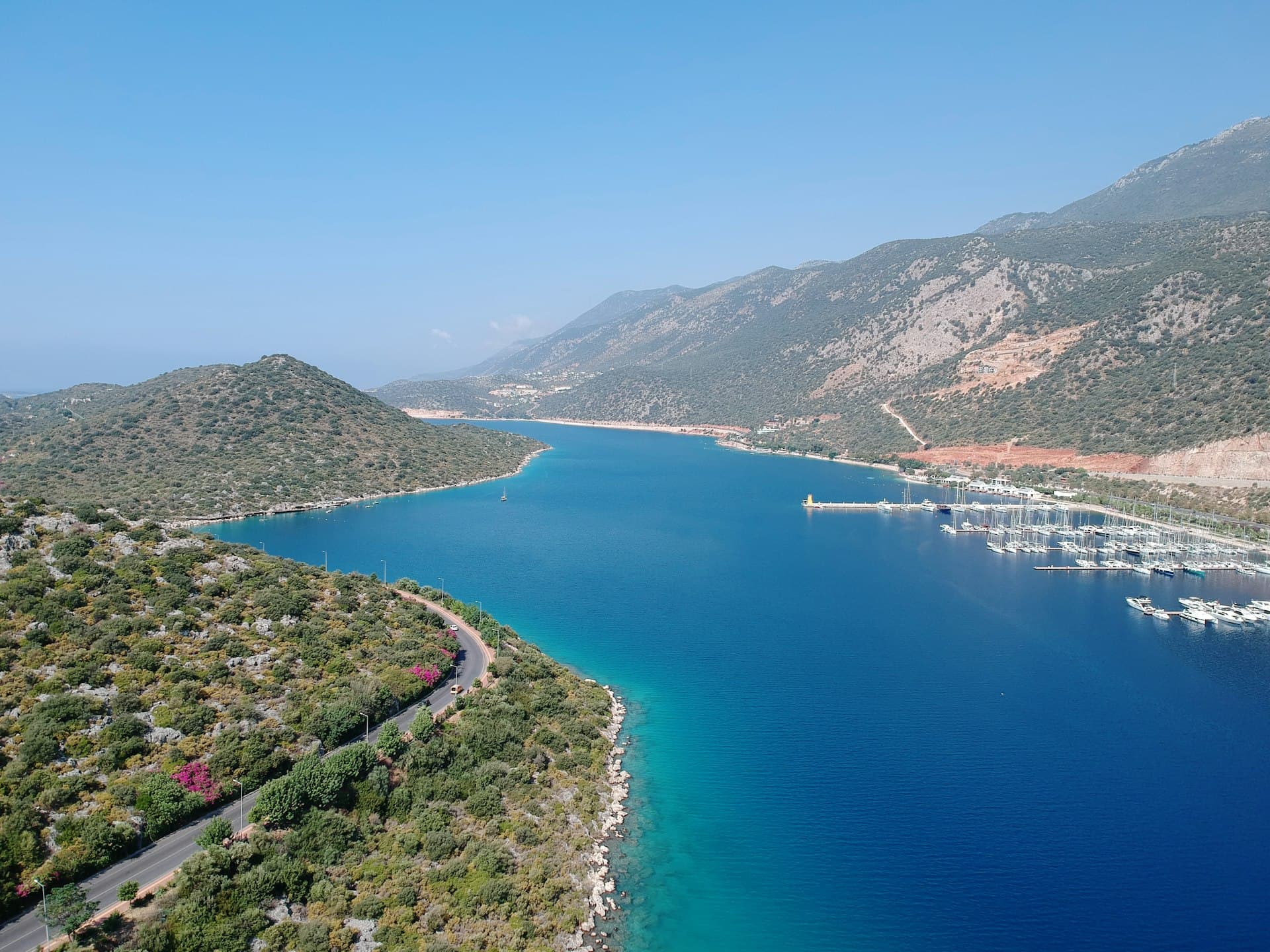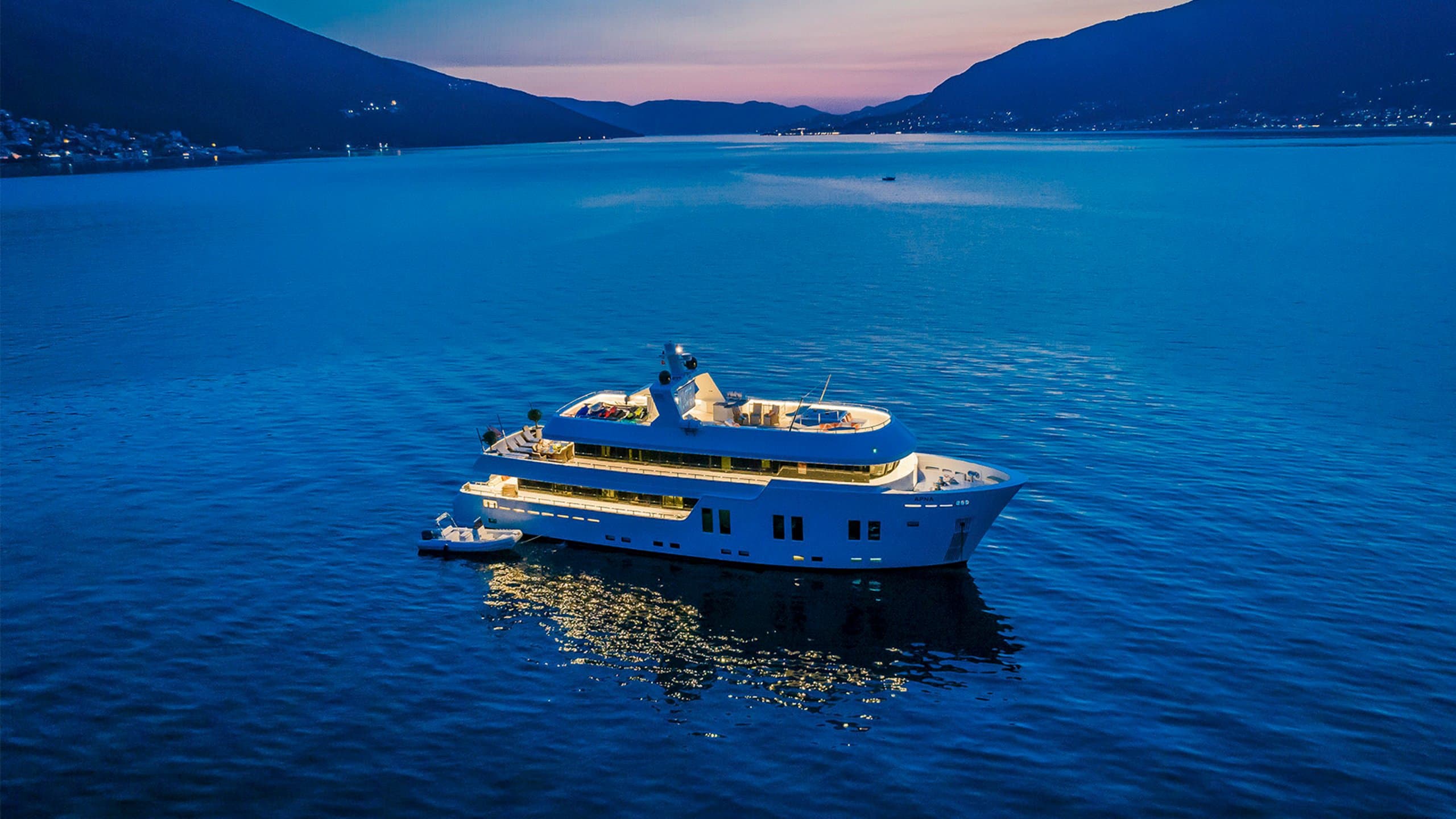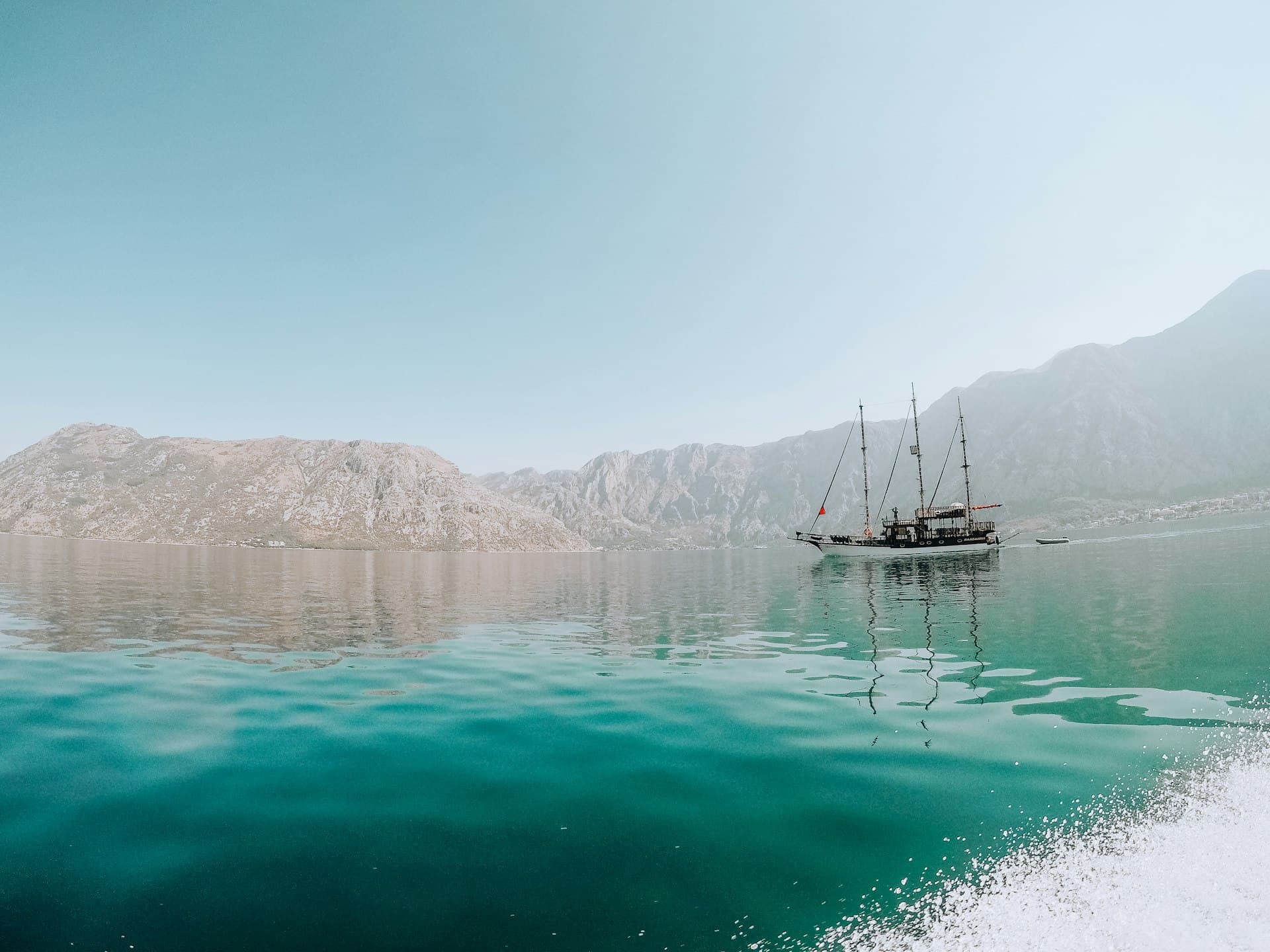
Montenegro’s coastline measures just 73 kilometres — shorter than a single day’s passage on most yachts — yet it contains one of the Mediterranean’s great natural wonders. The Bay of Kotor cuts 28 kilometres inland through mountains that rise to 1,749 metres directly from the waterline. The effect, entering by sea, is closer to a Norwegian fjord than anything else in the Mediterranean. Stone villages cling to the shore. Fortified churches sit on islets. The water is deep and still.
Seventy-three kilometres of coast, and one bay that justifies the entire journey.
The Cruising Ground
Montenegro’s charter area divides into two distinct sections: the open coast from the Croatian border south to Budva, and the Bay of Kotor (Boka Kotorska) — the enclosed, multi-chambered inlet that defines the country’s maritime identity. Most charter itineraries treat Montenegro as a two-to-three day addition to a Croatian charter, or as a focused long-weekend destination in its own right. There is enough here for a full week if the pace is unhurried, but the compact scale suits shorter stays particularly well.
Key Destinations
Season and Conditions
The season mirrors Croatia’s: May through October, with July and August at peak occupancy. The Bay of Kotor is exceptionally sheltered — the surrounding mountains block most wind, and the inner bay rarely sees more than 10 knots. This makes it a reliable destination even when the Bora disrupts the open Adriatic. Water temperatures reach 24-26°C in summer. Rainfall is low from June to September, though the bay’s microclimate can produce localised afternoon showers, particularly in May and October.
Porto Montenegro operates year-round, with reduced but available services through winter — useful for repositioning or maintenance layovers.
A Typical Charter Visit
Arriving from Dubrovnik (30 nm south), a three-day Montenegrin itinerary might run as follows: Day 1, enter the bay through the Verige strait — the narrowest point, where chains once blocked enemy fleets — and berth at Porto Montenegro in Tivat for lunch and provisioning. Afternoon tender ride to Perast and the islets. Day 2, motor to Kotor (20 minutes from Tivat). Morning exploring the old town; the energetic can climb the 1,350 steps to the fortress of San Giovanni for the view down the entire bay. Afternoon swim at one of the small beaches along the Vrmac peninsula. Day 3, back through the narrows to Herceg Novi for a morning ashore, then south around the headland to Budva for a final lunch before continuing to the next port.
The distances inside the bay are measured in minutes rather than hours — Tivat to Kotor is 4 nm, Kotor to Perast is 2 nm — which leaves the day open for exploration ashore, long meals, and the kind of slow immersion that a place this layered deserves.
- Bay of Kotor — UNESCO-listed medieval citadel and baroque churches
- Porto Montenegro marina in Tivat, one of Europe's finest superyacht ports
- Budva Riviera's Blue Flag beaches and Venetian old town
- Proximity to Dubrovnik for extended Adriatic itineraries
June is the first fully reliable month on the Montenegrin coast: the Adriatic is warm, the mountains behind Kotor are still green from the spring rains and the marina at Porto Montenegro has availability. July and August bring the peak season — Budva fills with Serbian and Montenegrin tourists and the anchorage off Sveti Stefan becomes crowded by midday — but Kotor itself, with its walls and its churches and its narrow lanes, is always worth the morning. September is the month that makes Montenegro a serious destination: quieter, cooler, with the mountains gaining their autumn tones and the bay at its most atmospheric. The shoulder season — May and October — is for those who value access over amenity.
Montenegro's coastline is one of the most dramatic in the Mediterranean — a 295-kilometre stretch where mountains plunge directly into the Adriatic, creating fjord-like bays, walled medieval towns, and a landscape of extraordinary intensity.
The Bay of Kotor (Boka Kotorska) is the centrepiece: a series of interconnected bays that reach deep inland, surrounded by mountains rising to nearly 2,000 metres. Kotor itself is a UNESCO World Heritage town, its medieval walls zigzagging up the mountainside behind a waterfront of Venetian palaces, Romanesque churches, and narrow marble streets.
Beyond the bay, the coast opens to the Budva Riviera — sandy beaches, the island-hotel of Sveti Stefan (connected to the mainland by a narrow causeway), and the emerging superyacht marina at Porto Montenegro in Tivat. Porto Montenegro has become the Adriatic's most modern yacht facility, with berths for vessels up to 250 metres and a village of restaurants and shops.
Montenegro charters combine beautifully with Croatia to the north (Dubrovnik is just 20 nm from the border) and with the Greek Ionian islands to the south via Albania's coast.
Bay of Kotor — Europe's southernmost fjord-like bay
Kotor — UNESCO medieval walled town
Perast — baroque waterfront with island church
Porto Montenegro — Adriatic's premier superyacht marina
Sveti Stefan — iconic island-hotel
Easy combination with Dubrovnik and Croatia